Read the passage and answer the questions:
Materials from the Subcontinent and Distant Lands
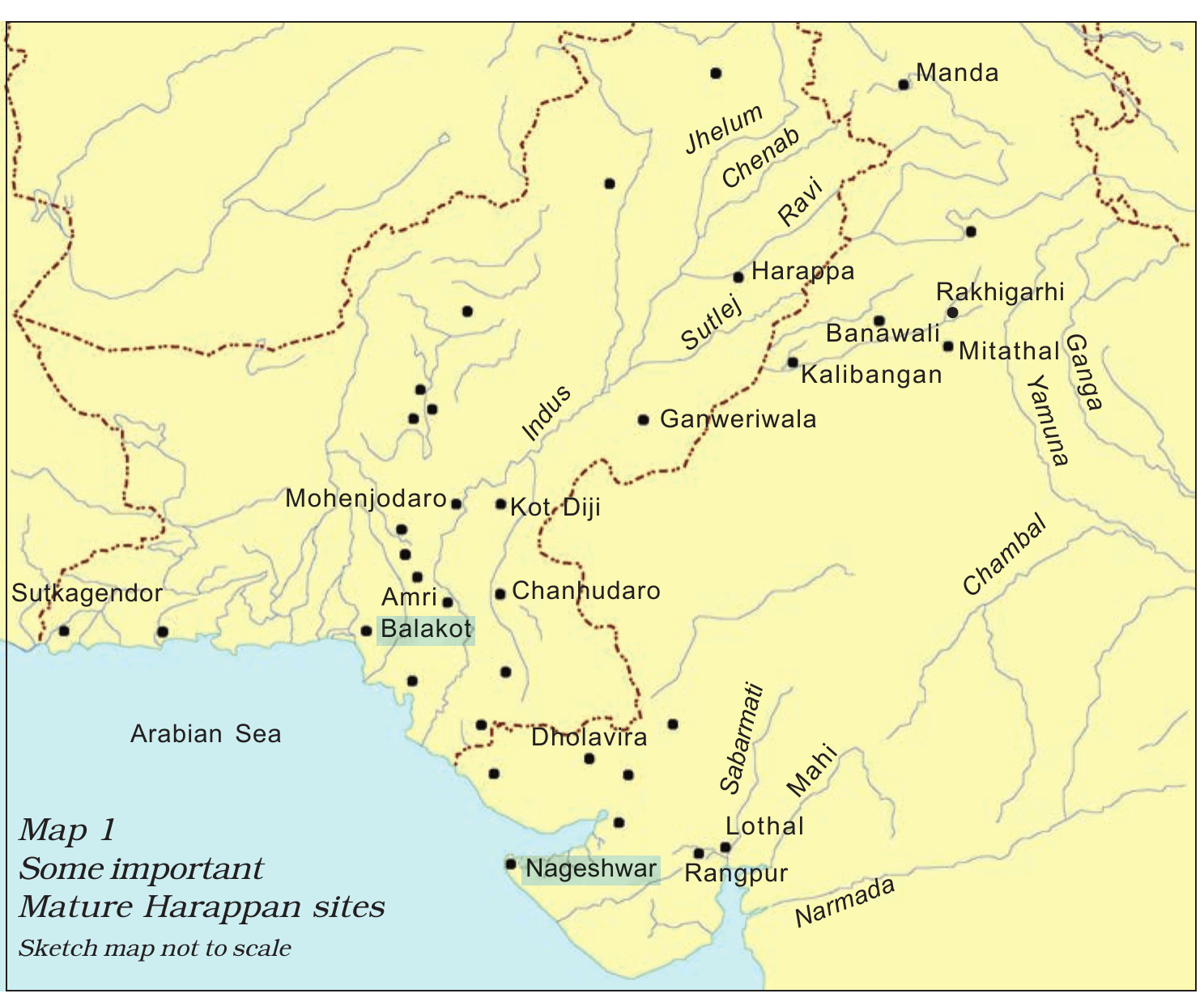
Chanhudaro is a tiny settlement (less than 7 hectares) as compared to Mohenjodaro (125 hectares), almost exclusively devoted to craft production, including bead-making, shell-cutting, metal-working, seal-making and weight-making. The Harappans procured materials for craft production in various ways. For instance, they established settlements such as Nageshwar and Balakot in areas where shell was available. Other such sites were Shortughai, in far-off Afghanistan, near the best source of lapis lazuli, a blue stone that was apparently very highly valued, and Lothal which was near sources of carnelian. Mesopotamian texts datable to the third millennium BCE refer to copper mining from a region called Magan, perhaps a name for Oman, and interestingly enough copper found at Mesopotamian sites also contains traces of nickel. Other archaeological finds suggestive of long-distance contacts include Harappan seals, weights, dice and beads. In this context, it is worth noting that Mesopotamian texts mention contact with regions named Dilmun, Magan and Meluhha, possibly the Harappan region. They mention the products from Meluhha: carnelian, lapis lazuli, copper, gold and varieties of wood. A Mesopotamian myth says of Meluhha: "May your bird be the haja-bird, may its call be heard in the royal palace." Some archaeologists think the haja-bird was the peacock. Did it get this name from its call? It is likely that communication with Oman, Bahrain or Mesopotamia was by sea. Mesopotamian texts refer to Meluhha as a land of seafarers. Besides, we find depictions of ships and boats on seals.
Which sites in the Indus Valley Civilization were the specialised centres for making shell objects, including bangles, ladles and inlay?
Answer & explanation
Correct answer: option 3
The correct answer is Option (3) → Balakot and Nageshwar
Nageshwar and Balakot, both near the coast, were the specialised centres for making shell objects such as bangles, ladles and inlay, which were then taken to other settlements.
NCERT (2025-26): “5. Finding Out About Craft Production … Specialised drills have been found at Chanhudaro, Lothal and more recently at Dholavira. If you locate Nageshwar and Balakot on Map 1, you will notice that both settlements are near the coast. These were specialised centres for making shell objects – including bangles, ladles and inlay – which were taken to other settlements. Similarly, it is likely that finished products (such as beads) from Chanhudaro and Lothal were taken to the large urban centres such as Mohenjodaro and Harappa.…”
|