Match the Deccani paintings in List-I with their place of origin in List-II.
List-I (Painting) | List-II (Place of origin) |
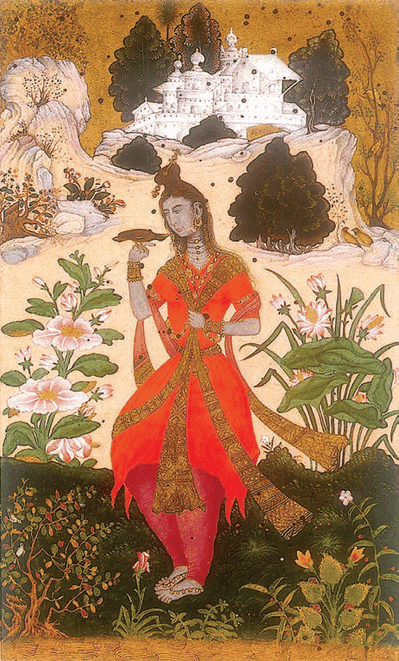
A. Yogini | I. Ahmadnagar |
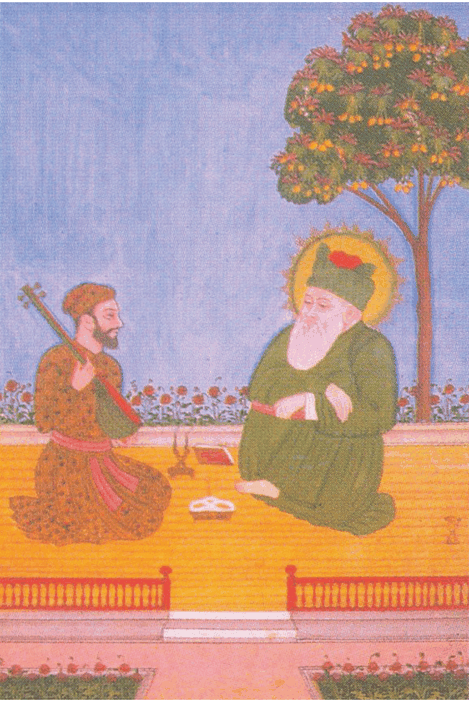
B. Hazrat Nizamuddin Auliya and Amir Khusrau | II. Bijapur |
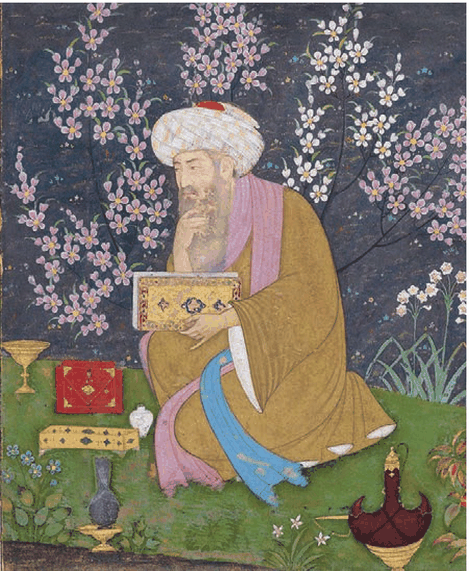
C. Poet in a Garden | III. Hyderabad |
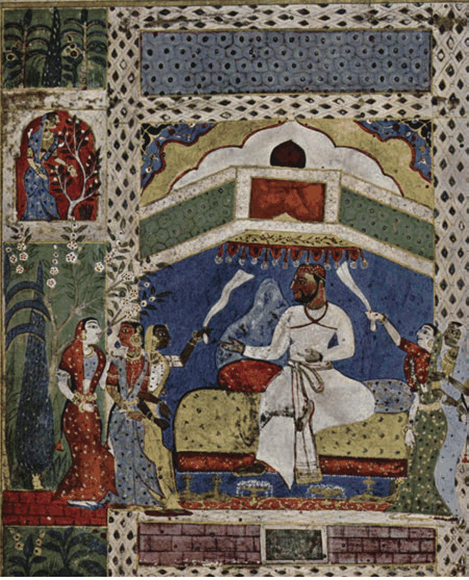
D. Tarif-i-Hussain Shahi: King sitting on the Throne | IV. Golconda |
Choose the correct answer from the options given below:
Answer & explanation
Correct answer: option 4
The correct answer is Option (4) → A-II, B-III, C-IV, D-I
| List-I | List-II | Reason |
|---|---|---|
| (A) Yogini | (II) Bijapur | Yogini is a seventeenth-century painting from Bijapur. |
| (B) Hazrat Nizamuddin Auliya and Amir Khusrau | (III) Hyderabad | This provincial painting, now in the National Museum, New Delhi, is from Hyderabad, Deccan. |
| (C) Poet in a Garden | (IV) Golconda | It was painted at Golconda in 1605–1615. |
| (D) Tarif-i-Hussain Shahi: King sitting on the Throne | (I) Ahmadnagar | This miniature of 1565–1569 is from Ahmadnagar. |
NCERT (2026-27): “Hazrat Nizamuddin Auliya and Amir Khusrau This provincial painting in the collection of National Museum, New Delhi, is from Hyderabad, Deccan. It depicts Hazrat Nizamuddin Auliya, the revered Sufi saint of the thirteenth century, listening to music being played by his disciple, Hazrat Amir Khusrau, a renowned Indian poet and scholar.”
“Yogini, Bijapur, seventeenth century, The Chester Beatty Library, Dublin, Ireland”
“Poet in a Garden, Muhammad Ali, Golconda, 1605–1615, Museum of Fine Arts, Boston, USA”
“Tarif–i–Hussain Shahi: King sitting on the Throne, Ahmadnagar, 1565–1569, Bharata Itihasa Samshodaka Mandala, Poona” |