Match List-I with List-II.
| List-I | List-II |
| (A) Institution that accept public deposits | (I) Issuance of currency notes |
| (B) The central Bank of India | (II) Acceptance of deposit from public |
| (C) Function of a Central Bank | (III) Reserve Bank of India |
| (D) Function of Commercial Bank | (IV) Commercial Bank |
Choose the correct answer from the options given below :
Answer & explanation
Correct answer: option 2
The correct answer is Option (2) → (A)-(IV), (B)-(III), (C)-(I), (D)-(II)
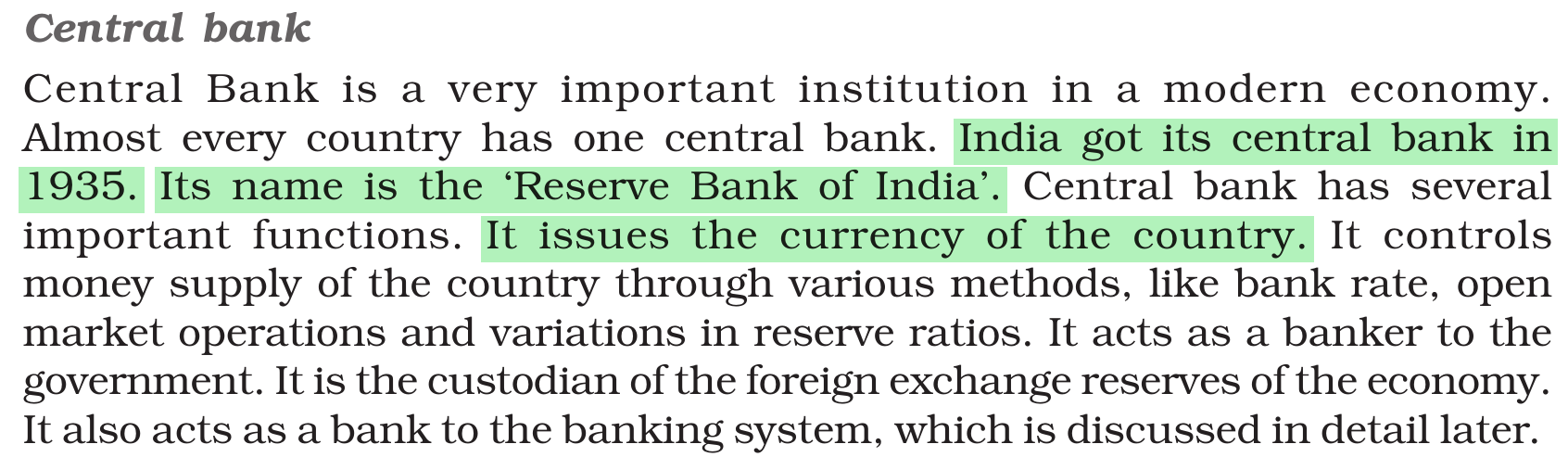
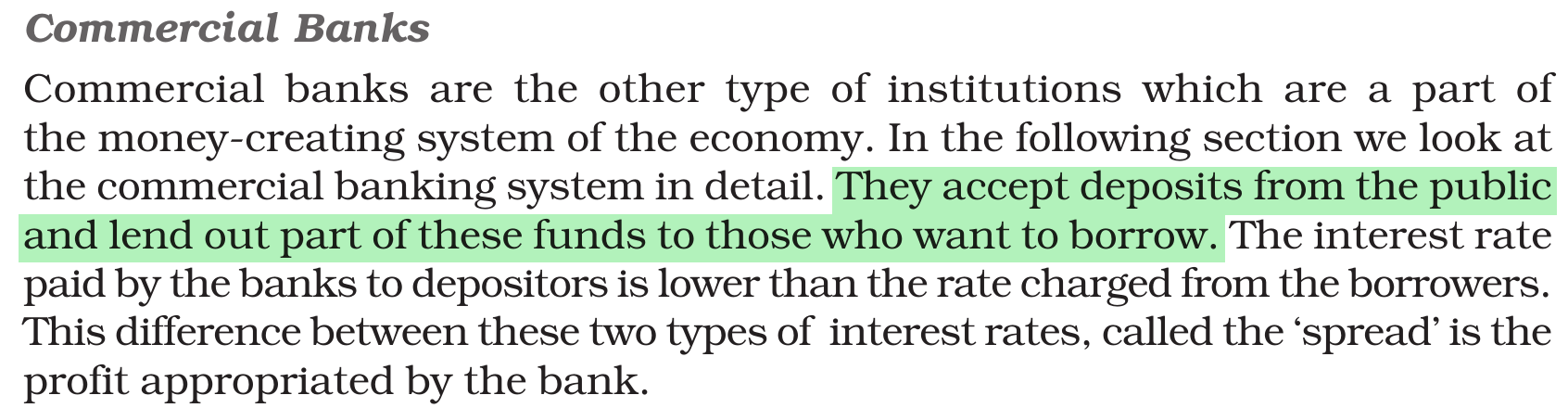
India’s money-creating system has two kinds of institutions. The central bank (the Reserve Bank of India) issues the currency. Commercial banks accept deposits from the public and lend part of them.
| List-I | List-II | Reason |
|---|---|---|
| (A) Institution that accept public deposits | (IV) Commercial Bank | Commercial banks take deposits from the public and lend out a part of these funds. |
| (B) The central Bank of India | (III) Reserve Bank of India | India got its central bank in 1935, named the Reserve Bank of India. |
| (C) Function of a Central Bank | (I) Issuance of currency notes | The central bank issues the currency of the country. |
| (D) Function of Commercial Bank | (II) Acceptance of deposit from public | Accepting deposits is the basic work of a commercial bank. The money it lends comes from these deposits. |
NCERT (2026-27): Introductory Macroeconomics — Chapter 3: Money and Banking
|