Match List-I with List-II.
|
List-I |
List-II |
|
(A) Dissolution by notice |
(I) Partnership at will |
|
(B) Dissolution by agreement |
(II) When a partner becomes insane |
|
(C) Dissolution by court |
(III) With the consent of all partners |
|
(D) Compulsory Dissolution |
(IV) When the business of the firm becomes illegal |
Choose the correct answer from the options given below:
Answer & explanation
Correct answer: option 2
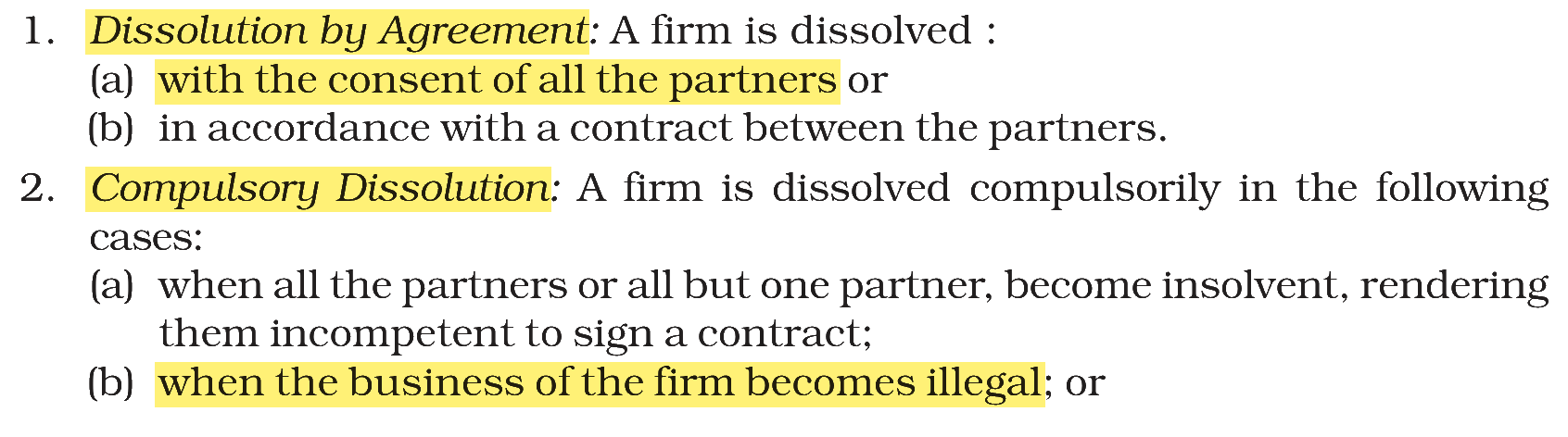
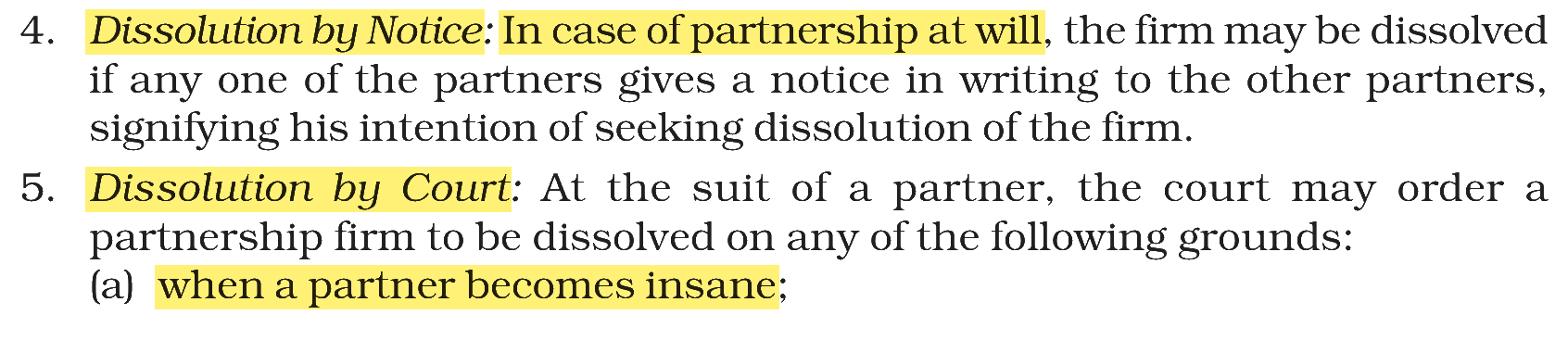
The correct answer is Option (2) → (A) - (I), (B) - (III), (C) - (II), (D) - (IV)
Each mode of dissolution has its own ground:
(A) Dissolution by notice — this matches (I) Partnership at will. Where the partnership has no fixed term, any partner may dissolve it by written notice.
(B) Dissolution by agreement — this matches (III) With the consent of all partners.
(C) Dissolution by court — this matches (II) When a partner becomes insane. The court may order dissolution on a partner’s suit.
(D) Compulsory Dissolution — this matches (IV) When the business of the firm becomes illegal. The firm cannot go on, whatever the partners wish.
NCERT (2026-27 edition):
|