Which of the following statements are True in the context of Revolt of 1857?
(A) Subhadra Kumari Chauhan wrote a heroic poem on Rani Lakshmi Bai of Jhansi.
(B) The British government was asked to protect the honour of women and ensure the safety of children during the Revolt of 1857.
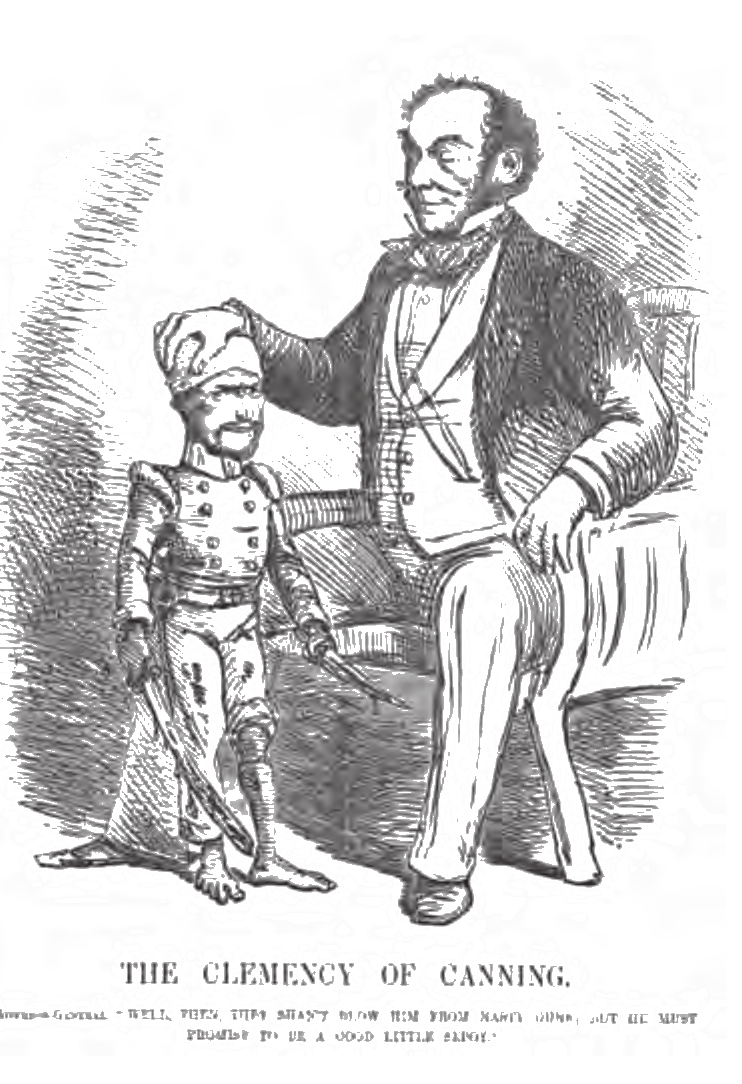
(C) Governor General Canning is shown as a looming father figure in 'Punch'.
(D) In British accounts, the siege of Lucknow became a shame to British power.
(E) Relief of Lucknow painted by Thomas Jones Barker criticised the British heroes.
Choose the correct answer from the options given below:
Answer & explanation
Correct answer: option 3
The correct answer is Option (3) → (A), (B), (C) Only
(A) Subhadra Kumari Chauhan wrote a heroic poem on Rani Lakshmi Bai of Jhansi. Correct. Heroic poems were written about the valour of the Rani of Jhansi, and children in many parts of India grow up reading the lines of Subhadra Kumari Chauhan: “Khoob lari mardani woh to Jhansi wali rani thi”.
(B) The British government was asked to protect the honour of women and ensure the safety of children during the Revolt of 1857. Correct. Tales of violence against women and children led to public demands in Britain for revenge, and the British government was asked to protect the honour of innocent women and ensure the safety of helpless children.
(C) Governor General Canning is shown as a looming father figure in ‘Punch’. Correct. When Canning pleaded for leniency towards the sepoys, he was mocked in the British press; a Punch cartoon shows him as a looming father figure with his protective hand over the head of a sepoy holding blood-stained weapons.
(D) In British accounts, the siege of Lucknow became a shame to British power. Incorrect. In British accounts the siege of Lucknow became a story of survival, heroic resistance and the ultimate triumph of British power, not a matter of shame.
(E) Relief of Lucknow painted by Thomas Jones Barker criticised the British heroes. Incorrect. Barker’s painting celebrates the moment of Campbell’s entry into Lucknow, with the British heroes Campbell, Outram and Havelock at the centre of the canvas.
NCERT (2026-27): “5.2 English women and the honour of Britain … Inflamed particularly by tales of violence against women and children, there were public demands in Britain for revenge and retribution. The British government was asked to protect the honour of innocent women and ensure the safety of helpless children.… 5.5 No time for clemency … At a time when the clamour was for vengeance, pleas for moderation were ridiculed. When Governor General Canning declared that a gesture of leniency and a show of mercy would help in winning back the loyalty of the sepoys, he was mocked in the British press. In one of the cartoons published in the pages of Punch, a British journal of comic satire, Canning is shown as a looming father figure, with his protective hand over the head of a sepoy who still holds an unsheathed sword in one hand and a dagger in the other, both dripping with blood (Fig.10.17) – an imagery that recurs in a number of British pictures of the time.… 5.6 Nationalist imageries … Heroic poems were written about the valour of the queen who, with a sword in one hand and the reins of her horse in the other, fought for the freedom of her motherland. Rani of Jhansi was represented as a masculine figure chasing the enemy, slaying British soldiers and valiantly fighting till her last. Children in many parts of India grow up reading the lines of Subhadra Kumari Chauhan: ‘Khoob lari mardani woh to Jhansi wali rani thi’ (Like a man she fought, she was the Rani of Jhansi).… 5.1 Celebrating the saviours … In British accounts the siege of Lucknow became a story of survival, heroic resistance and the ultimate triumph of British power. Barker’s painting celebrates the moment of Campbell’s entry. At the centre of the canvas are the British heroes – Campbell, Outram and Havelock.…”
Fig. 10.17 “The Clemency of Canning”, Punch, 24 October 1857 |