CUETMOCK
  • Pricing
  • Mentors
Log inStart freeStart free mocks→

First test, then trust

Try a free CUET mock test.

Join 5,00,000+ students who rehearsed exam day on the exact NTA screen before sitting CUET. On the web and on Android.

Start free mocks →Get the Android app
CUETMOCK

India's #1 CUET Mock Test Platform. Original NCERT-based questions on the exact NTA exam screen — trusted by 5,00,000+ students since CUET 2022.

Get it onGoogle PlayScan to download the CUETMOCK app

Mock tests

  • CUET mock test series
  • Browse all papers
  • Commerce mocks
  • Humanities (Arts) mocks
  • Science mocks
  • Languages & GAT mocks
  • Free practice questions
  • Pricing

Resources

  • CUET exam guide
  • CUET syllabus
  • Universities accepting CUET
  • Expert blogs
  • News & notifications
  • Webinars & counselling
  • CUET score calculator
  • How we estimate your rank
  • FAQs

Company

  • About us
  • Our leadership & team
  • Our toppers
  • Mentors
  • For schools
  • Contact us
  • Terms
  • Privacy
  • Refund policy

Talk to us

+91 7696 6630 56info@cuetmock.comWhatsApp us

Our other platforms

  • JEE Mock — For IIT-JEE aspirants
  • NEET Mock — For NEET aspirants

Newsletter

Exam updates, study material and offers — no spam.

© 2026 NYC Ventures Pvt. Ltd.

701-702, Royal Business Park, Zirakpur, Punjab - 140603

  • Terms of use
  • Privacy policy
  • Refund policy
  • Contact us

iCUETMOCK is an independent preparation platform, not affiliated with the National Testing Agency (NTA). Always check exam details on the official NTA website.

  • Home
  • Mock tests
  • CUET guide
  • Pricing
  • Log in
Home/Practice questions/History
HistoryModern India: Colonialism and the Countryside

Before the railway age, which region was a collection centre for cott…

Before the railway age, which region was a collection centre for cotton from the Deccan?

Answer & explanation+

Correct answer: option 1

The correct answer is Option (1) → Mirzapur

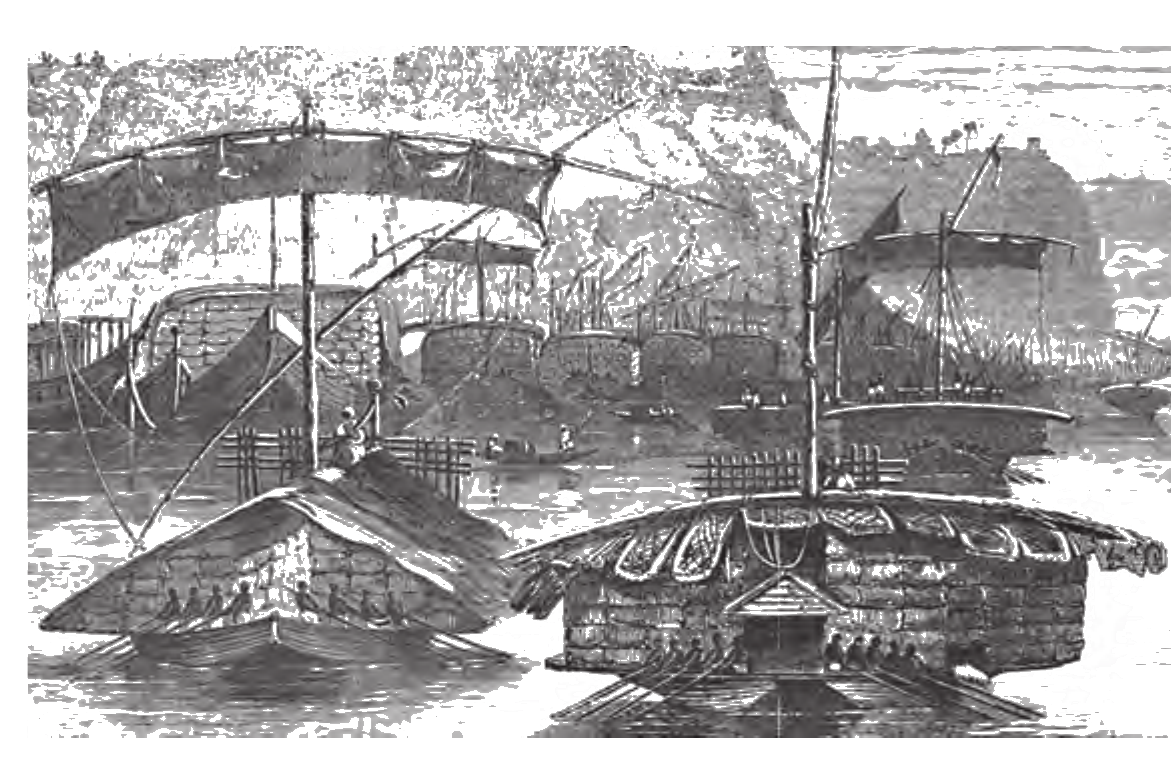
Before the railway age, the town of Mirzapur was a collection centre for cotton from the Deccan.

Note: A same/similar question was asked in CUET (UG) in the papers below.

20262025202420232022
–––24-05 S2*
05-06 S2*
09-06 S3
–

* A similar question.


NCERT: Themes in Indian History Part III — Chapter 9: Colonialism and the Countryside (2026-27)

NCERT extract

Fig. 9.18 A fleet of boats carrying cotton bales down the Ganges from Mirzapur, Illustrated London News, 13 December 1862. Before the railway age, the town of Mirzapur was a collection centre for cotton from the Deccan.

Advertisement

Practise more on Modern India: Colonialism and the Countryside

Chapter-wise mocks on the real NTA exam screen, with solutions and your rank. Your first mocks are free.

Start free mocks →

Advertisement

Next questions

  1. Which of the following periods is generally given for the Mature Harappan civilisation?General Aptitude Test · General Knowledge
  2. The total cost (in Rs.) of producing x units of an item is C(x) = 2x^2 + 50x + 800 . The least possible average cost per unit isApplied Maths. Section A · Applications of Derivatives
  3. Three different positions of the same dice are shown. Find the number on the face opposite the face showing '2'.General Aptitude Test · Verbal Reasoning
  4. What role did the Communists and the Hyderabad Congress play in the movement against Nizam's rule?Political Science · Politics in India Since Independence: Challenges of nation Building
  5. Gulab Kaur migrated to the Philippines in search of _____.English · Comprehension - (Narrative / Factual)
  6. Comparative Statements are also known as :Accountancy Part B · Analysis of Financial Statements
  7. A machine was installed in a factory in 2020 and is still working in 2024. In which year(s) is it a part of the flow of new machines added…Economics · Macro Economics: National Income Accounting
  8. Consider the role of zamindars in the rural economy of Mughal India. Identify the odd one out.History · Medieval India: Peasants, Zamindars and the State
  9. P/E Ratio (Price Earning Ratio)Accountancy Part B · Accounting Ratios
  10. Which of the following is not a leap year?General Aptitude Test · Verbal Reasoning