
Given below are two statements:
Statement I: In bacteria, the RNA polymerase on its own is capable of catalysing the process of initiation of transcription.
Statement II: In bacteria, association with the termination-factor (ρ) alters the specificity of the RNA polymerase to terminate transcription.
In the light of the above statements, choose the most appropriate answer from the options given below:
Answer & explanation
Correct answer: option 4
The correct answer is Option (4) → Statement I is incorrect but Statement II is correct.
Bacteria have a single DNA-dependent RNA polymerase that makes all types of RNA. Transcription has three steps: initiation, elongation and termination. The enzyme by itself can catalyse only elongation; for the other two steps it joins for a short time with two factors, the initiation-factor sigma (σ) and the termination-factor rho (ρ).
Statement I: In bacteria, the RNA polymerase on its own is capable of catalysing the process of initiation of transcription. — False. On its own the RNA polymerase can catalyse only elongation. It needs the σ factor to initiate transcription.
Statement II: In bacteria, association with the termination-factor (ρ) alters the specificity of the RNA polymerase to terminate transcription. — True. The enzyme associates transiently with the ρ factor to terminate transcription, and this association alters its specificity. The figure below shows the σ factor with the enzyme at initiation and the ρ factor at termination.
So Statement I is incorrect and Statement II is correct.
NCERT Extract:
Types of RNA and the Process of Transcription – “… An intriguing question is that how is the RNA polymerases able to catalyse all the three steps, which are initiation, elongation and termination. The RNA polymerase is only capable of catalysing the process of elongation. It associates transiently with initiation-factor (σ) and termination-factor (ρ) to initiate and terminate the transcription, respectively. Association with these factors alter the specificity of the RNA polymerase to either initiate or terminate (Figure 5.10).”
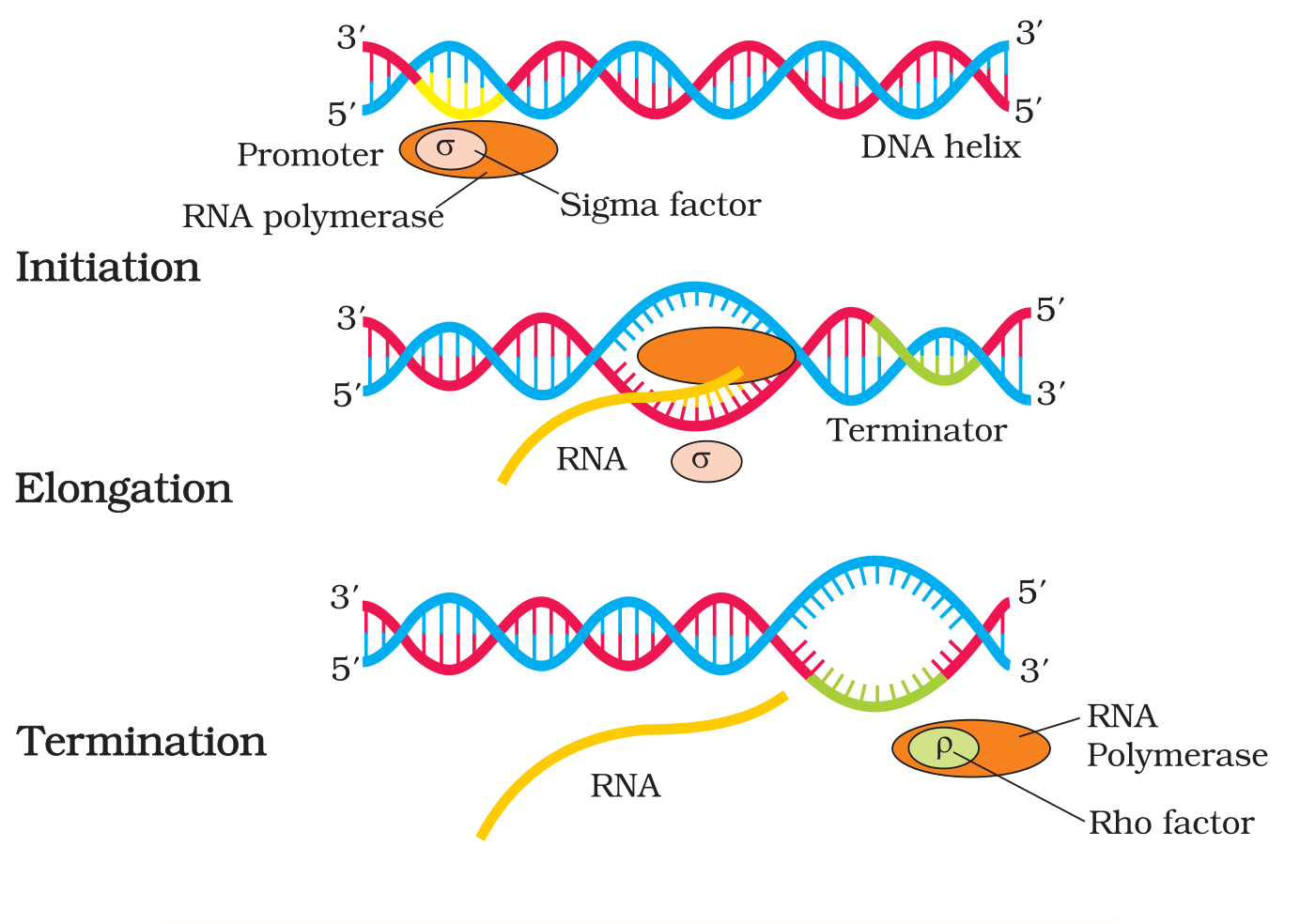
Figure 5.10 Process of Transcription in Bacteria