
Which one of the following structures ensures that only one sperm can fertilize an ovum?
Answer & explanation
Correct answer: option 3
The correct answer is Option (3) → Zona pellucida
The ovum is surrounded by a few layers of cells (the corona radiata) and, just outside its cell membrane, a clear jelly-like layer called the zona pellucida. When a sperm touches the zona pellucida, the membrane of the ovum changes and blocks the entry of any further sperms. This is how polyspermy (entry of more than one sperm) is prevented.
(1) Cells of the corona radiata — Incorrect. These follicle cells form the outer coat of the ovum. Sperms pass through them. They do not stop other sperms.
(2) Perivitelline membrane — Incorrect. This is not one of the layers that NCERT describes around the human ovum. The layers it names are the corona radiata and the zona pellucida.
(3) Zona pellucida — Correct. Contact of the sperm with this layer blocks the entry of additional sperms.
(4) Perivitelline space — Incorrect. It is the gap between the zona pellucida and the ovum’s own membrane. It is only a space, so it cannot block a sperm.
NCERT Extract:
Fertilisation and Implantation – …
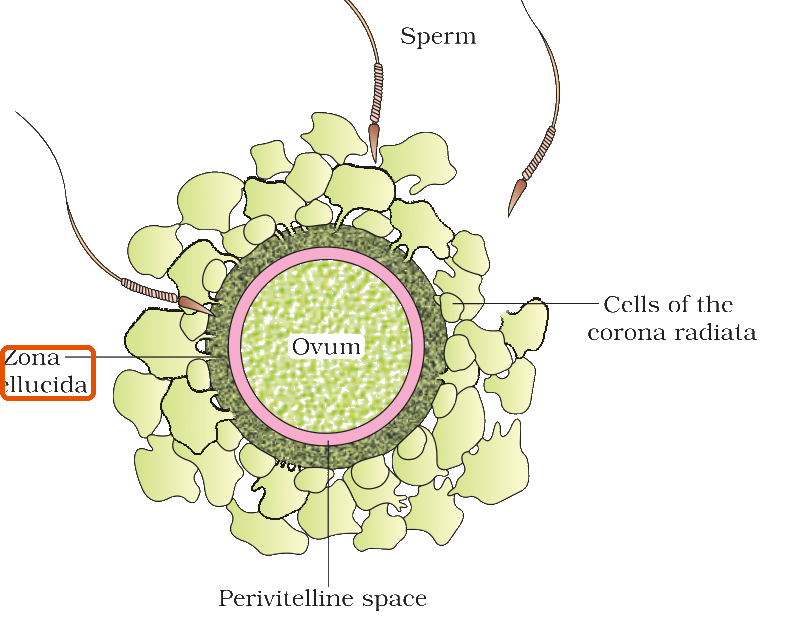
Figure 2.10 Ovum surrounded by few sperms