Match List-I with List-II
| List-I | List-II | ||
| (A) | Control Price | (I) | Set below the equilibrium price |
| (B) | Floor Price | (II) | Fixed by the government for the labourers |
| (C) | Minimum Wage Legislation | (III) | Set above the equilibrium price |
| (D) | Market Equilibrium | (IV) | when demand and supply curve intersect. |
Choose the correct answer from the options given below:
Answer & explanation
Correct answer: option 2
The correct answer is Option (2) → (A)-(I), (B)-(III), (C)-(II), (D)-(IV)
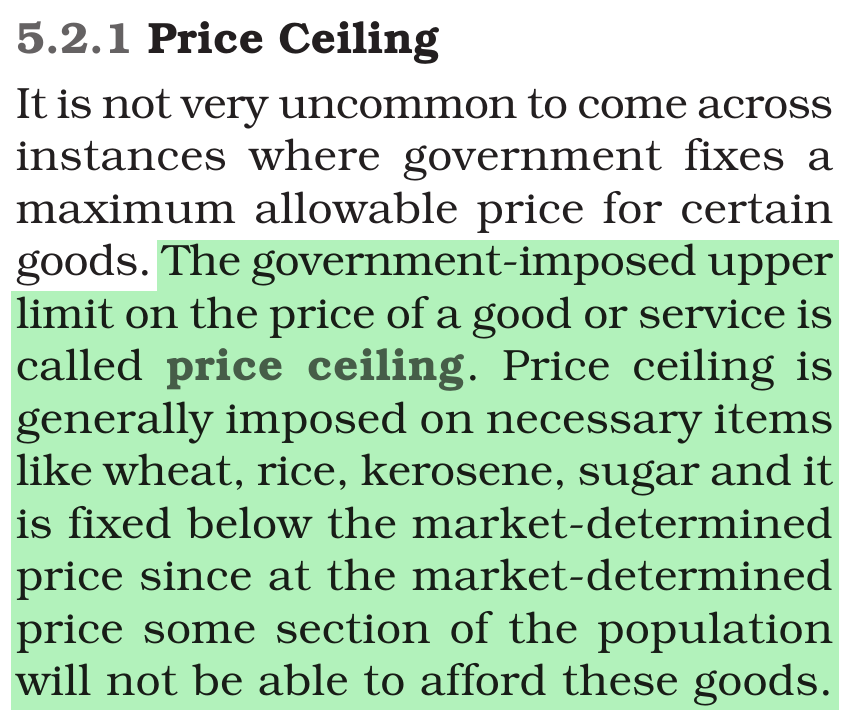
The market settles at the equilibrium price, but the government sometimes fixes a price away from it. ‘Control price’ is the paper’s term for a price ceiling.
| List-I | List-II | Reason |
|---|---|---|
| (A) Control Price | (I) Set below the equilibrium price | A price ceiling is an upper limit on price. It is fixed below the market-determined price on necessary items such as wheat, rice and sugar. |
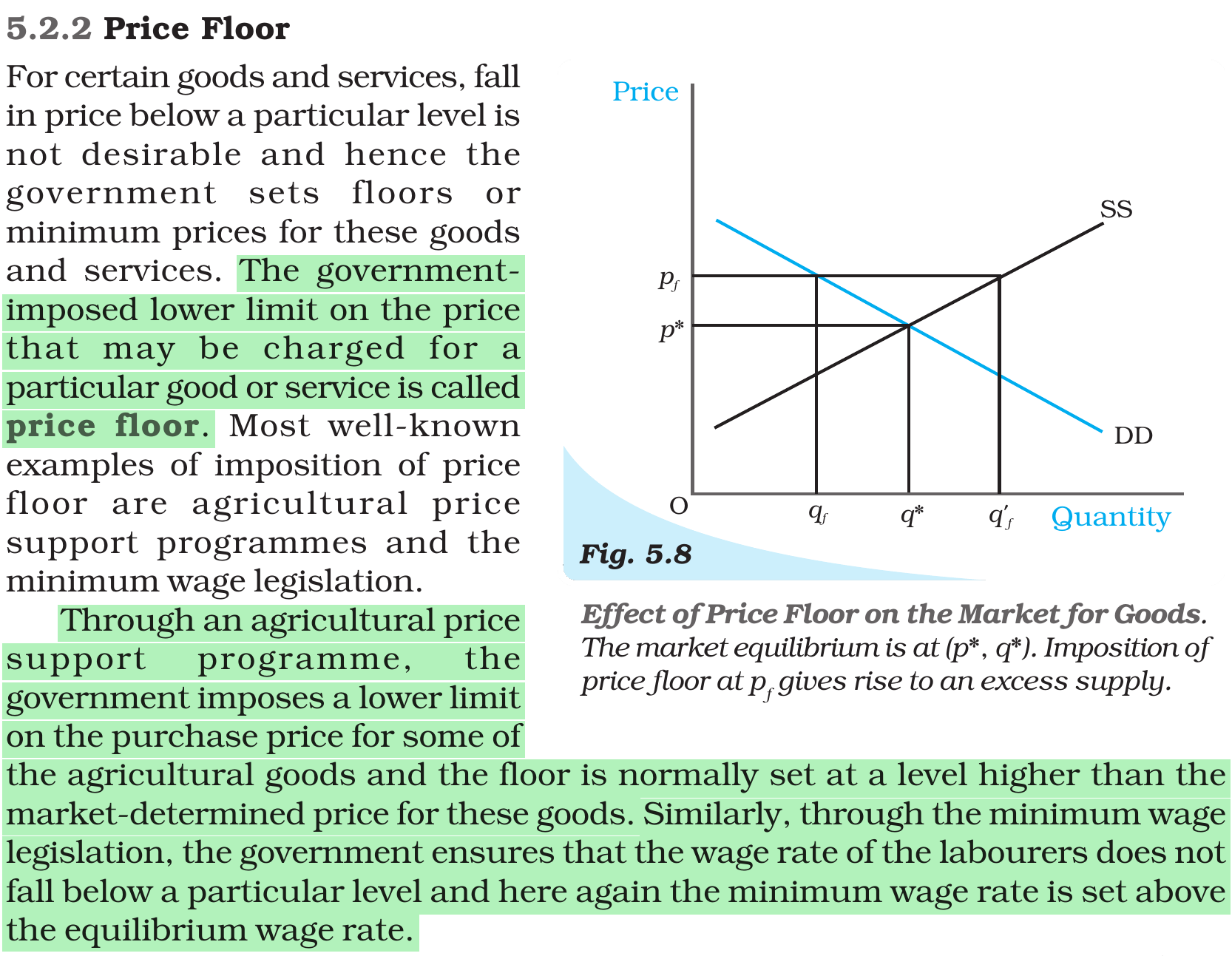
| (B) Floor Price | (III) Set above the equilibrium price | A price floor is a lower limit on price. It is normally set higher than the market-determined price. |
| (C) Minimum Wage Legislation | (II) Fixed by the government for the labourers | By this law, the government ensures that the wage rate of the labourers does not fall below a particular level. |
| (D) Market Equilibrium | (IV) when demand and supply curve intersect. | Where the two curves meet, quantity demanded equals quantity supplied. |
Note: One item of List-I fits two entries of List-II:
(C) Minimum Wage Legislation → both (II) and (III). The government fixes this wage for the labourers, and it is set above the equilibrium wage rate.
NCERT (2026-27): Introductory Microeconomics — Chapter 5: Market Equilibrium
|