
Assertion (A): In capping, an unusual nucleotide (methyl guanosine triphosphate) is added to the 5'-end of hnRNA.
Reason (R): In tailing, adenylate residues are added at the 3'-end of hnRNA in a template-independent manner.
Answer & explanation
Correct answer: option 2
The correct answer is Option (2) → Both (A) and (R) are true but (R) is not the correct explanation of (A).
In eukaryotes the hnRNA made by RNA polymerase II is processed at both of its ends before it leaves the nucleus. Capping works at the 5′-end and tailing at the 3′-end, as the figure below shows.
Assertion (A): In capping, an unusual nucleotide (methyl guanosine triphosphate) is added to the 5′-end of hnRNA. — True. This is how NCERT describes capping.
Reason (R): In tailing, adenylate residues are added at the 3′-end of hnRNA in a template-independent manner. — True. The poly A tail is added without a DNA template.
A is about what is added at the 5′-end of hnRNA. R is about a separate step that adds a poly A tail at the 3′-end.
Why R does not explain A? Both statements describe processing of the same hnRNA, so R looks related. But tailing happens at the opposite end and adds a different group. Adding adenylate residues at the 3′-end tells us nothing about why methyl guanosine triphosphate is added at the 5′-end. So both statements are correct, but R is not the explanation of A.
NCERT Extract:
Types of RNA and the Process of Transcription – “… hnRNA undergoes additional processing called as capping and tailing. In capping an unusual nucleotide (methyl guanosine triphosphate) is added to the 5′-end of hnRNA. In tailing, adenylate residues (200-300) are added at 3′-end in a template independent manner. It is the fully processed hnRNA, now called mRNA, that is transported out of the nucleus for translation (Figure 5.11).”
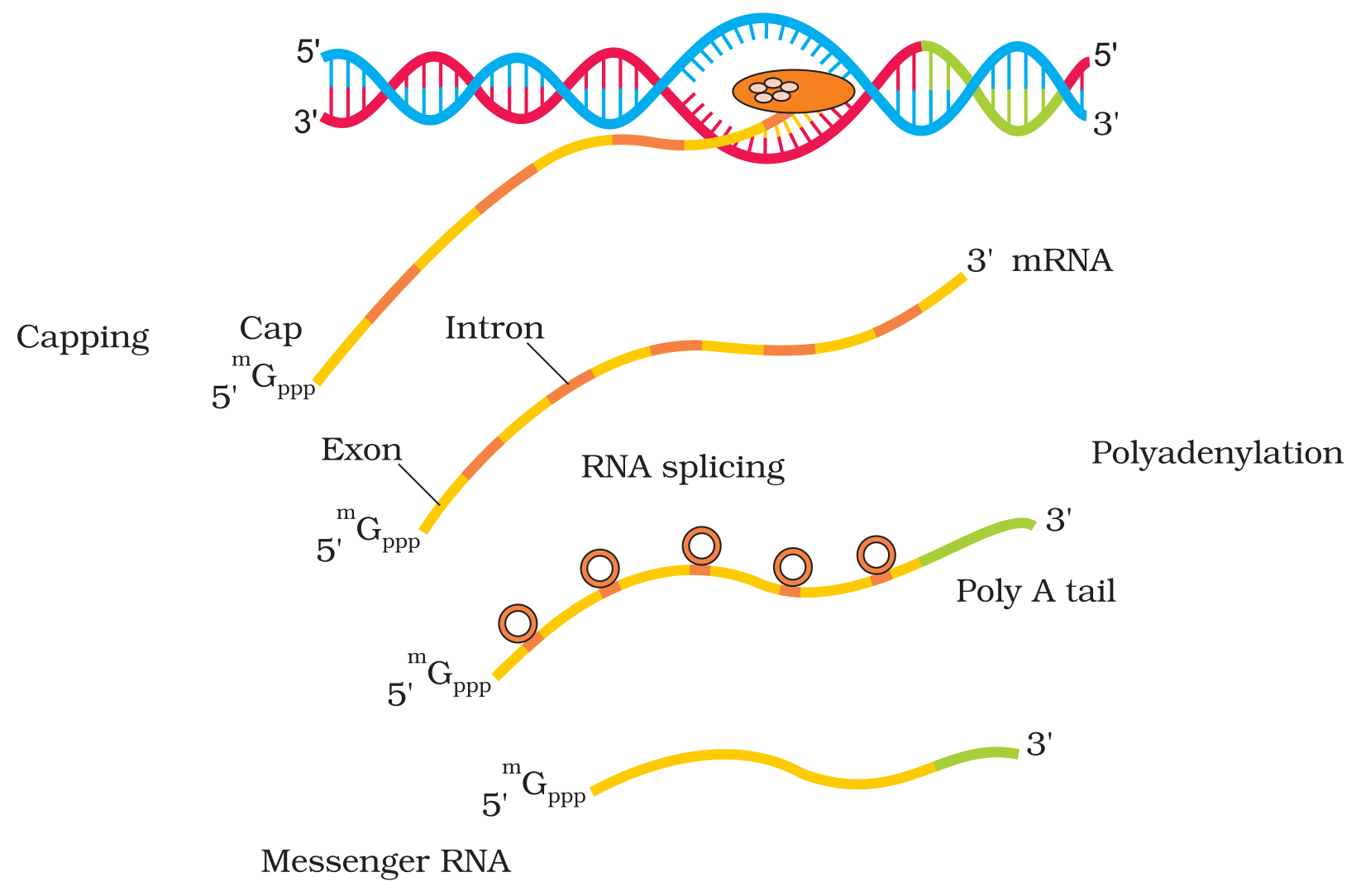
Figure 5.11 Process of Transcription in Eukaryotes