Consider the following statements about simultaneous shifts of the demand and supply curves, with a fixed number of firms:
(A) When both curves shift rightward, the equilibrium quantity rises.
(B) When both curves shift leftward, the equilibrium price falls.
(C) When the supply curve shifts leftward and the demand curve shifts rightward, the equilibrium quantity may rise, fall or remain unchanged.
(D) When the supply curve shifts rightward and the demand curve shifts leftward, the equilibrium quantity falls.
(E) When both curves shift in the same direction, the change in equilibrium price depends on the size of the shifts.
Choose the correct answer from the options given below:
Answer & explanation
Correct answer: option 2
The correct answer is Option (2) → (A), (C) and (E) only
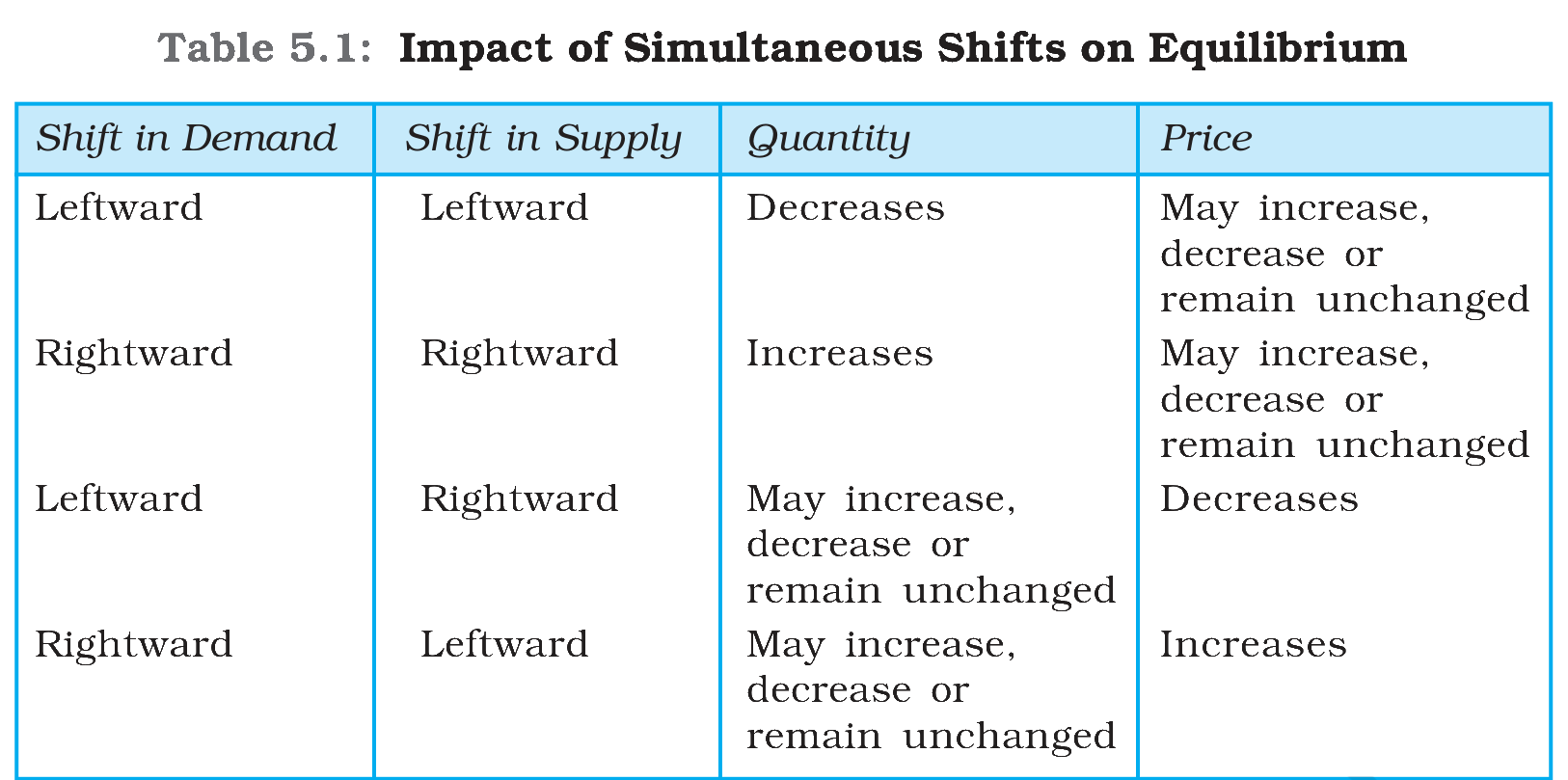
When both curves shift the same way, the change in quantity is sure and the price depends on the size of the shifts. When they shift opposite ways, the change in price is sure and the quantity depends on the size of the shifts.
(A) When both curves shift rightward, the equilibrium quantity rises. — Correct. More is demanded and more is supplied, so the quantity surely rises.
(B) When both curves shift leftward, the equilibrium price falls. — Incorrect. Less demand pulls the price down, but less supply pushes it up. The price may rise, fall or stay the same.
(C) When the supply curve shifts leftward and the demand curve shifts rightward, the equilibrium quantity may rise, fall or remain unchanged. — Correct. The demand shift raises the quantity and the supply shift lowers it, so the result depends on the size of the shifts.
(D) When the supply curve shifts rightward and the demand curve shifts leftward, the equilibrium quantity falls. — Incorrect. Here the price surely falls, but the quantity may rise, fall or stay the same.
(E) When both curves shift in the same direction, the change in equilibrium price depends on the size of the shifts. — Correct. In both same-direction cases, the price may move either way, depending on the size of the shifts.
NCERT (2026-27): “Simultaneous Shifts of Demand and Supply … In the first two cases which are shown in the first two rows of the table, the impact on equilibrium quantity is unambiguous but the equilibrium price may change, if at all, in either direction depending on the magnitudes of shifts. In the next two cases, shown in the last two rows of the table, the effect on price is unambiguous whereas effect on quantity depends on the magnitude of shifts in the two curves.”
|