


CUET Preparation Today
The rate of a first order reaction at a constant temperature |
Increases as the reaction proceeds Decreases as the reaction proceeds May increase or decrease as the reaction proceeds Remains constant as the reaction proceeds |
Decreases as the reaction proceeds |
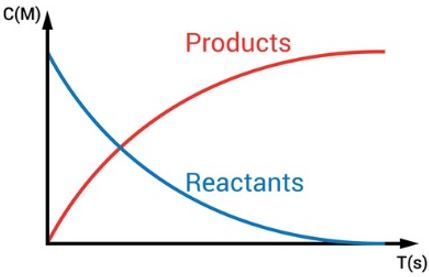
The correct answer is Option (2) → Decreases as the reaction proceeds The correct answer is: Decreases as the reaction proceeds. In a first-order reaction, the rate of the reaction is directly proportional to the concentration of the reactant. As the reaction progresses, the reactant is consumed, its concentration drops, and consequently, the rate slows down. Why the rate decreases To understand this, we can look at the rate law for a first-order reaction: $\text{Rate} = k[A]^1$ Where:
As the reaction goes on, $[A]$ gets smaller and smaller. Since the rate depends entirely on that value, the speed of the reaction must also drop. First-Order Reaction Rate Explained
Key Distinctions Rate vs. Rate Constant: While the rate decreases over time, the rate constant (k) remains exactly the same because the temperature is constant. Zero-Order Comparison: In a zero-order reaction, the rate would remain constant regardless of concentration. But for first-order, the "fuel" (concentration) dictates the speed. |