Match List-I with List-II:
| List-I | List-II | ||
|---|---|---|---|
| (A) | Nature of training | (I) | To enable the overall growth of the employee |
| (B) | Nature of development | (II) | A job oriented process |
| (C) | Aim of training | (III) | To enable the employee to do the job better |
| (D) | Aim of development | (IV) | A career oriented process |
Choose the correct answer from the options given below:
Answer & explanation
Correct answer: option 1
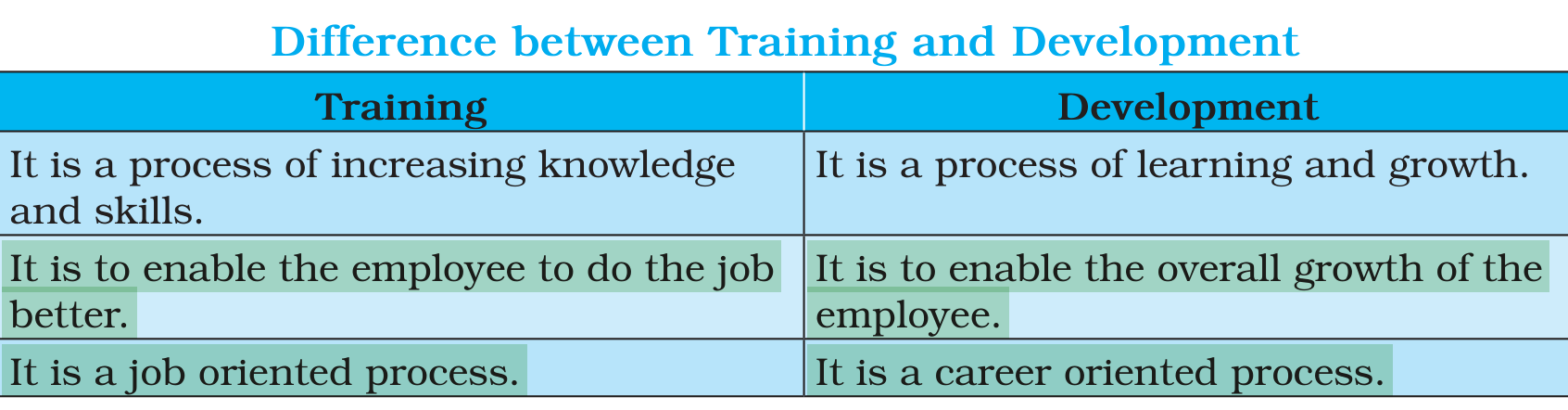
The correct answer is Option (1) → (A)-(II), (B)-(IV), (C)-(III), (D)-(I)
| List-I | List-II | Reason |
|---|---|---|
| (A) Nature of training | (II) A job oriented process | Training is tied to the job the employee does. It increases the knowledge and skills that job needs. |
| (B) Nature of development | (IV) A career oriented process | Development looks at the employee’s whole career. It is a process of learning and growth. |
| (C) Aim of training | (III) To enable the employee to do the job better | Since training serves the present job, its aim is better work on that job. |
| (D) Aim of development | (I) To enable the overall growth of the employee | Since development serves the career, its aim is the growth of the person in all respects. |
Note: All four answers sit in one small table of the chapter. A two-column table read once can be worth full marks.
NCERT (2026-27 Edition): “Training, Development and Education The term training is used to indicate the process by which attitudes, skills and abilities of employees to perform specific jobs are increased. But the term development means growth of individual in all respects. Training is short term process but development is an on going process. Also, development includes training. It also needs to be understood that training, education and development are distinct terms although they overlap to some extent. …”
|