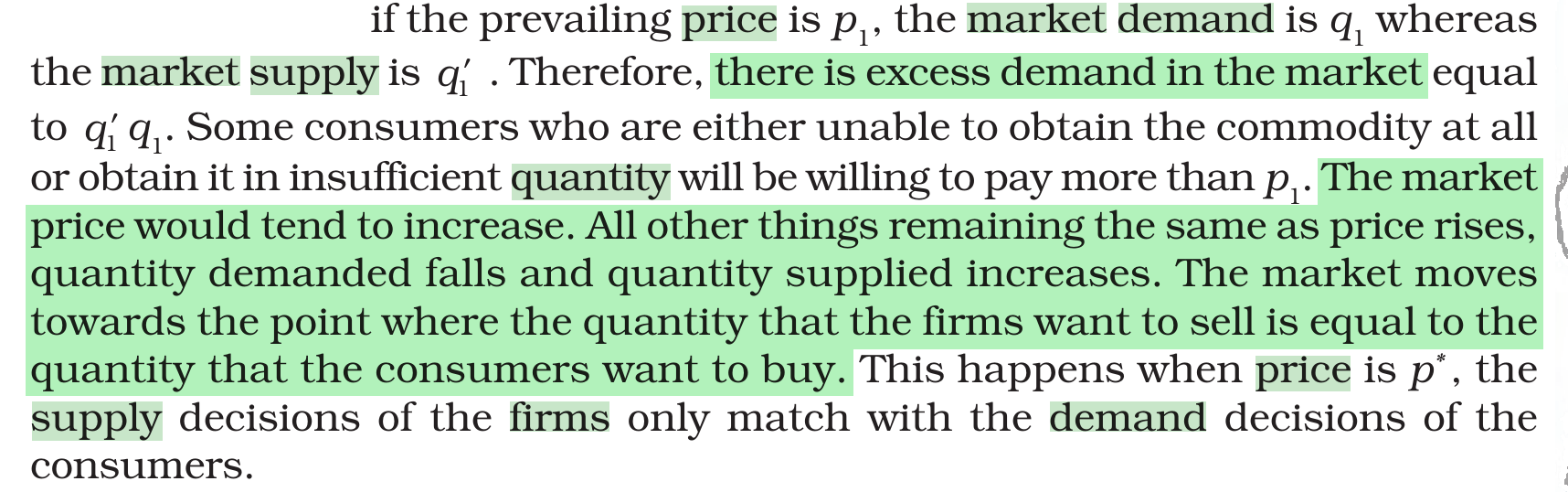
Arrange the following statements in correct sequence to determine the market equilibrium when the number of firms is fixed.
(A) There is excess demand in the market.
(B) Quantity demanded falls due to law of demand and quantity supplied increases due to law of supply (keeping other factors constant)
(C) The market price would tend to increase.
(D) The market moves towards the point where the quantity that the firms want to sell is equal to the quantity that the consumers want to buy.
Choose the correct answer from the options given below:
Answer & explanation
Correct answer: option 2
The correct answer is Option (2) → (A), (C), (B), (D)
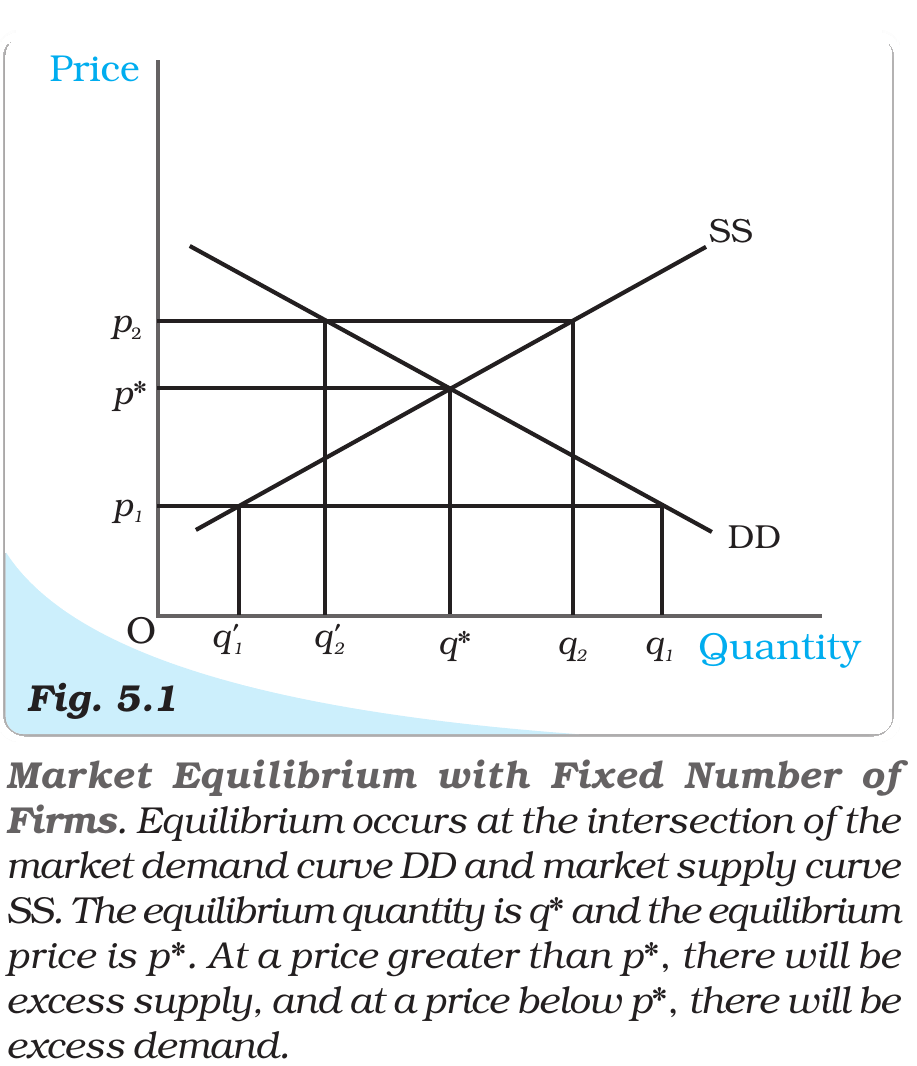
A market is in equilibrium when the quantity the consumers want to buy equals the quantity the firms want to sell, that is, when market demand equals market supply; the price at which this happens is the equilibrium price. With the number of firms fixed, any other price cannot last:
Price below the equilibrium: buyers want more than firms offer, so there is excess demand, and buyers who go without push the price up.
Price above the equilibrium: firms offer more than buyers want, so there is excess supply, and firms that cannot sell bring the price down.
In either case the change in price works through the law of demand and the law of supply until the gap closes. The four statements follow the first case, step by step.
(A) There is excess demand in the market. — the starting point. At a price below the equilibrium, market demand exceeds market supply.
(C) The market price would tend to increase. — some consumers cannot get the good at all, or get too little of it, and are willing to pay more, so the price begins to rise.
(B) Quantity demanded falls due to law of demand and quantity supplied increases due to law of supply (keeping other factors constant) — as the price rises, buyers want less and firms offer more, so the excess demand shrinks.
(D) The market moves towards the point where the quantity that the firms want to sell is equal to the quantity that the consumers want to buy. — the end point: the excess demand has disappeared, the plans of the firms and the consumers match, and the price stops changing.
NCERT: Introductory Microeconomics — Chapter 5: Market Equilibrium (2025-26)
|