Read the passage and answer the questions:
Constitution: The Power of the State
The rights of the states were mostly eloquently defended by K. Santhanam. A reallocation of powers were necessary, he felt, to strengthen not only the states but also the Centre. “There is almost an obsession that by adding all kinds of powers to the Centre we can make it strong.” This was a misconception, said Santhanam. If the Centre was overburdened with responsibilities, it could not function effectively. By relieving it of some its functions, and transferring them to the states, the Centre could, in fact, be made stronger. As for the states, Santhanam felt that the proposed allocation of powers would cripple them. The fiscal provisions would impoverish the provinces since most taxes, except the land revenue, had been the preserve of the Centre. Without finances how could the states undertake any project of development? The argument for greater power to the provinces provoked a strong reaction in the Assembly. The need for a strong centre had been underlined on numerous occasions since the Constituent Assembly had begun its sessions. Ambedkar had declared that he wanted “a strong and united Centre much stronger than the Centre we had created under the Government of India Act of 1935”. Reminding the members of the riots and violence that was ripping the nation apart, many members had repeatedly stated that the powers of the Centre had to be greatly strengthened to enable it to stop the communal frenzy. Reacting to the demands for giving power to the provinces, Gopalaswami Ayyangar declared that “the Centre should be made as strong as possible”.
Identify the correct statements from below:
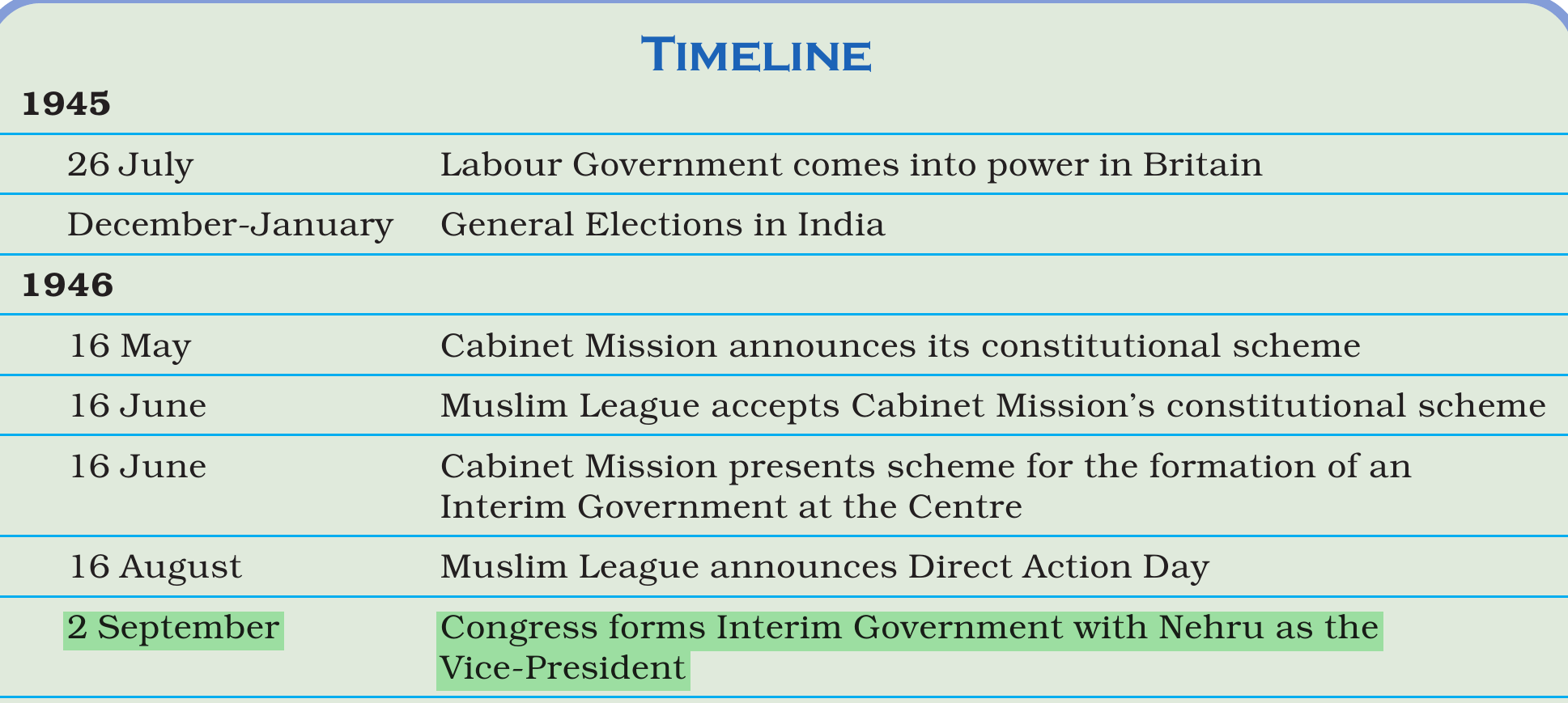
A. Congress forms Interim Government with Mahatma Gandhi as the Vice-President.
B. Before Partition, the Congress had agreed to grant considerable autonomy to the provinces.
C. The Constitution also mandated for a complex system of fiscal federalism.
D. The Draft Constitution provided for three lists of subjects: Union, State and Concurrent.
Choose the correct answer from the options given below:
Answer & explanation
Correct answer: option 4
The correct answer is Option (4) → B, C and D only
A. Congress forms Interim Government with Mahatma Gandhi as the Vice-President. Incorrect. On 2 September 1946 the Congress formed the Interim Government with Jawaharlal Nehru as the Vice-President. Mahatma Gandhi held no office in it.
B. Before Partition, the Congress had agreed to grant considerable autonomy to the provinces. Correct. Before Partition the Congress had agreed to considerable autonomy for the provinces, to assure the Muslim League that it would not be interfered with in the provinces where it came to power. After Partition this reason was gone, and most members wanted a strong Centre.
C. The Constitution also mandated for a complex system of fiscal federalism. Correct. Fiscal federalism means dividing the taxes between the Centre and the states. Some taxes (customs duties, Company taxes) went wholly to the Centre, some (income tax, excise duties) were shared with the states, and some (estate duties) were assigned wholly to the states.
D. The Draft Constitution provided for three lists of subjects: Union, State and Concurrent. Correct. Subjects in the Union list were for the Central Government, those in the State list for the states, and on the Concurrent list the Centre and the states shared responsibility.
Note: This passage is taken from the NCERT chapter ‘Framing the Constitution’, almost word for word. The debates of the Constituent Assembly are a favourite source of passages, so read who said what and from which province.
NCERT (2025-26): “4. The Powers of the State … The Draft Constitution provided for three lists of subjects: Union, State, and Concurrent. The subjects in the first list were to be the preserve of the Central Government, while those in the second list were vested with the states. As for the third list, here Centre and state shared responsibility.… 4. The Powers of the State … The Constitution also mandated for a complex system of fiscal federalism. In the case of some taxes (for instance, customs duties and Company taxes) the Centre retained all the proceeds; in other cases (such as income tax and excise duties) it shared them with the states; in still other cases (for instance, estate duties) it assigned them wholly to the states.… 4.2 ‘What we want today is a strong Government’ … Before Partition the Congress had agreed to grant considerable autonomy to the provinces.…”
|