
Which one of the following is not associated with the process of transcription in bacteria?
Answer & explanation
Correct answer: option 2
The correct answer is Option (2) → Methyl guanosine triphosphate
In bacteria a single DNA-dependent RNA polymerase makes all types of RNA. It carries out elongation by itself and takes help from two factors to start and to stop. The mRNA of bacteria needs no further processing.
Option (1) Rho factor — Associated with bacterial transcription. The termination factor (ρ) makes the RNA polymerase stop at the end of the gene.
Option (2) Methyl guanosine triphosphate — Not associated with bacterial transcription. It is added to the 5′ end of the hnRNA as a cap during processing in eukaryotes. Bacteria do not cap their mRNA.
Option (3) Sigma factor — Associated with bacterial transcription. The initiation factor (σ) lets the polymerase recognise the promoter and start.
Option (4) DNA dependent RNA polymerase — Associated with bacterial transcription. It is the enzyme that makes the RNA on the DNA template.
NCERT Extract:
Types of RNA and the Process of Transcription – “… An intriguing question is that how is the RNA polymerases able to catalyse all the three steps, which are initiation, elongation and termination. The RNA polymerase is only capable of catalysing the process of elongation. It associates transiently with initiation-factor (σ) and termination-factor (ρ) to initiate and terminate the transcription, respectively. Association with these factors alter the specificity of the RNA polymerase to either initiate or terminate (Figure 5.10). In bacteria, since the mRNA does not require any processing to become active, and also since transcription and translation take place in the same compartment (there is no separation of cytosol and nucleus in bacteria), many times the translation can begin much before the mRNA is fully transcribed. … hnRNA undergoes additional processing called as capping and tailing. In capping an unusual nucleotide (methyl guanosine triphosphate) is added to the 5′-end of hnRNA.”
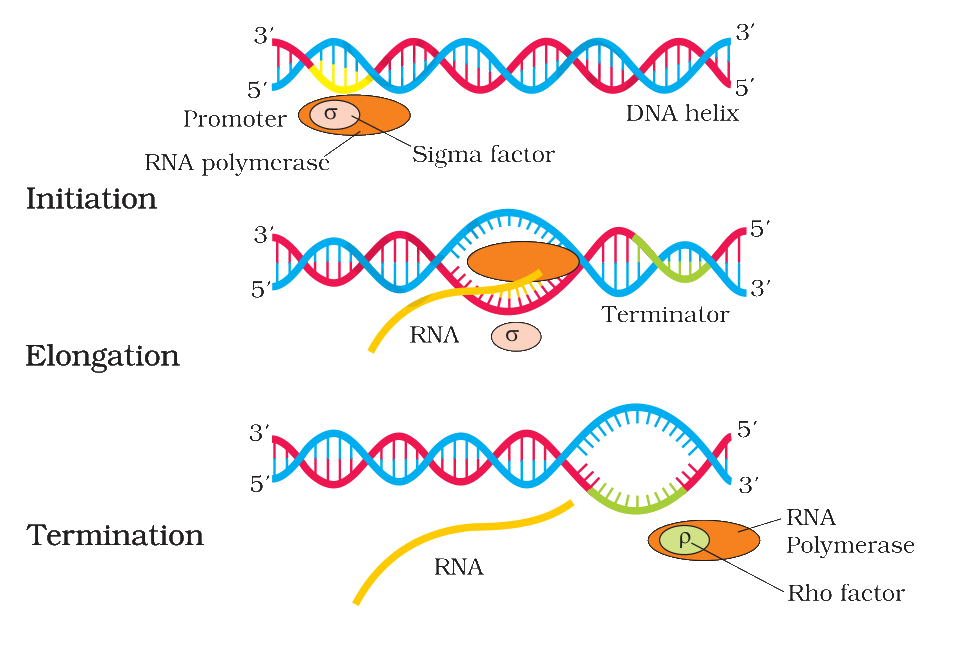
Figure 5.10 Process of Transcription in Bacteria