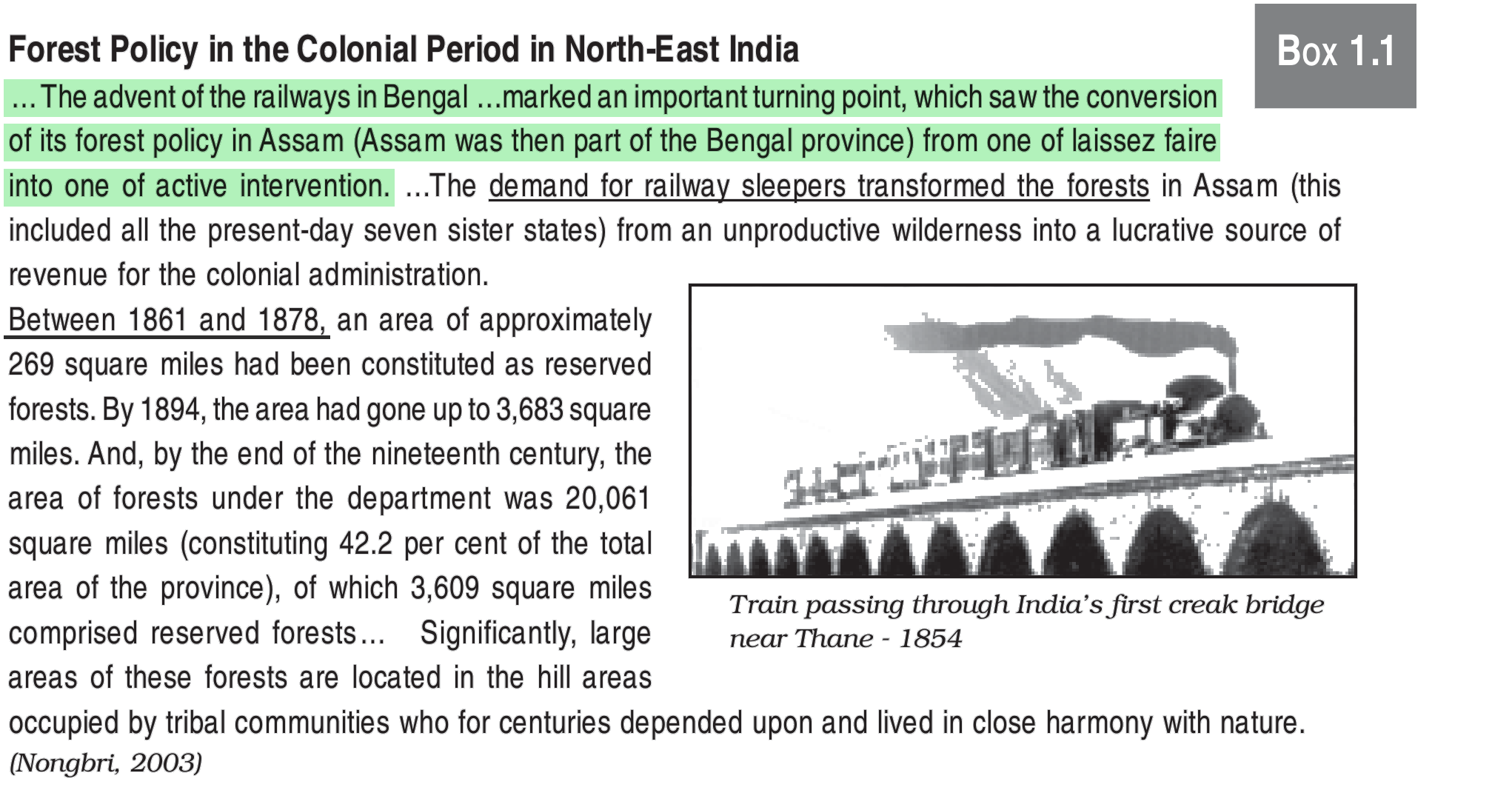
Identify the important turning point that led to the conversion of the forest policy in Assam.
Answer & explanation
Correct answer: option 1
The correct answer is Option (1) → The advent of the railway in Bengal
Option (1) The advent of the railway in Bengal — Correct. The advent of the railways in Bengal marked the turning point that changed forest policy in Assam (then part of the Bengal province) from laissez faire to active intervention. The demand for railway sleepers turned the forests of Assam into a lucrative source of revenue, and large areas were made reserved forests.
Note: Box 1.1 on forest policy in the colonial period in North-East India, in the chapter ‘Structural Change’, was there in the pre-rationalised NCERT, which NTA followed in 2023. This box has been deleted from the NCERT book (2025-26), though the chapter is still there and still says that colonialism entered the forests and brought in Forest Acts.
NCERT (2025-26): “1.1 Understanding Colonialism … For instance it changed the very laws of the land. It changed not just land ownership laws but decided even what crops ought to be grown and what ought not to be. It meddled with the manufacturing sector. It altered the way production and distribution of goods took place. It entered into the forests. It cleared trees and started tea plantations. It brought in Forest Acts that changed the lives of pastoralists. They were prevented from entering many forests that had earlier provided valuable forage for their cattle.”
Box 1.1, Forest Policy in the Colonial Period in North-East India (Pre-rationalised NCERT) |