
Which is the structure that represents the junction between ovule and funicle?
Answer & explanation
Correct answer: option 4
The correct answer is Option (4) → Hilum
An ovule is attached to the placenta by a stalk called the funicle. The point where the body of the ovule joins the funicle is the hilum, so the hilum marks the junction between the ovule and its stalk. The other parts of the ovule are named by position: the micropyle is the small opening left at the tip where the integuments do not meet, and the chalaza is the basal part of the ovule, opposite the micropylar end. The funicle itself is the stalk, so it cannot be the junction between the stalk and the ovule.
NCERT Extract:
The Pistil, Megasporangium (Ovule) and Embryo Sac – “… The Megasporangium (Ovule) : Let us familiarise ourselves with the structure of a typical angiosperm ovule (Figure 1.7d). The ovule is a small structure attached to the placenta by means of a stalk called funicle. The body of the ovule fuses with funicle in the region called hilum. Thus, hilum represents the junction between ovule and funicle. Each ovule has one or two protective envelopes called integuments. Integuments encircle the nucellus except at the tip where a small opening called the micropyle is organised. Opposite the micropylar end, is the chalaza, representing the basal part of the ovule.”
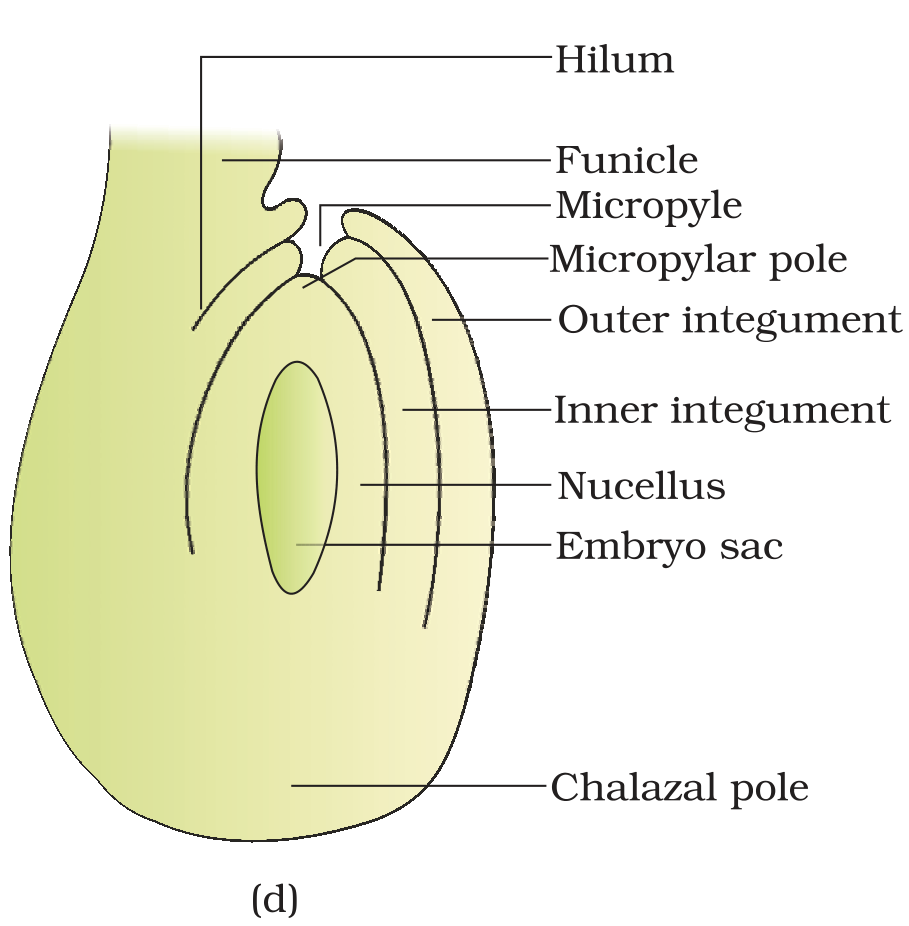
Figure 1.7 (d) A diagrammatic view of a typical anatropous ovule