Match List - I with List - II.
| List - I | List - II | ||
|---|---|---|---|
| (a) | Building undervalued | (i) | Credited to Partner’s Capital Account |
| (b) | Building overvalued | (ii) | Credited to Revaluation Account |
| (c) | Capital withdrawn | (iii) | Debited to Revaluation Account |
| (d) | Additional capital introduced | (iv) | Debited to Partner’s Capital Account |
Choose the correct answer from the options given below :
Answer & explanation
Correct answer: option 1
The correct answer is Option (1) → (a) - (ii), (b) - (iii), (c) - (iv), (d) - (i)
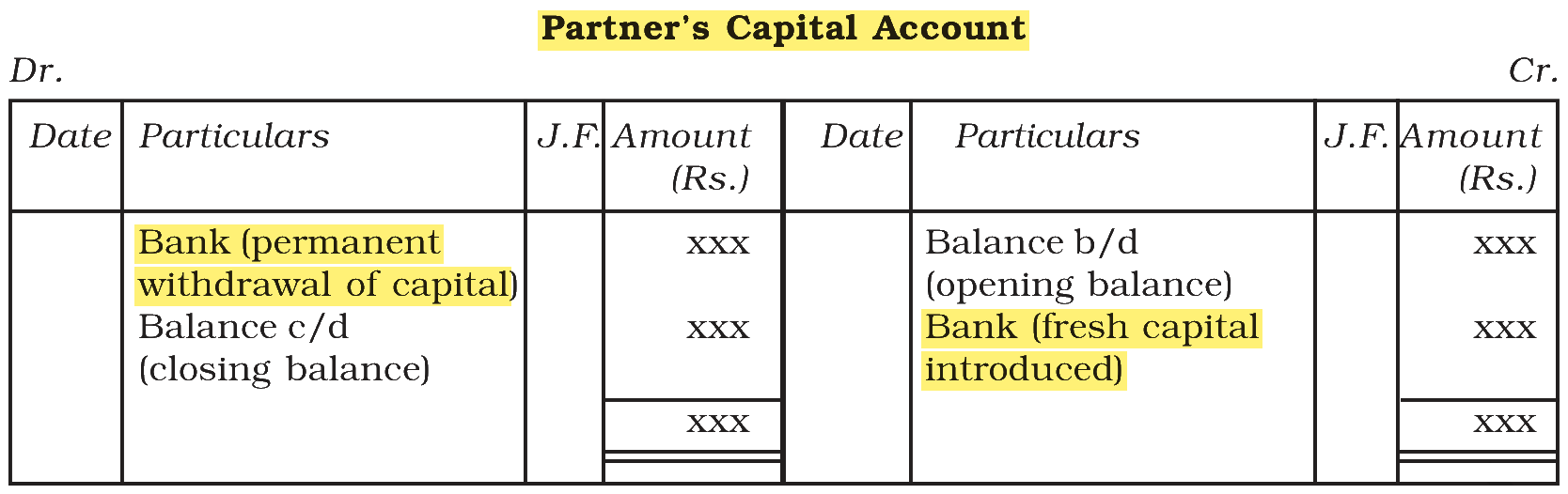
On revaluation, a gain is credited and a loss is debited to the Revaluation Account. Money a partner takes out of the firm reduces his capital, so it is debited to his capital account; money he brings in is credited.
| List-I | List-II | Reason |
|---|---|---|
| (a) Building undervalued | (ii) Credited to Revaluation Account | The building is raised to its real value. The increase in an asset is a gain, so it goes to the credit side. |
| (b) Building overvalued | (iii) Debited to Revaluation Account | The building is brought down to its real value. The decrease in an asset is a loss, so it goes to the debit side. |
| (c) Capital withdrawn | (iv) Debited to Partner’s Capital Account | Withdrawal reduces what the firm owes the partner, so his capital account is debited. |
| (d) Additional capital introduced | (i) Credited to Partner’s Capital Account | Fresh capital adds to what the firm owes the partner, so his capital account is credited. |
NCERT (2026-27 edition): Maintenance of Capital Accounts of Partners
|