Match List - I with List - II.
| List - I | List - II |
| (A) Monthly Per Capita Expenditure | (I) Relative poverty |
| (B) Comparison of poverty among nations | (II) Helps to identify the poor |
| (C) Measure of total number of poor people | (III) Poverty line |
| (D) Cut-off point which divides population as poor or non-poor | (IV) Head Count Ratio |
Choose the correct answer from the options given below :
Answer & explanation
Correct answer: option 3
The correct answer is Option (3) → (A)-(II), (B)-(I), (C)-(IV), (D)-(III)
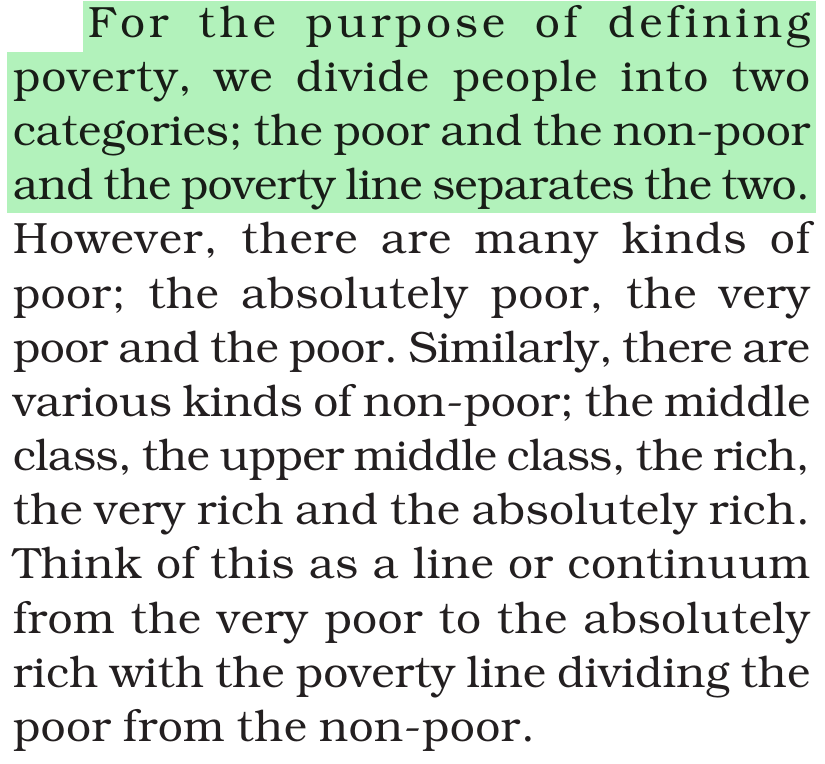
To measure poverty, we first fix a line that separates the poor from the non-poor. Then we count the people below it.
| List-I | List-II | Reason |
|---|---|---|
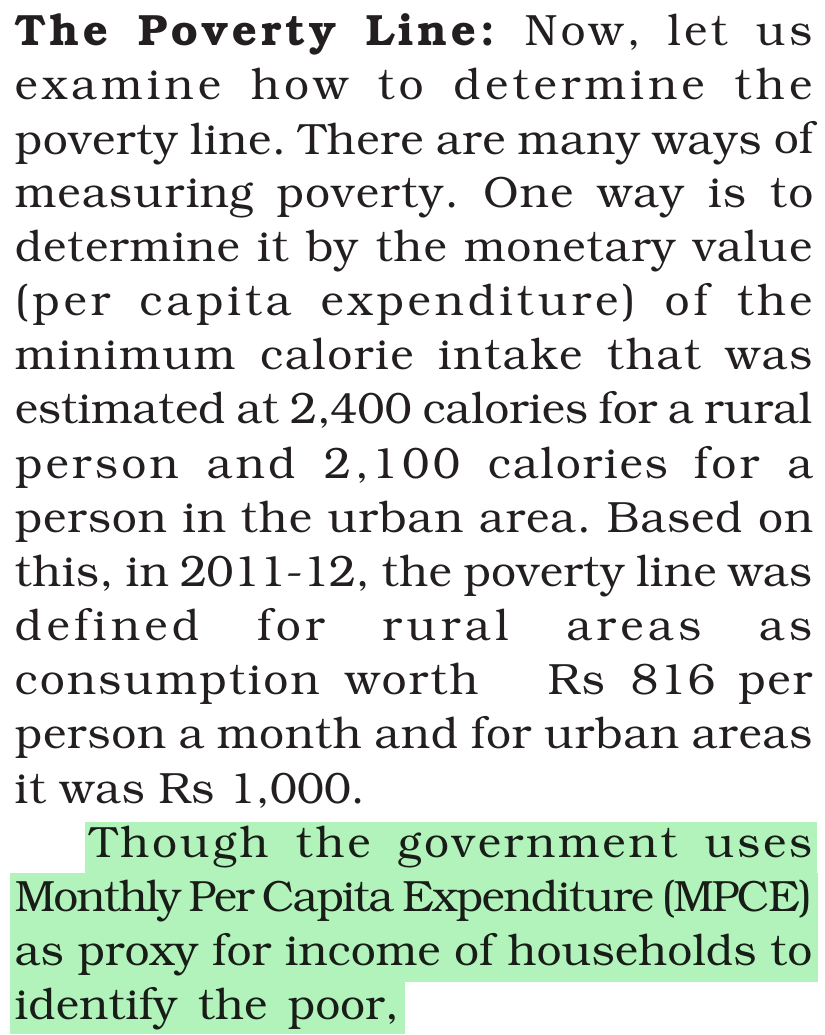
| (A) Monthly Per Capita Expenditure | (II) Helps to identify the poor | The government uses monthly per capita expenditure (MPCE) as a proxy for household income to identify the poor. |
| (B) Comparison of poverty among nations | (I) Relative poverty | Relative poverty compares how poor people are with others who are better off. Comparing poverty among nations is such a comparison. |
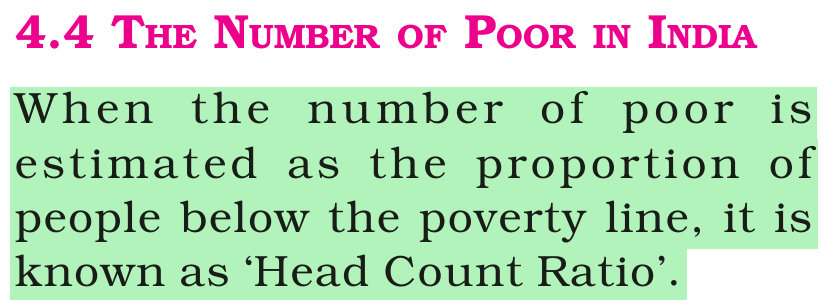
| (C) Measure of total number of poor people | (IV) Head Count Ratio | The number of poor, estimated as the proportion of people below the poverty line, is the Head Count Ratio. |
| (D) Cut-off point which divides population as poor or non-poor | (III) Poverty line | The poverty line is the level of consumption that separates the poor from the non-poor. |
Note: This question is taken from the chapter ‘Poverty’ which was there in the pre-rationalised NCERT and has been deleted from subsequent editions of NCERT, including the NCERT book (2026-27). The chapter was also not in the CUET (UG) 2026 syllabus.
NCERT (Pre-rationalised): Indian Economic Development — Chapter 4: Poverty
|