Match the categories with correct explanations :
| LIST-I (Categories) | LIST-II (Explanation) | ||
| (A) | Panchayati Raj System | (I) | Interest groups, dominant groups |
| (B) | Political Party | (II) | Village courts, address violence-against women |
| (C) | FICCI, ASSOCHAM | (III) | Gram-Sabha, Local self-governance |
| (D) | Nyaya Panchayat | (IV) | Governmental power, formal groups |
Choose the correct answer from the options given below:
Answer & explanation
Correct answer: option 3
The correct answer is Option (3) → (A)-(III), (B)-(IV), (C)-(I), (D)-(II)
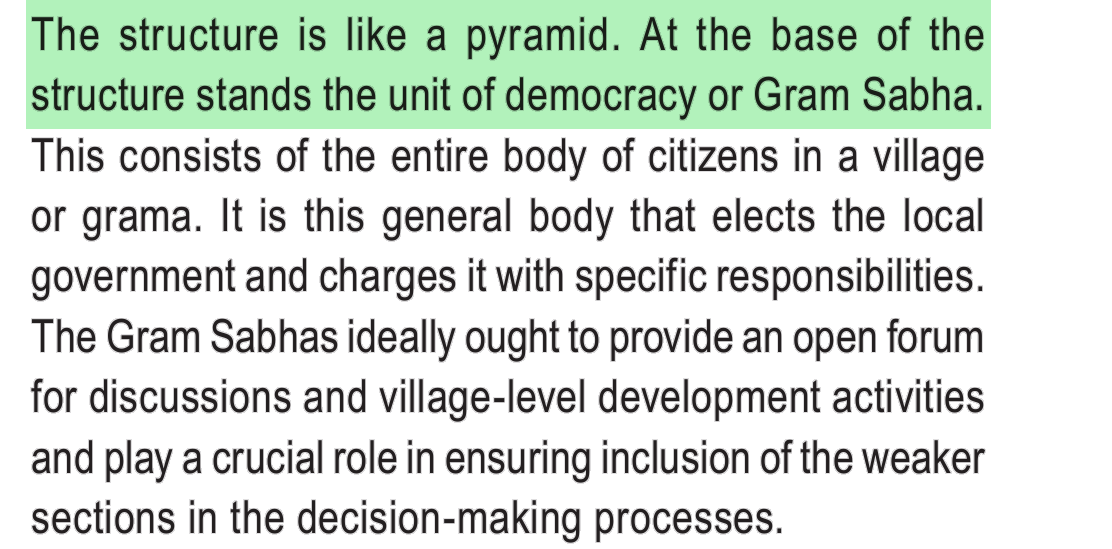
(A) Panchayati Raj System — this matches (III) Gram-Sabha, Local self-governance. Panchayati Raj is the system of local self-governance at the village level, in which the Gram Sabha, the village assembly, makes decisions on development activities and funds.
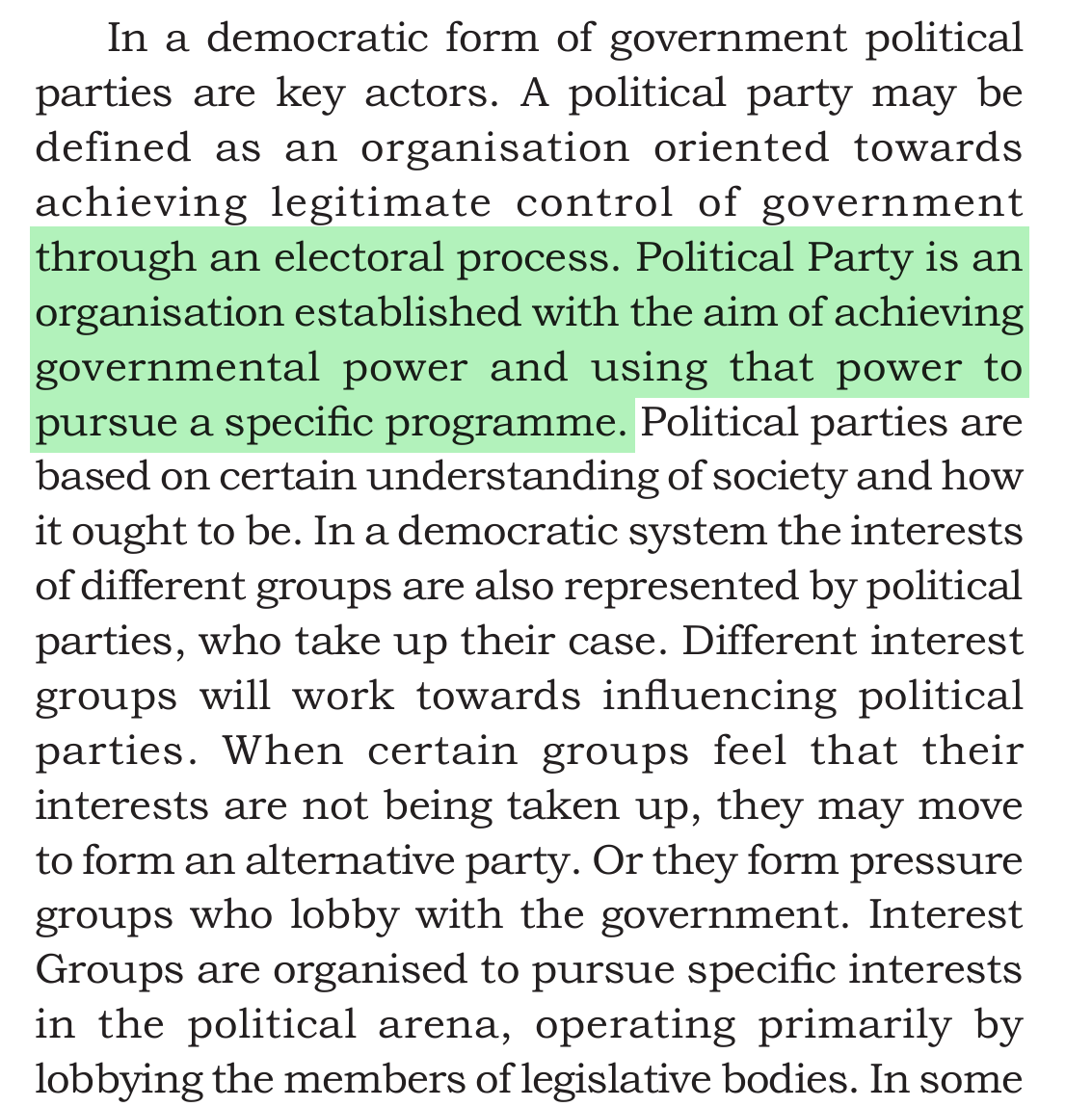
(B) Political Party — this matches (IV) Governmental power, formal groups. A political party is an organisation established with the aim of achieving governmental power and using that power to pursue a specific programme, through an electoral process.
(C) FICCI, ASSOCHAM — this matches (I) Interest groups, dominant groups. Industrialists form associations such as FICCI and ASSOCHAM to press their interests; such interest groups work towards influencing political parties and the government.
(D) Nyaya Panchayat — this matches (II) Village courts, address violence-against women. Nyaya Panchayats hear petty civil and criminal cases. These village courts have been particularly effective in punishing men who harass women for dowry and perpetrate violence against them.
Note: The chapter ‘The Story of Indian Democracy’ of the pre-rationalised NCERT, which NTA followed in 2023, has been renamed ‘The Constitution and Social Change’ in the NCERT book (2025-26). Its sections on Panchayati Raj, Nyaya Panchayats, and political parties and interest groups are still there.
NCERT: Social Change and Development in India — Chapter 3: The Constitution and Social Change (2025-26)
|