Based on the following diagram answer the question :
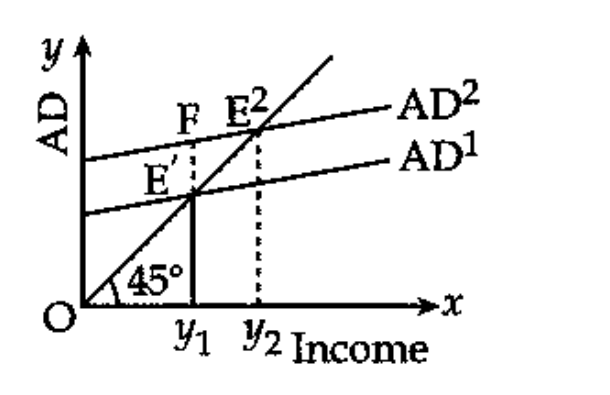
Identify the correct statement from the following statements :
Answer & explanation
Correct answer: option 2
The correct answer is Option (2) → MPS and investment multiplier are inversely related to each other
Note: The given answer is as per the official NTA Answer Key. However, more than one answer is possible: Option (2) and Option (3) are both correct, as explained below.
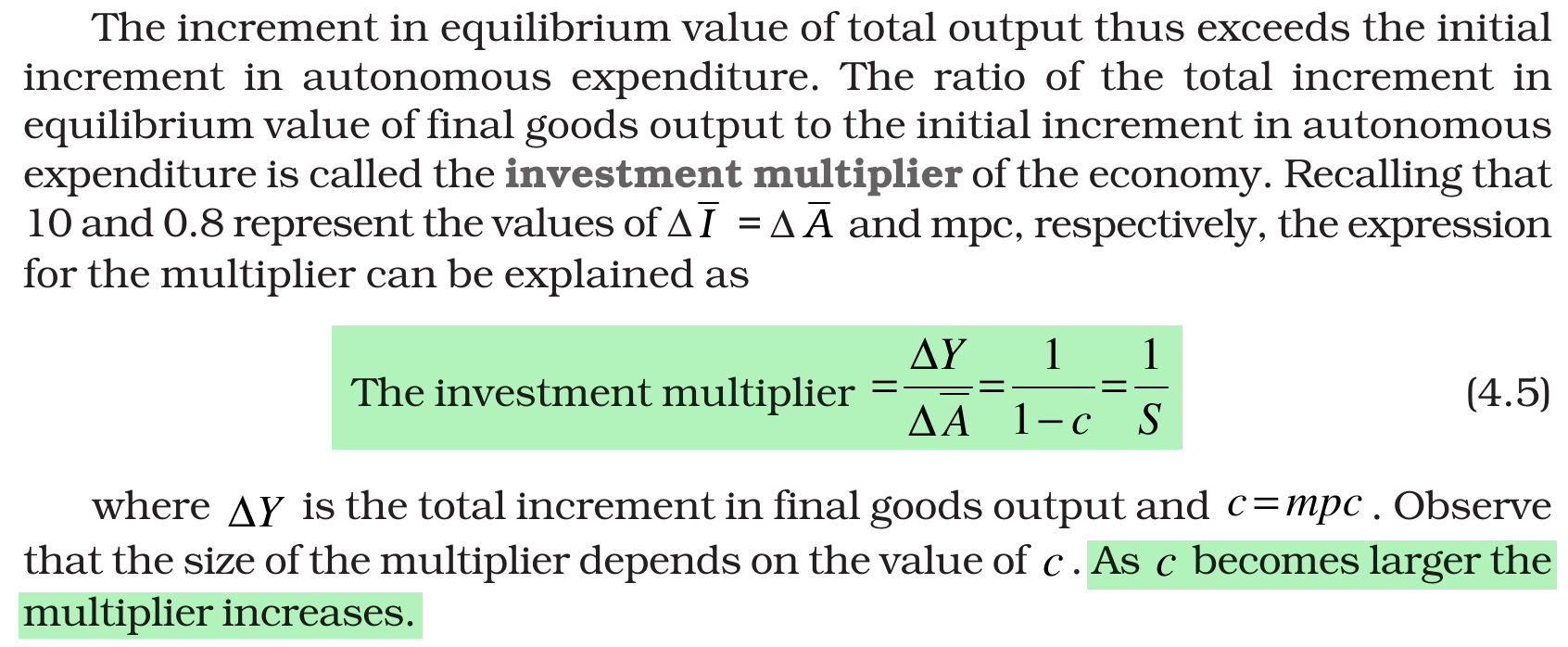
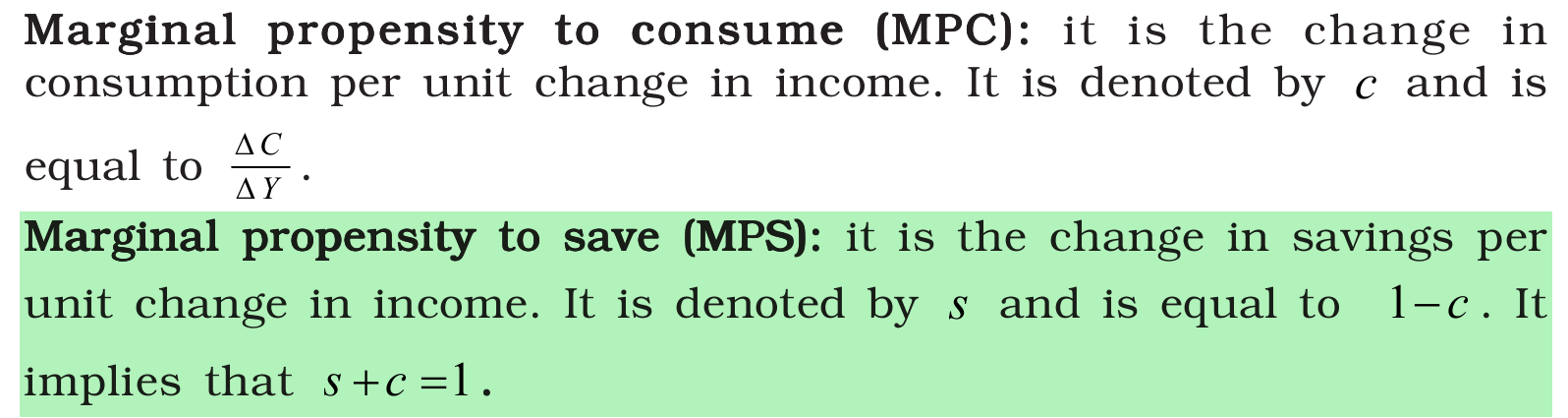
The investment multiplier is the total rise in income divided by the rise in investment that caused it. It depends on the marginal propensity to consume (MPC), the share of extra income that is spent. It also depends on the marginal propensity to save (MPS), the share that is saved. Since MPC + MPS = 1:
\( \displaystyle k=\frac{1}{1-MPC}=\frac{1}{MPS} \)
Option (1) MPS and investment multiplier are directly related to each other — Incorrect. MPS is in the denominator. A larger MPS gives a smaller multiplier.
Option (2) MPS and investment multiplier are inversely related to each other — Correct. When more of each extra rupee is saved, less is spent in each round, so income grows less. For example, MPS = 0.2 gives k = 5, but MPS = 0.5 gives k = 2.
Option (3) MPC and investment multiplier are directly related to each other — Should also be correct, though not the answer given by NTA. When more of each extra rupee is spent, each round of spending is bigger, so income grows more. MPC = 0.5 gives k = 2, but MPC = 0.8 gives k = 5.
Option (4) MPC and MPS both have no relation with investment multiplier — Incorrect. The formula itself is written in terms of MPC and MPS, so the multiplier depends on both.
Advice for the exam: When more than one option is correct, mark the one you are surest of as per economic principles and the NCERT book. Here both Option (2) and Option (3) follow from the same rule, k = 1/MPS = 1/(1 − MPC). If NTA’s provisional answer key marks a different option, challenge it during the answer-key challenge window, giving proper reasoning. NTA does revise its key when a challenge is well justified, so a sound challenge can raise your marks.
NCERT (2026-27): Introductory Macroeconomics — Chapter 4: Determination of Income and Employment
|