Reading Comprehension
Three friends, Rajat, Raman, and Ansh, after completing their studies from a reputed business school in Delhi, were discussing the organisation they should be joining. Rajat was very clear about his future. He would like to take a job in the government sector as it gives him stability in his future income and the kind of work which will help him to work with greater zeal. It will also provide him with many post retirement benefits when he retires from his service. Raman wants to work with a company which has an appropriate and clear development plan for its employees and helps the employees to grow to higher levels in the organisation. In addition to this, the company should also provide facilities like free housing, free medical aid etc. Ansh said that he would prefer to work with an organisation, which has a culture of individual autonomy that is considered by employees and provides employees with the opportunity for personal growth and meaningful work experience.
All of them have different set of expectations and needs of joining an organisation.
Which of the following non-financial incentive is not discussed in the above case?
Answer & explanation
Correct answer: option 3
The correct answer is Option (3) → Employee recognition programmes
Option (1) Job Security — Discussed in the case (Incorrect). Job security means stability of future income and work, so that the employee does not worry and works with greater zeal. Rajat wants a government job for “stability in his future income” and work that will help him “work with greater zeal”.
Option (2) Status — Discussed in the case (Incorrect). Status means the rank of a position in the organisation. The authority, rewards, perquisites and prestige of a job show its status. Raman wants to “grow to higher levels in the organisation”. He also wants perquisites such as free housing and free medical aid. A higher level and such perquisites are marks of higher status.
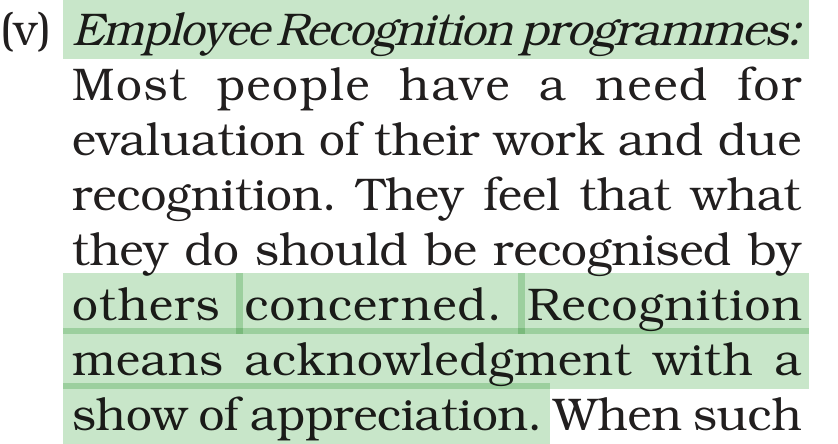
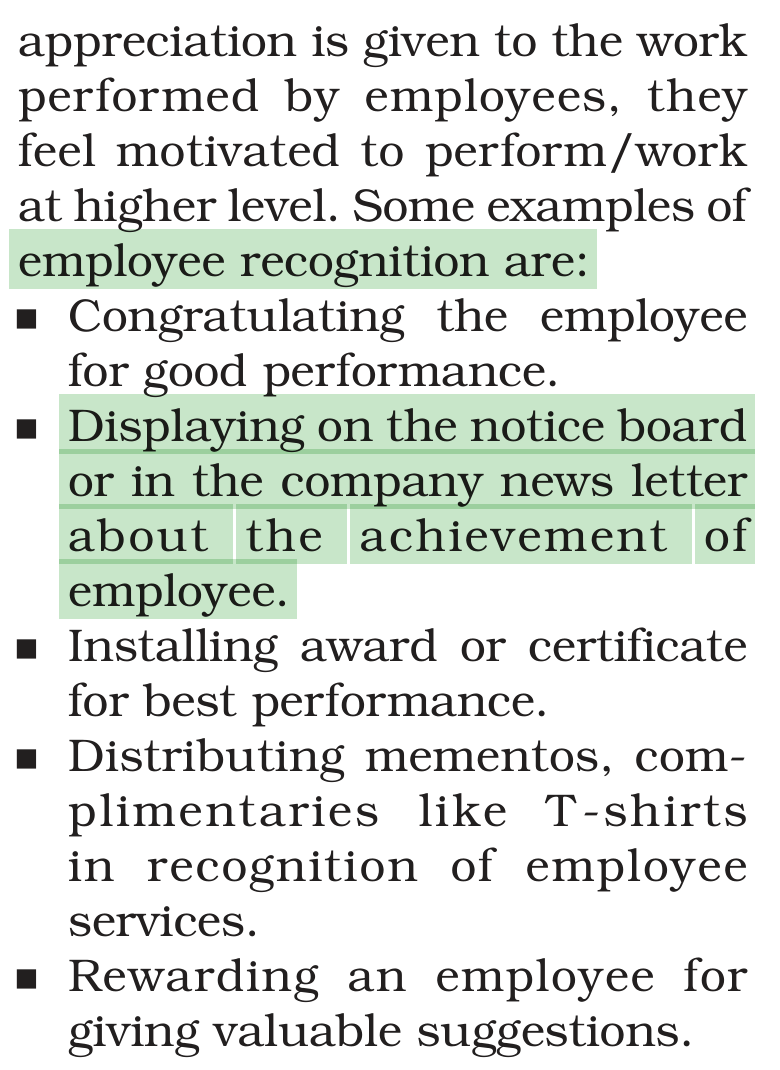
Option (3) Employee recognition programmes — Not discussed in the case (Correct). Recognition means acknowledging an employee’s work with a show of appreciation. Examples are congratulating the employee, displaying the achievement on the notice board, and giving an award or certificate. The case mentions none of these: Rajat talks of stability and retirement benefits, Raman of growth and perquisites, and Ansh of autonomy and meaningful work. None of the three friends speaks of praise or awards for work done.
Option (4) Organisational Climate — Discussed in the case (Incorrect). Organisational climate is the set of features that describe an organisation and set it apart from others, such as individual autonomy, reward orientation and consideration to employees. Ansh wants an organisation with “a culture of individual autonomy”, which is its climate.
NCERT (2026-27 Edition): “(vi) Job security: Employees want their job to be secure. They want certain stability about future income and work so that they do not feel worried on these aspects and work with greater zeal. …” “(ii) Organisational Climate: Organisational climate indicates the characteristics which describe an organisation and distinguish one organisation from the other. These characteristics influence the behaviour of individuals in the organisation. Some of these characteristics are–individual autonomy, reward orientation, consideration to employees, risk-tasking, etc., …”
|