Read the passage and answer the following question :
"There were several archaeological cultures in the region prior to the Mature Harappan. There cultures were associated with distinctive pottery, evidence of agriculture and pastoralism, and some crafts. It appears to be a break between the early Harrapan and the Harrapan civilisation, evident from large-scale burning at some sites, as well as abandonment of same settlements."
Arrange the following developments of 'Harappan Archaeology' in chronological order :
(A) S.R. Rao begins excavations at Lothal.
(B) R.S. Bisht begins excavations at Dholavira.
(C) B.B. Lal excavates at Kalibangan.
(D) R.E.M. Wheeler excavates at Harappa.
(E) M.S. Vats begins excavations at Harappa.
Choose the correct answer from the options given below:
Answer & explanation
Correct answer: option 2
The correct answer is Option (2) → (E), (D), (A), (C), (B)
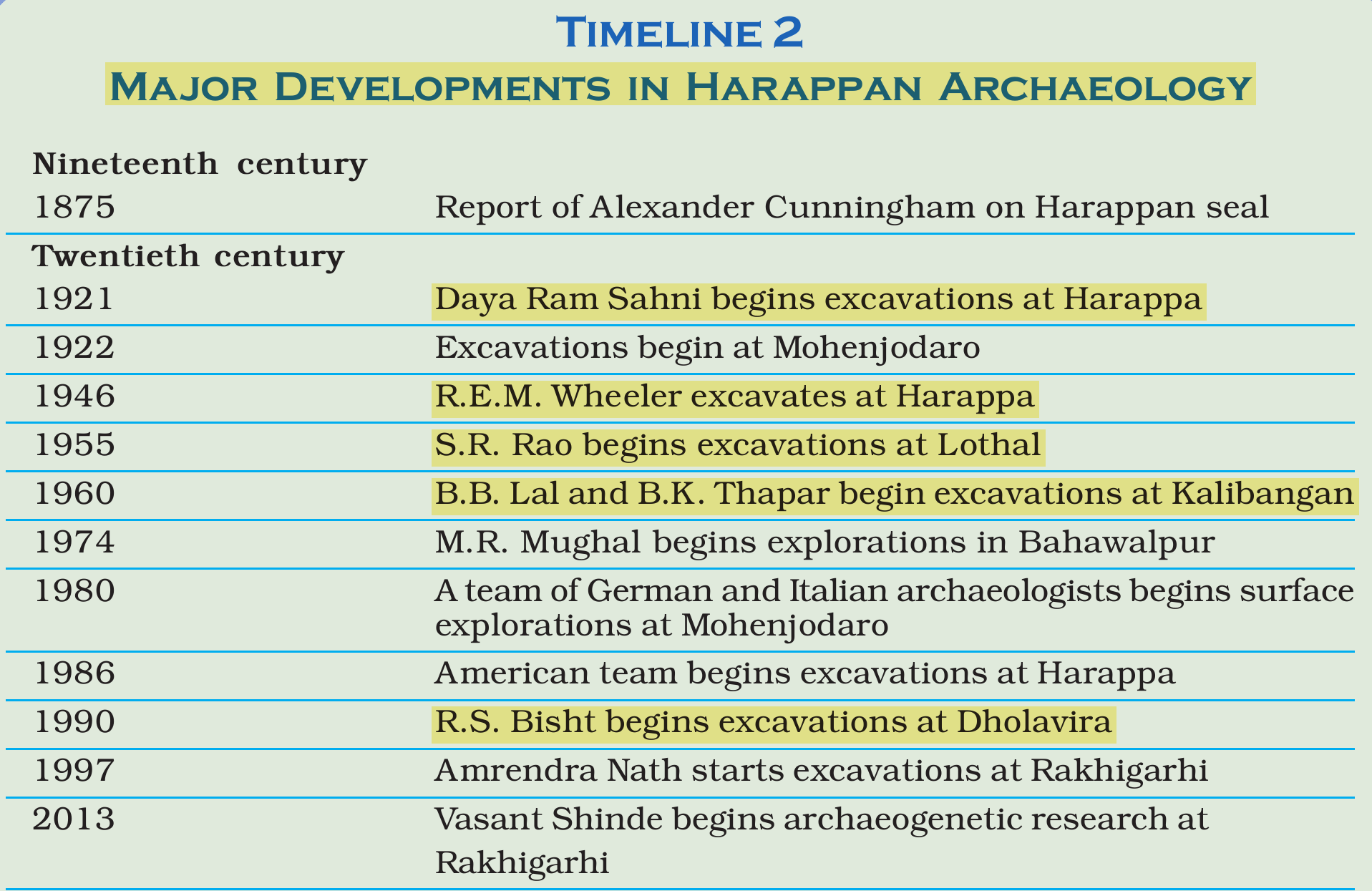
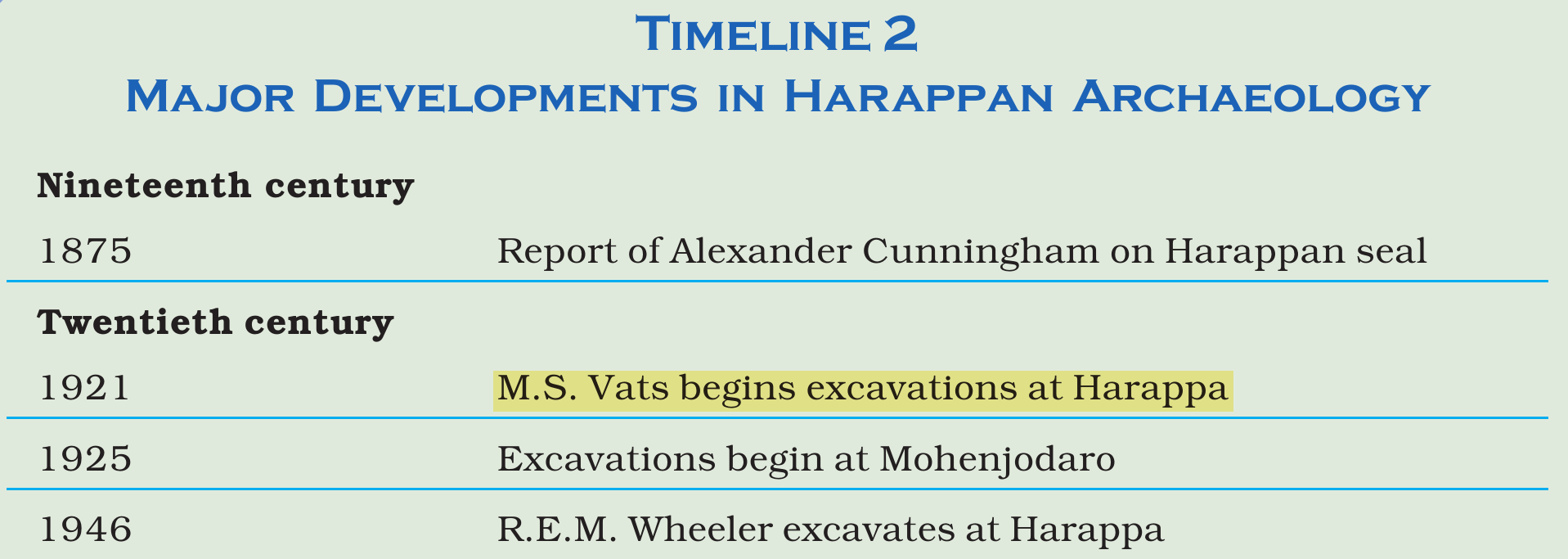
(E) M.S. Vats begins excavations at Harappa. — 1921, the first of these developments.
(D) R.E.M. Wheeler excavates at Harappa. — 1946.
(A) S.R. Rao begins excavations at Lothal. — 1955.
(C) B.B. Lal excavates at Kalibangan. — 1960, when B.B. Lal and B.K. Thapar began excavations at Kalibangan.
(B) R.S. Bisht begins excavations at Dholavira. — 1990.
Note: The 2023-24 NCERT timeline names M.S. Vats as the one who began excavations at Harappa in 1921, while the NCERT book (2026-27) names Daya Ram Sahni for that year. The year 1921 is the same in both books, so the answer does not change.
NCERT: Themes in Indian History Part I — Chapter 1: Bricks, Beads and Bones (2026-27)
NCERT (2023-24): Timeline 2, ‘Major Developments in Harappan Archaeology’, chapter ‘Bricks, Beads and Bones’
|