The degradation of humus by microbes to release inorganic nutrients is known as-
Answer & explanation
Correct answer: option 2
The correct answer is Option (2) → Mineralisation
Option (1) Humification — Incorrect. Humification is the step that forms humus, a dark, colloidal substance that breaks down very slowly. It comes before the humus is degraded.
Option (2) Mineralisation — Correct. It is the last step of decomposition, in which nutrients locked in humus are set free in inorganic form for plants to use again.
Option (3) Fragmentation — Incorrect. In fragmentation, detritivores such as the earthworm break detritus into small pieces.
Option (4) Catabolism — Incorrect. In catabolism, bacterial and fungal enzymes break detritus down into simpler inorganic substances. It acts on detritus, not on humus.
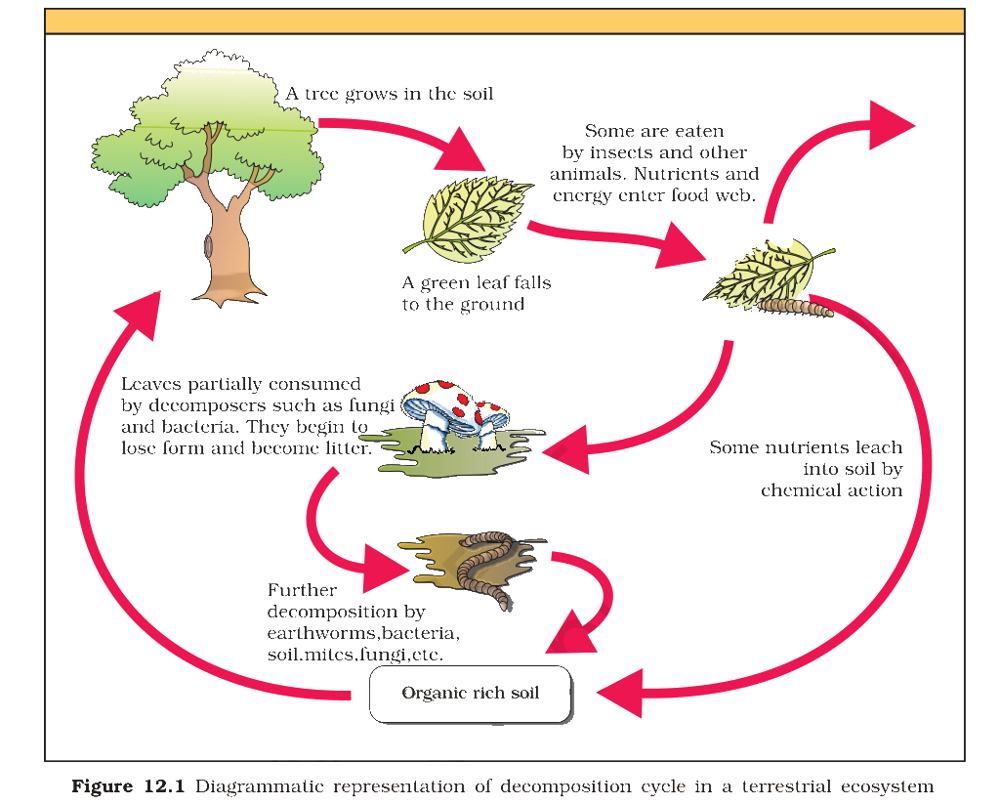
NCERT Extract:
Decomposition – “… Bacterial and fungal enzymes degrade detritus into simpler inorganic substances. This process is called as catabolism. It is important to note that all the above steps in decomposition operate simultaneously on the detritus (Figure 12.1). Humification and mineralisation occur during decomposition in the soil. Humification leads to accumulation of a dark coloured amorphous substance called humus that is highly resistant to microbial action and undergoes decomposition at an extremely slow rate. Being colloidal in nature it serves as a reservoir of nutrients. The humus is further degraded by some microbes and release of inorganic nutrients occur by the process known as mineralisation.”