
For a zero-order reaction, the plot of the concentration of the reactant against time is a straight line with:
Answer & explanation
Correct answer: option 4
The correct answer is Option (4) → Negative slope and non-zero intercept
In a zero order reaction the rate does not depend on the concentration, so the reactant is used up at a constant rate k. The integrated rate equation is:
\( \displaystyle [\mathrm{R}]=-kt+[\mathrm{R}]_0 \)
Compared with a straight line y = mx + c, a plot of [R] against t has slope = −k (negative, because [R] falls with time) and intercept = [R]0, the initial concentration, which is not zero.
Why the other options are incorrect
Option (1) Positive slope and zero intercept — Incorrect. A positive slope would mean the reactant concentration rises with time, and a zero intercept would mean there was no reactant at the start.
Option (2) Negative slope and zero intercept — Incorrect. The slope is right, but at t = 0 the concentration is [R]0, not zero.
Option (3) Positive slope and non-zero intercept — Incorrect. The intercept is right, but a reactant is consumed, so its concentration decreases and the slope is negative.
NCERT (2026-27 edition):
3.3.1 Zero Order Reactions – “…
\( \displaystyle [\mathrm{R}]=-kt+[\mathrm{R}]_0 \qquad (3.6) \)
Comparing (3.6) with equation of a straight line, y = mx + c, if we plot [R] against t, we get a straight line (Fig. 3.3) with slope = –k and intercept equal to [R]0.”
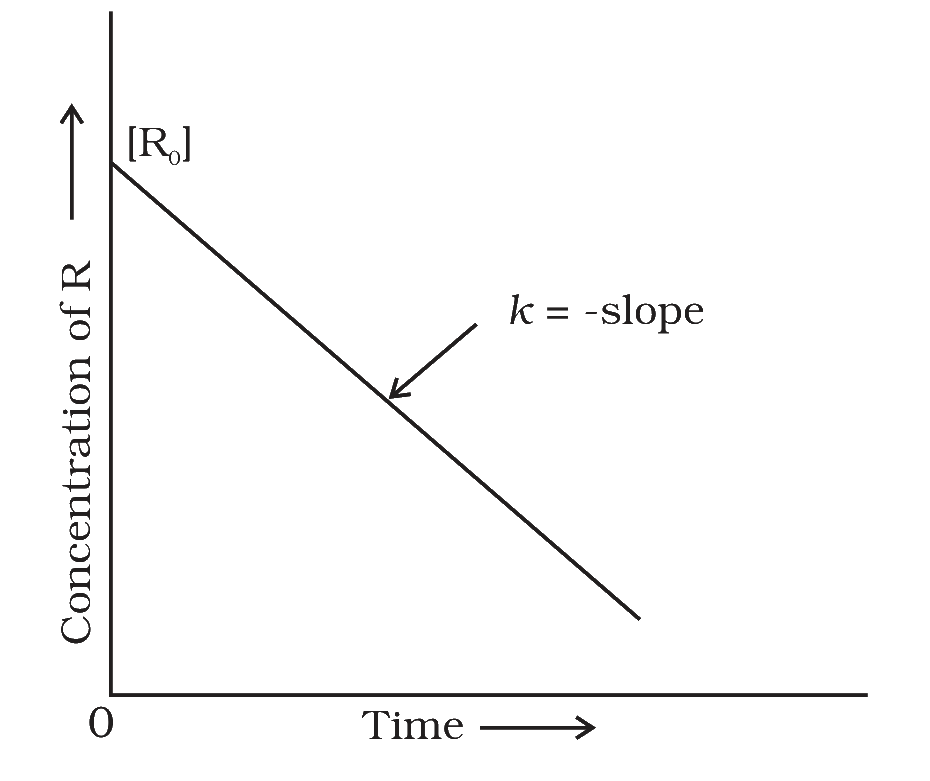
Fig. 3.3: Variation in the concentration vs time plot for a zero order reaction