
Which ecological pyramid is generally inverted in the sea?
Answer & explanation
Correct answer: option 2
The correct answer is Option (2) → Pyramid of biomass
An ecological pyramid shows how number, biomass or energy changes from the producers up to the top carnivores. In the sea the producers are tiny phytoplankton. At any one time their total mass is small, while the fishes that depend on them have a much larger total mass. So the pyramid of biomass in the sea stands upside down.
Option (1) Pyramid of numbers — Incorrect. This pyramid counts the organisms at each level. In the sea the phytoplankton far outnumber the fishes, so the pyramid of numbers stays upright. For the pyramid of numbers, the book only asks the reader to work out the shape for insects feeding on a big tree; it says nothing about the sea.
Option (2) Pyramid of biomass — Correct. Biomass is the total mass of living matter at a level. The biomass of fishes exceeds that of the phytoplankton, so the top of the pyramid is wider than its base.
Option (3) Pyramid of energy — Incorrect. Some energy is lost as heat at every step from one level to the next. So the pyramid of energy can never be inverted, in any ecosystem.
NCERT Extract:
Ecological Pyramids – “… In most ecosystems, all the pyramids, of number, of energy and biomass are upright, i.e., producers are more in number and biomass than the herbivores, and herbivores are more in number and biomass than the carnivores. … The pyramid of biomass in sea is generally inverted because the biomass of fishes far exceeds that of phytoplankton. … Pyramid of energy is always upright, can never be inverted, because when energy flows from a particular trophic level to the next trophic level, some energy is always lost as heat at each step.”
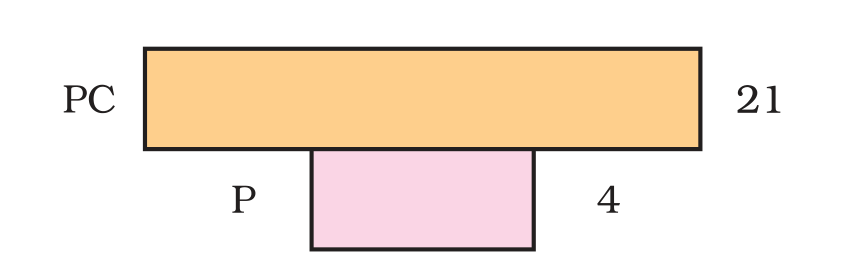
Figure 12.4 (c) Inverted pyramid of biomass-small standing crop of phytoplankton supports large standing crop of zooplankton