
Read the passage given below and answer the questions that follow.
DNA fingerprinting involves identifying differences in some specific regions in DNA sequence called repetitive DNA, because in these sequences, a small stretch of DNA is repeated many times. These sequences normally do not code for any proteins, but they form a large portion of the human genome. These sequences show a high degree of polymorphism and form the basis of DNA fingerprinting. Polymorphism (variation at genetic level) arises due to mutations. New mutations may arise in an individual either in somatic cells or in the germ cells (cells that generate gametes in sexually reproducing organisms). If a germ cell mutation does not seriously impair the individual’s ability to have offspring who can transmit the mutation, it can spread to the other members of the population (through sexual reproduction). The technique of DNA fingerprinting was initially developed by Alec Jeffreys. He used a satellite DNA as probe that shows a very high degree of polymorphism. It was called Variable Number of Tandem Repeats (VNTR).
DNA fingerprints of two persons, prepared with the VNTR probe, show exactly the same banding pattern. The two persons are most likely:
Answer & explanation
Correct answer: option 3
The correct answer is Option (3) → monozygotic (identical) twins
A DNA fingerprint is the set of bands produced by the VNTR probe. Because the copy number of VNTR varies so much, the banding pattern is characteristic of each individual. Two people can share the exact same pattern only if they have the same DNA.
Option (1) a father and his son — Incorrect. A son gets only one allele of each chromosome from his father; the other comes from his mother. So about half of his bands match the father, not all of them. This partial match is what paternity testing uses.
Option (2) dizygotic (fraternal) twins — Incorrect. Fraternal twins develop from two different eggs fertilised by two different sperms. They are like any two siblings, so their DNA, and their banding patterns, differ.
Option (3) monozygotic (identical) twins — Correct. Identical twins develop from one zygote that splits into two. Both carry the same DNA, so their VNTR bands are the same. NCERT names them as the only exception to the rule that the pattern differs from person to person.
Option (4) a mother and her daughter — Incorrect. The daughter shares only one allele of each chromosome with her mother; the other comes from the father. So only about half of the bands match.
NCERT Extract:
DNA Fingerprinting – “… The VNTR belongs to a class of satellite DNA referred to as mini-satellite. A small DNA sequence is arranged tandemly in many copy numbers. The copy number varies from chromosome to chromosome in an individual. The numbers of repeat show very high degree of polymorphism. As a result the size of VNTR varies in size from 0.1 to 20 kb. Consequently, after hybridisation with VNTR probe, the autoradiogram gives many bands of differing sizes. These bands give a characteristic pattern for an individual DNA (Figure 5.16). It differs from individual to individual in a population except in the case of monozygotic (identical) twins.”
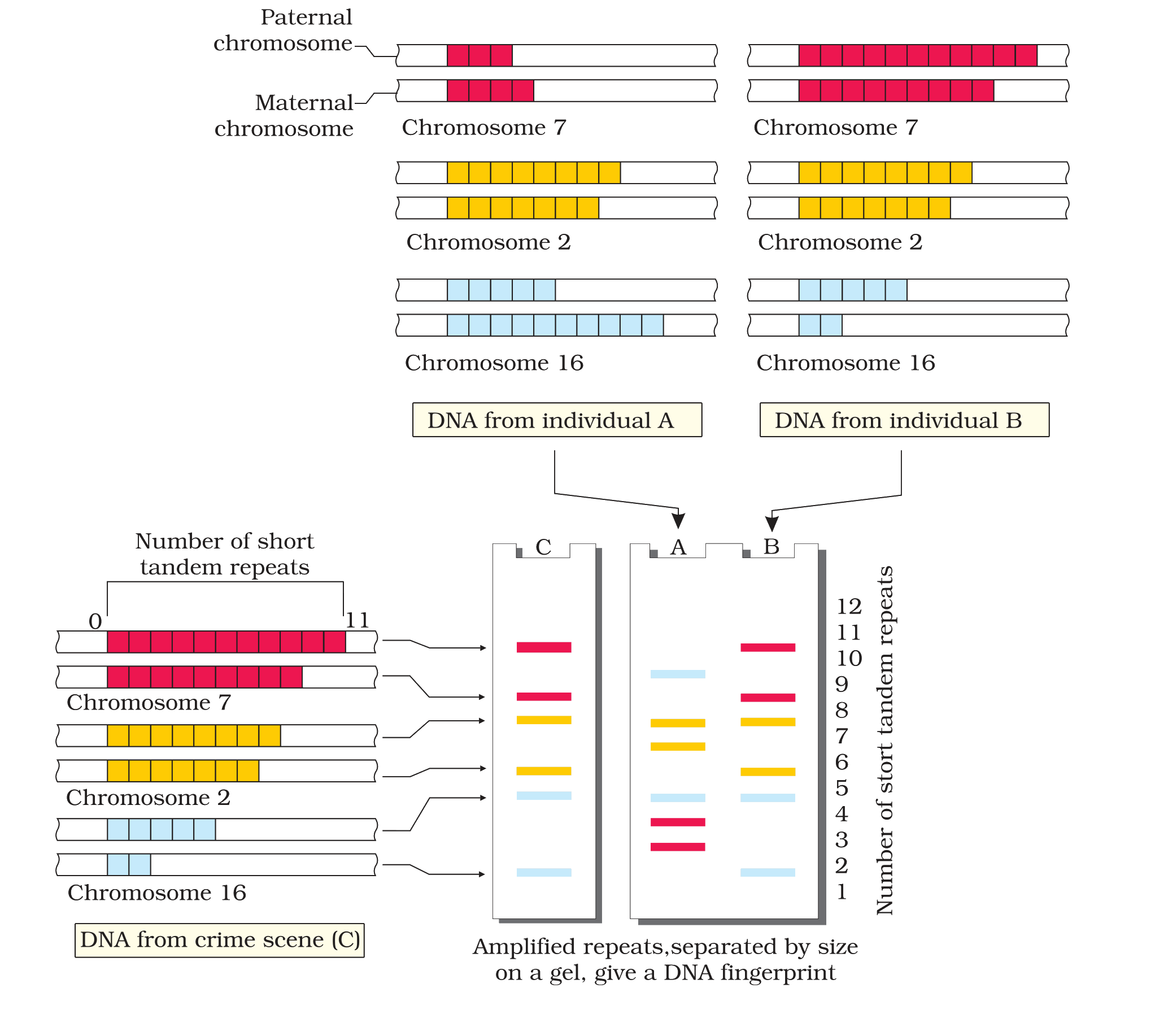
Figure 5.16 Schematic representation of DNA fingerprinting