
Given below are two statements:
Statement I: The eggs of Ascaris are excreted along with the urine of infected persons, which contaminate soil, water, plants, etc.
Statement II: The filarial worms, W. bancrofti and W. malayi, are transmitted to a healthy person through the bite by the female mosquito vectors.
In the light of the above statements, choose the most appropriate answer from the options given below:
Answer & explanation
Correct answer: option 4
The correct answer is Option (4) → Statement I is incorrect but Statement II is correct
Ascaris and Wuchereria are both helminths, but they spread in very different ways. Ascaris lives in the intestine, so its eggs leave the body with the faeces. Wuchereria lives in the lymphatic vessels, so it needs a mosquito to carry it to a new person.
Statement I: The eggs of Ascaris are excreted along with the urine of infected persons, which contaminate soil, water, plants, etc. — False. The eggs are excreted along with the faeces, not the urine. A healthy person then gets the infection through contaminated water, vegetables, fruits, etc.
Statement II: The filarial worms, W. bancrofti and W. malayi, are transmitted to a healthy person through the bite by the female mosquito vectors. — True. The filarial worms, which cause elephantiasis (filariasis), are carried by female mosquito vectors and enter a healthy person through their bite.
NCERT Extract:
Common Diseases in Humans – “… Ascaris, an intestinal parasite causes ascariasis. Symptoms of these disease include internal bleeding, muscular pain, fever, anemia and blockage of the intestinal passage. The eggs of the parasite are excreted along with the faeces of infected persons which contaminate soil, water, plants, etc. A healthy person acquires this infection through contaminated water, vegetables, fruits, etc.”
Common Diseases in Humans – “… Wuchereria (W. bancrofti and W. malayi), the filarial worms cause a slowly developing chronic inflammation of the organs in which they live for many years, usually the lymphatic vessels of the lower limbs and the disease is called elephantiasis or filariasis (Figure 7.2). The genital organs are also often affected, resulting in gross deformities. The pathogens are transmitted to a healthy person through the bite by the female mosquito vectors.”
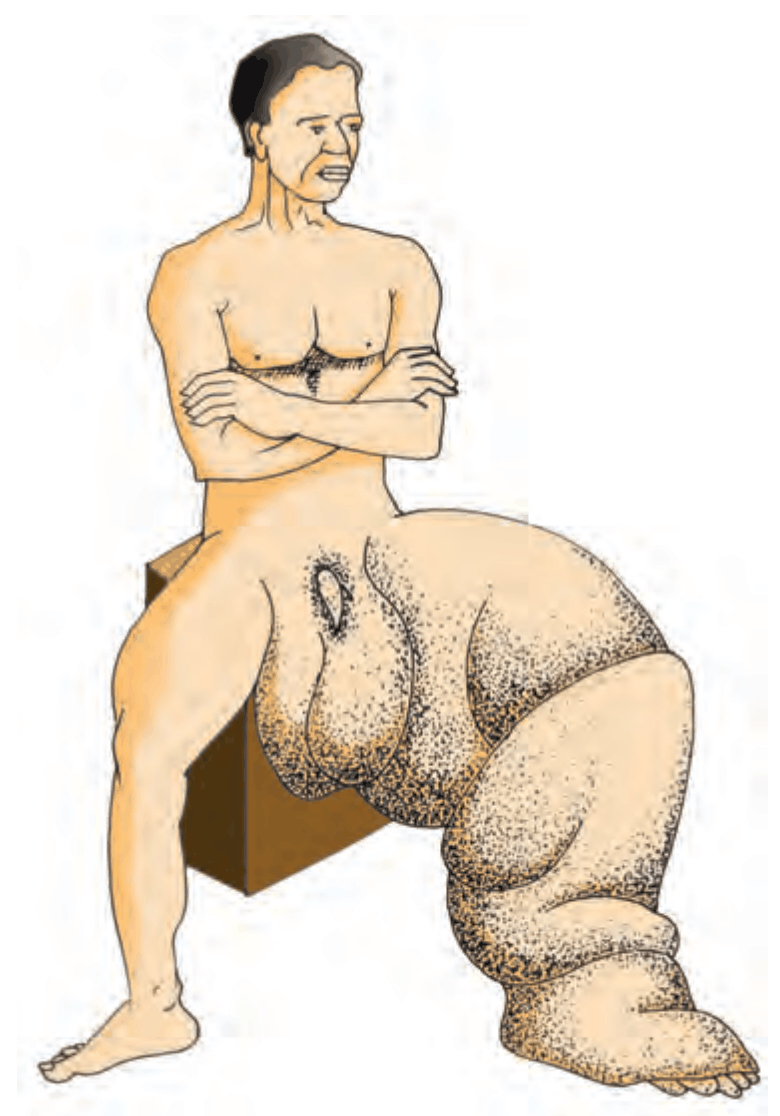
Figure 7.2 Diagram showing inflammation in one of the lower limbs due to elephantiasis