CUETMOCK
  • Pricing
  • Mentors
Log inStart freeStart free mocks→

First test, then trust

Try a free CUET mock test.

Join 5,00,000+ students who rehearsed exam day on the exact NTA screen before sitting CUET. On the web and on Android.

Start free mocks →Get the Android app
CUETMOCK

India's #1 CUET Mock Test Platform. Original NCERT-based questions on the exact NTA exam screen — trusted by 5,00,000+ students since CUET 2022.

Get it onGoogle PlayScan to download the CUETMOCK app

Mock tests

  • CUET mock test series
  • Commerce mocks
  • Humanities (Arts) mocks
  • Science mocks
  • Languages & GAT mocks
  • Free practice questions
  • Pricing

Resources

  • CUET exam guide
  • CUET syllabus
  • Universities accepting CUET
  • Expert blogs
  • News & notifications
  • Webinars & counselling
  • CUET score calculator
  • How we estimate your rank
  • FAQs

Company

  • About us
  • Our leadership & team
  • Our toppers
  • Mentors
  • For schools
  • Contact us
  • Terms
  • Privacy
  • Refund policy

Talk to us

+91 7696 6630 56info@cuetmock.comWhatsApp us

Our other platforms

  • JEE Mock — For IIT-JEE aspirants
  • NEET Mock — For NEET aspirants

Newsletter

Exam updates, study material and offers — no spam.

© 2026 NYC Ventures Pvt. Ltd.

701-702, Royal Business Park, Zirakpur, Punjab - 140603

  • Terms of use
  • Privacy policy
  • Refund policy
  • Contact us

iCUETMOCK is an independent preparation platform, not affiliated with the National Testing Agency (NTA). Always check exam details on the official NTA website.

  • Home
  • Mock tests
  • CUET guide
  • Pricing
  • Log in
Home/Practice questions/Chemistry
ChemistryOrganic: Alcohols, Phenols and Ethers

Match List-I with List-IIList-IReactionsList-IIProduct(A) (I) (B) (II…

Match List-I with List-II

List-I
Reactions
List-II
Product
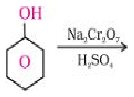
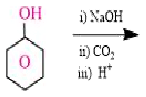
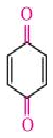
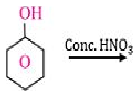
(A) Reaction A for Q29(I) Structure I for Q29
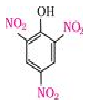
(B) Reaction B for Q29(II) Structure II for Q29
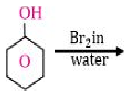
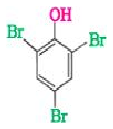
(C) Reaction C for Q29(III) Structure III for Q29
(D) Reaction D for Q29(IV) Structure IV for Q29

Choose the correct answer from the options given below:

Answer & explanation+

Correct answer: option 1

The correct answer is Option (1) → (A) - (III), (B) - (I), (C) - (IV), (D) - (II)

The –OH group makes the benzene ring of phenol very electron rich. So phenol is easily oxidised, and it undergoes electrophilic substitution at the ortho and para positions much faster than benzene. The reagent and the conditions decide the product:

  • (A) Phenol with \( \ce{Na2Cr2O7} \)/\( \ce{H2SO4} \) — This matches structure III (benzoquinone). Chromic acid oxidises phenol to the conjugated diketone benzoquinone (p-benzoquinone).

        \( \displaystyle \ce{C6H5OH} \xrightarrow{\ce{Na2Cr2O7}/\ce{H2SO4}} \ce{C6H4O2}\ \text{(benzoquinone)} \)

  • (B) Phenol with (i) NaOH (ii) \( \ce{CO2} \) (iii) \( \ce{H^{+}} \) — This matches structure I (salicylic acid). This is the Kolbe reaction: the phenoxide ion, even more reactive than phenol, is attacked by the weak electrophile \( \ce{CO2} \) at the ortho position; acidification gives 2-hydroxybenzoic acid.

        \( \displaystyle \ce{C6H5OH} \xrightarrow{\ce{NaOH}} \ce{C6H5ONa} \xrightarrow[\text{(ii) }\ce{H^+}]{\text{(i) }\ce{CO2}} \text{salicylic acid} \)

  • (C) Phenol with \( \ce{Br2} \) in water — This matches structure IV (2,4,6-tribromophenol). In the polar solvent water, phenol partly ionises to the highly activated phenoxide ion, so all three ortho and para positions are brominated and a white precipitate forms.

        \( \displaystyle \ce{C6H5OH + 3Br2} \xrightarrow{\ce{H2O}} \ce{C6H2Br3OH v + 3HBr} \)

  • (D) Phenol with conc. \( \ce{HNO3} \) — This matches structure II (2,4,6-trinitrophenol, picric acid). Concentrated nitric acid nitrates all three ortho and para positions.

        \( \displaystyle \ce{C6H5OH + 3HNO3} \xrightarrow{\text{conc.}} \ce{C6H2(NO2)3OH + 3H2O} \)

Advertisement

Practise more on Organic: Alcohols, Phenols and Ethers

Chapter-wise mocks on the real NTA exam screen, with solutions and your rank. Your first mocks are free.

Start free mocks →

Advertisement

Next questions

  1. __________ is a tendency of the subject to agree with the items/questions irrespective of their content.Psychology · Self and Personality
  2. When there is sudden and abnormal mitosis in an organ, it often leads to the development of which condition?Biology · Human Health and Disease
  3. बाजार से किस संज्ञा का बोध होता है ?Hindi · Collective Noun
  4. Who among the following was the third Vice-President of India ?General Aptitude Test · General Knowledge
  5. Assertion (A): If the price elasticity of supply of a good is 2, a 1 per cent rise in its price raises the quantity supplied by 2 per cent.…Economics · Micro Economics: Theory of Firms under Perfect Competition
  6. An astronomical telescope consists of an objective of focal length 50 cm and eyepiece of focal length 2 cm is focused on the moon so that t…Physics · Ray Optics
  7. Read the given statements and conclusions carefully. Assuming that the information given in the statements is true, even if it appears to b…General Aptitude Test · Verbal Reasoning
  8. The area enclosed by the curve (x^2)/16+(y^2)/25=1 is:Maths. Section B1 · Application of Integrals
  9. गद्यांश के आधार पर कौन-सा कथन सही नहीं है?Hindi · अपठित गद्यांश (Comprehension - Prose)
  10. Which of the following statement is NOT correct in respect of the power of courts of Judicial Review in India?Legal Studies · Judiciary