From the following, identify the main features of Fiscal responsibility and Budget Management act.
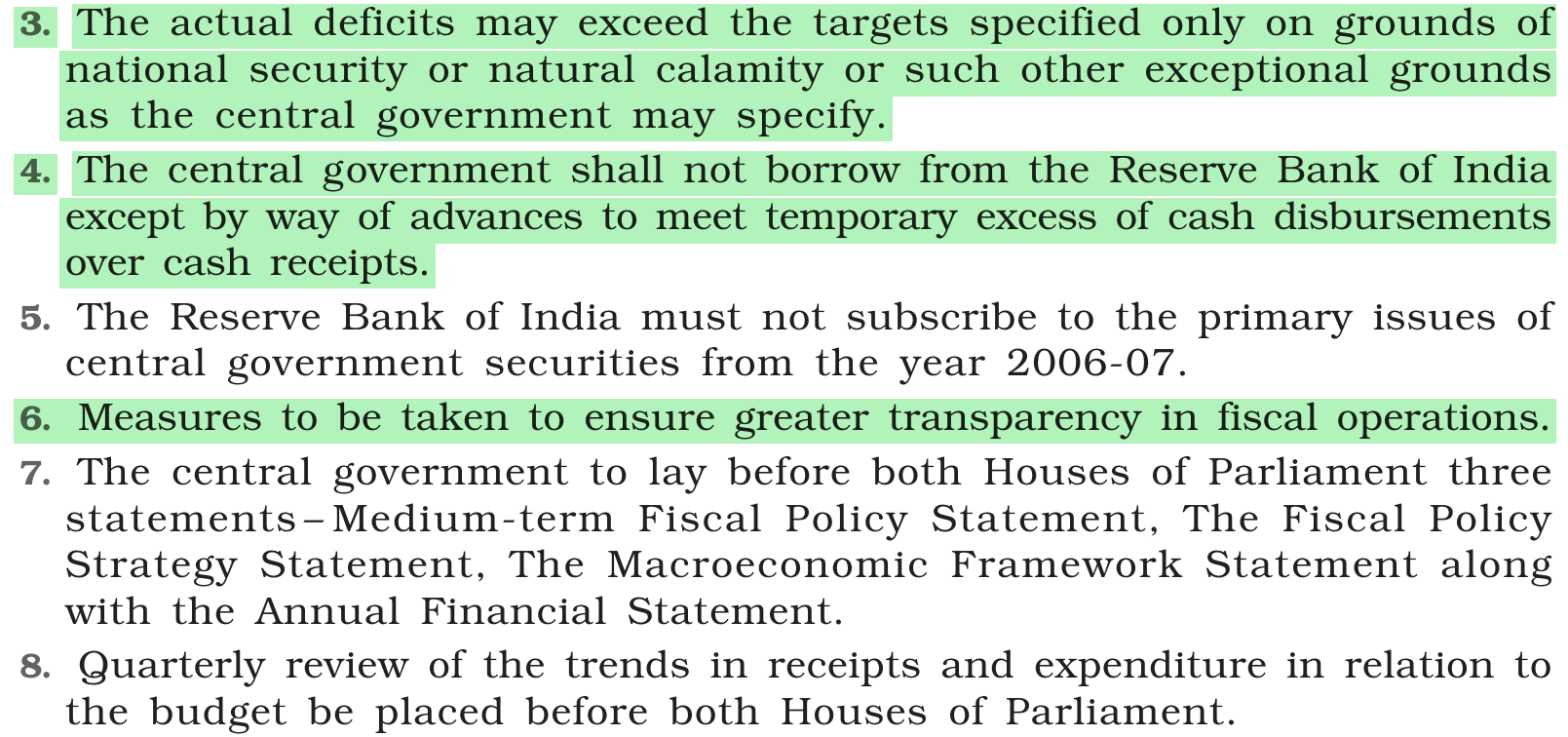
(A) The actual deficits may exceed the targets specified only on grounds of national security or natural calamity or such other exceptional grounds as the central government may specify.
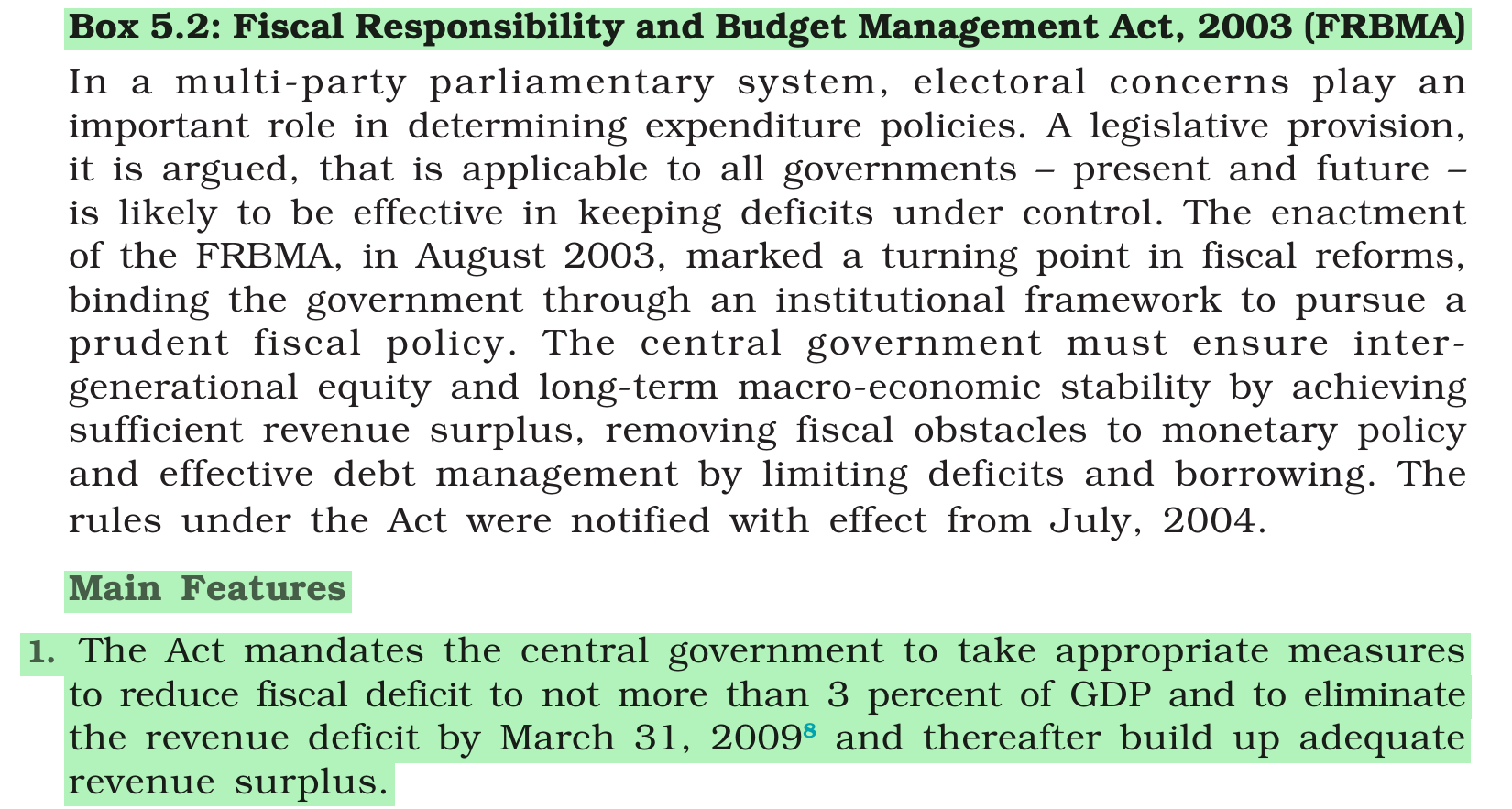
(B) The Act mandates the central government to take appropriate measures to reduce fiscal deficit to not more than 3 percent of GDP
(C) The central government shall not borrow from the Reserve Bank of India except under specified conditions.
(D) Measures to be taken to ensure greater transparency in fiscal operations.
Choose the correct answer from the options given below:
Answer & explanation
Correct answer: option 3
The correct answer is Option (3) → (A), (B), (C) and (D)
The Fiscal Responsibility and Budget Management Act, 2003 (FRBMA) binds the government, by law, to keep its deficits under control.
(A) The actual deficits may exceed the targets specified only on grounds of national security or natural calamity or such other exceptional grounds as the central government may specify. — Correct. The targets can be crossed only in exceptional cases.
(B) The Act mandates the central government to take appropriate measures to reduce fiscal deficit to not more than 3 percent of GDP — Correct. Fiscal deficit is the gap between the government’s total expenditure and its receipts other than borrowing. The Act sets a limit on it of 3 per cent of GDP.
(C) The central government shall not borrow from the Reserve Bank of India except under specified conditions. — Correct. The one condition is advances to meet a temporary excess of cash payments over cash receipts.
(D) Measures to be taken to ensure greater transparency in fiscal operations. — Correct. Parliament gets three policy statements along with the budget, and a quarterly review of receipts and expenditure. So the government’s fiscal plans stay open to view.
NCERT (2026-27): Introductory Macroeconomics — Chapter 5: Government Budget and the Economy
|