Match List-I with List-II.
| List-I | List-II |
| (A) Wealth Tax | (I) Single comprehensive indirect tax |
| (B) Income Tax | (II) Indirect Tax |
| (C) Service Tax | (III) Paper Tax |
| (D) GST | (IV) Direct Tax |
Choose the correct answer from the options given below :
Answer & explanation
Correct answer: option 2
The correct answer is Option (2) → (A)-(III), (B)-(IV), (C)-(II), (D)-(I)
A direct tax falls on a person’s or firm’s income or wealth. An indirect tax is charged on goods and services.
| List-I | List-II | Reason |
|---|---|---|
| (A) Wealth Tax | (III) Paper Tax | Wealth tax is a direct tax, like income tax. It has never brought in a large amount of revenue, so it is called a paper tax. |
| (B) Income Tax | (IV) Direct Tax | It is charged directly on people’s income. |
| (C) Service Tax | (II) Indirect Tax | It is charged on services, and indirect taxes are charged on goods and services. |
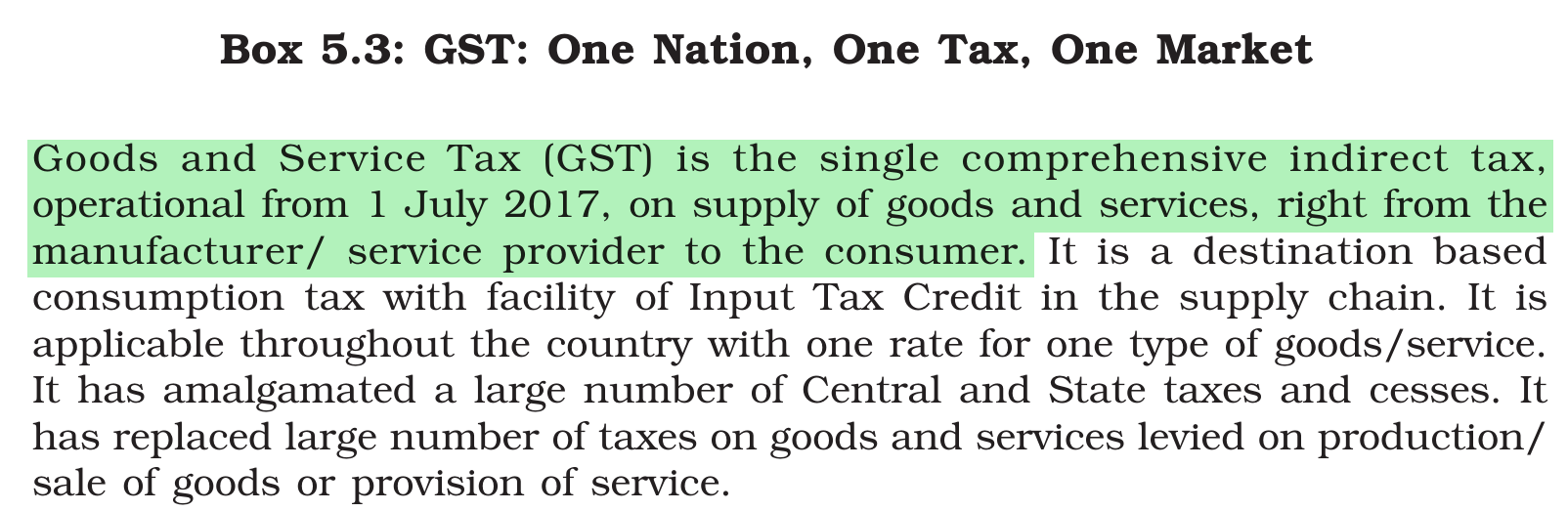
| (D) GST | (I) Single comprehensive indirect tax | The Goods and Services Tax is one tax on the supply of goods and services, from the maker to the consumer. |
NCERT (2026-27): “Revenue Receipts: … Tax revenues, an important component of revenue receipts, have for long been divided into direct taxes (personal income tax) and firms (corporation tax), and indirect taxes like excise taxes (duties levied on goods produced within the country), customs duties (taxes imposed on goods imported into and exported out of India) and service tax1. Other direct taxes like wealth tax, gift tax and estate duty (now abolished) have never brought in large amount of revenue and thus have been referred to as ‘paper taxes’.…”
|