
Read the given passage and answer the following questions:
Bacteria like Streptococcus pneumoniae and Haemophilus influenzae are responsible for the disease pneumonia in humans which infects the alveoli (air filled sacs) of the lungs. As a result of the infection, the alveoli get filled with fluid leading to severe problems in respiration. The symptoms of pneumonia include fever, chills, cough and headache. In severe cases, the lips and finger nails may turn gray to bluish in colour. A healthy person acquires the infection by inhaling the droplets/aerosols released by an infected person or even by sharing glasses and utensils with an infected person. Dysentery, plague, diphtheria, etc., are some of the other bacterial diseases in man. Many viruses also cause diseases in human beings. Rhino viruses represent one such group of viruses which cause one of the most infectious human ailments – the common cold. They infect the nose and respiratory passage but not the lungs. The common cold is characterised by nasal congestion and discharge, sore throat, hoarseness, cough, headache, tiredness, etc., which usually last for 3-7 days. Droplets resulting from cough or sneezes of an infected person are either inhaled directly or transmitted through contaminated objects such as pens, books, cups, doorknobs, computer keyboard or mouse, etc., and cause infection in a healthy person.
Unlike pneumonia in the passage, malaria needs a vector. Sporozoites enter a healthy person through the bite of an infected female Anopheles mosquito. Arrange the following events in the life cycle of Plasmodium that come after this in the correct sequence:
(A) A female Anopheles mosquito bites the infected person and the parasites enter the mosquito’s body.
(B) The parasites multiply within the liver cells.
(C) The parasites multiply within the mosquito to form sporozoites that are stored in its salivary glands.
(D) The parasites attack the red blood cells, resulting in their rupture.
Choose the correct answer from the options given below:
Answer & explanation
Correct answer: option 2
The correct answer is Option (2) → (B), (D), (A), (C)
Malaria is caused by the protozoan Plasmodium. It needs two hosts, a human and a female Anopheles mosquito, which is also the vector. The cycle in the question starts when sporozoites enter a healthy person through the bite of an infected mosquito.
(B) The parasites multiply within the liver cells. — First. The sporozoites reach the liver through the blood and first multiply in the liver cells.
(D) The parasites attack the red blood cells, resulting in their rupture. — Second. Released from the liver, the parasites enter the RBCs and burst them. The rupture of RBCs releases haemozoin, which causes the chill and high fever that recur every three to four days.
(A) A female Anopheles mosquito bites the infected person and the parasites enter the mosquito's body. — Third. The parasites in the patient's blood are taken up by a mosquito when it bites the infected person.
(C) The parasites multiply within the mosquito to form sporozoites that are stored in its salivary glands. — Fourth. Inside the mosquito the parasites develop and multiply into sporozoites, which wait in the salivary glands for the next bite.
NCERT Extract:
Common Diseases in Humans – “… Plasmodium enters the human body as sporozoites (infectious form) through the bite of infected female Anopheles mosquito. The parasites initially multiply within the liver cells and then attack the red blood cells (RBCs) resulting in their rupture. The rupture of RBCs is associated with release of a toxic substance, haemozoin, which is responsible for the chill and high fever recurring every three to four days. When a female Anopheles mosquito bites an infected person, these parasites enter the mosquito’s body and undergo further development. The parasites multiply within them to form sporozoites that are stored in their salivary glands.”
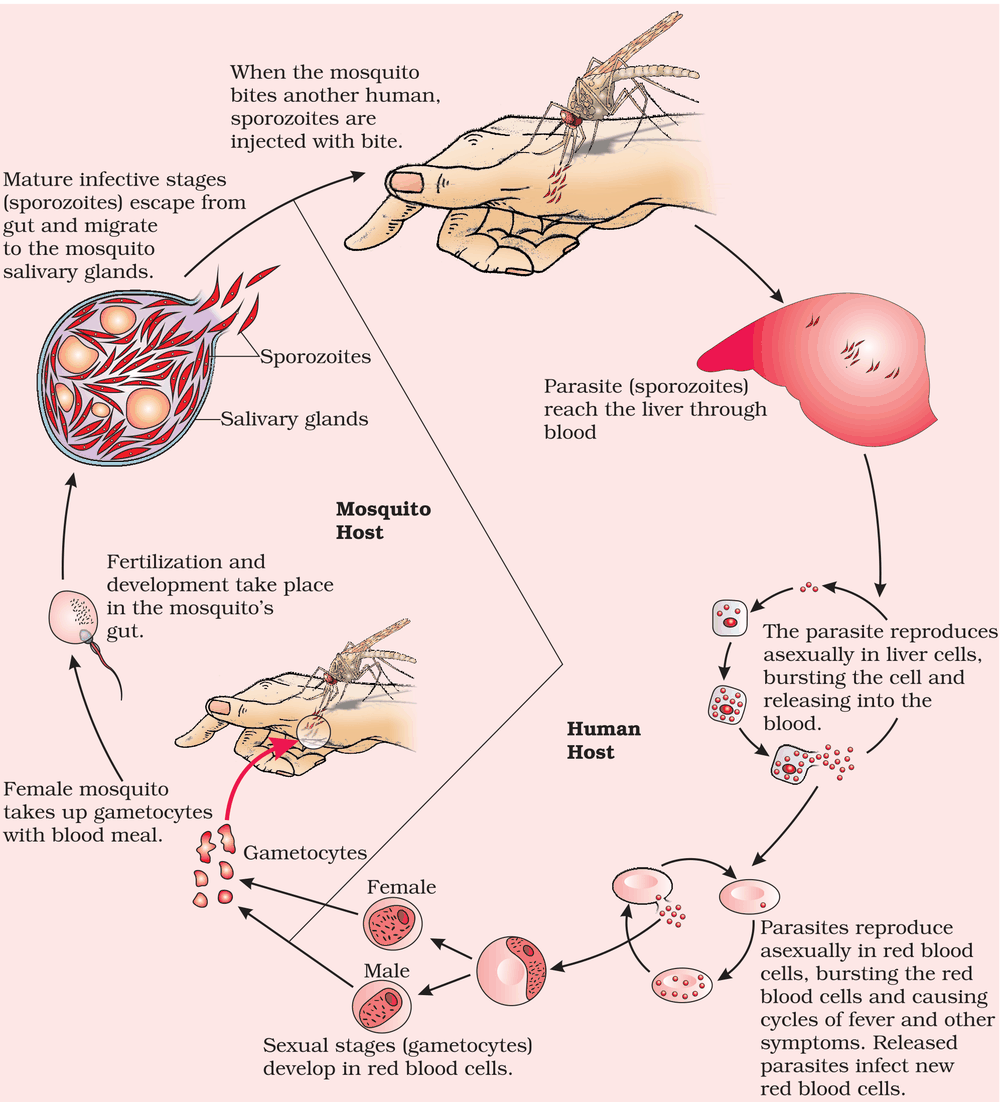
Figure 7.1 Stages in the life cycle of Plasmodium