
A p-n junction diode is forward biased. Electrons from the n-side cross the junction and enter the p-side. How does the concentration of these electrons on the p-side change with distance from the junction edge?
Answer & explanation
Correct answer: option 3
The correct answer is Option (3) → It is highest at the junction edge and falls with distance.
Under forward bias, electrons from the n-side cross the junction and reach the p-side. There they are minority carriers. This process is called minority carrier injection. They pile up near the junction edge and then diffuse into the p-side.
Option (1) It is the same at every point of the p-side. — Incorrect. The electrons enter only at the junction edge. So they are crowded there and fewer reach the far end.
Option (2) It is lowest at the junction edge and rises with distance. — Incorrect. This is the reverse of the real profile. The supply of electrons is at the junction, so the edge has the most.
Option (3) It is highest at the junction edge and falls with distance. — Correct. The electrons enter at the junction edge, so their concentration is highest there. As they spread deeper into the p-side, their number falls.
Option (4) It is zero, because all these electrons recombine at the junction. — Incorrect. The injected electrons do not vanish at the junction. They move into the p-side by diffusion and carry current there.
NCERT (2026-27):
p-n junction diode under forward bias – “… At the junction boundary, on each side, the minority carrier concentration increases significantly compared to the locations far from the junction.”
p-n junction diode under forward bias – “Due to this concentration gradient, the injected electrons on p-side diffuse from the junction edge of p-side to the other end of p-side. …”
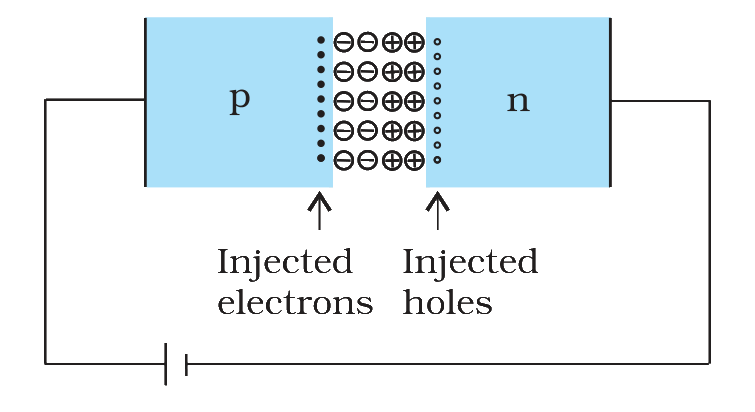
FIGURE 14.14 Forward bias minority carrier injection.