Calculate the value of the multiplier from the given consumption function C = 100 + 0.8Y.
Answer & explanation
Correct answer: option 1
The correct answer is Option (1) → 5
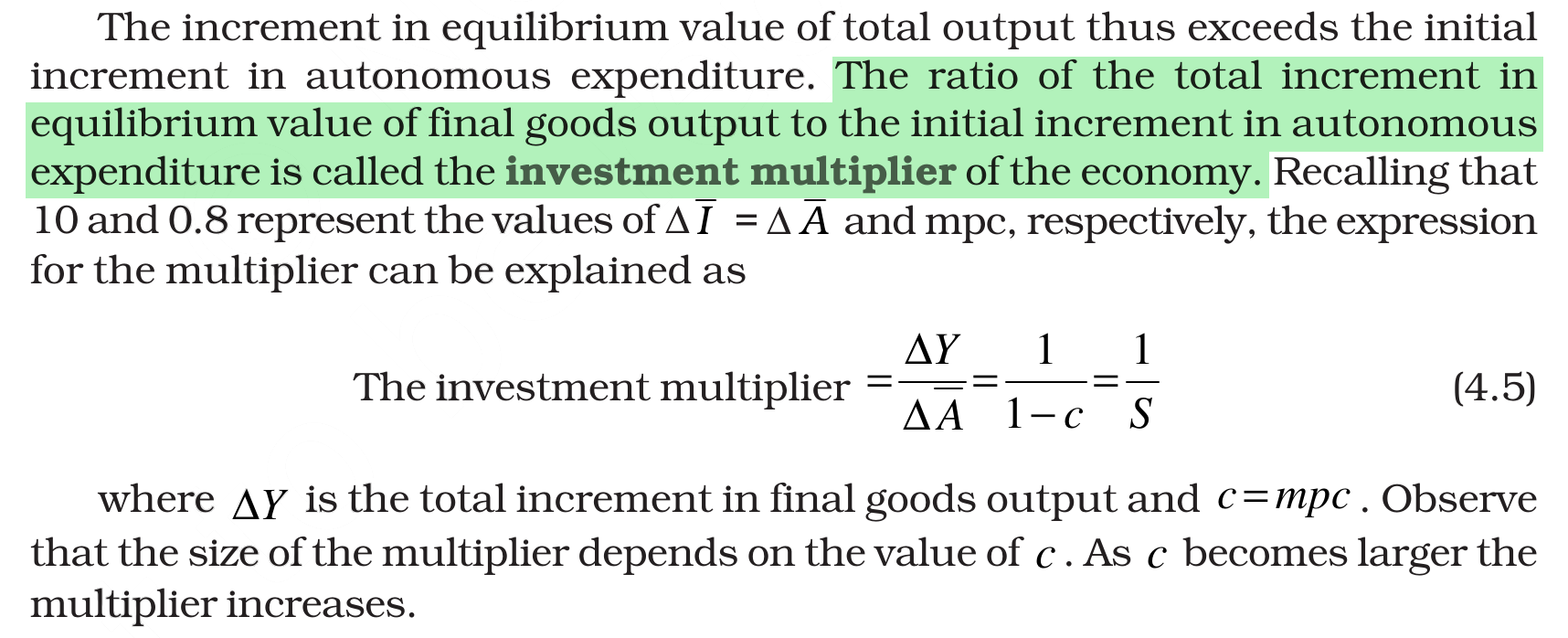
New spending becomes someone’s income, part of which is spent again, and so on round after round, so output rises by more than the first spending. The investment multiplier is the ratio of the total increase in equilibrium output to the initial increase in autonomous expenditure, and it depends only on the marginal propensity to consume.
Given:
Consumption function, C = 100 + 0.8Y
Marginal propensity to consume, c = 0.8 (the coefficient of Y)
Multiplier = 1 ÷ (1 − c) = 1 ÷ MPS
MPS = 1 − 0.8 = 0.2
Multiplier = 1 ÷ 0.2 = 5, which is Option (1)
The autonomous consumption of 100 does not enter the multiplier: it sets where the consumption function starts, not how much output responds. A rise in investment of 10 would raise output by 10 × 5 = 50.
NCERT: Introductory Macroeconomics — Chapter 4: Determination of Income and Employment (2025-26)
|