What happens to the total cost (TC) of production if the quantity of output in the production is reduced to 0 (zero)?
Where, TC=Total cost, FC=Fixed Cost, VC=Variable Cost.
Answer & explanation
Correct answer: option 1
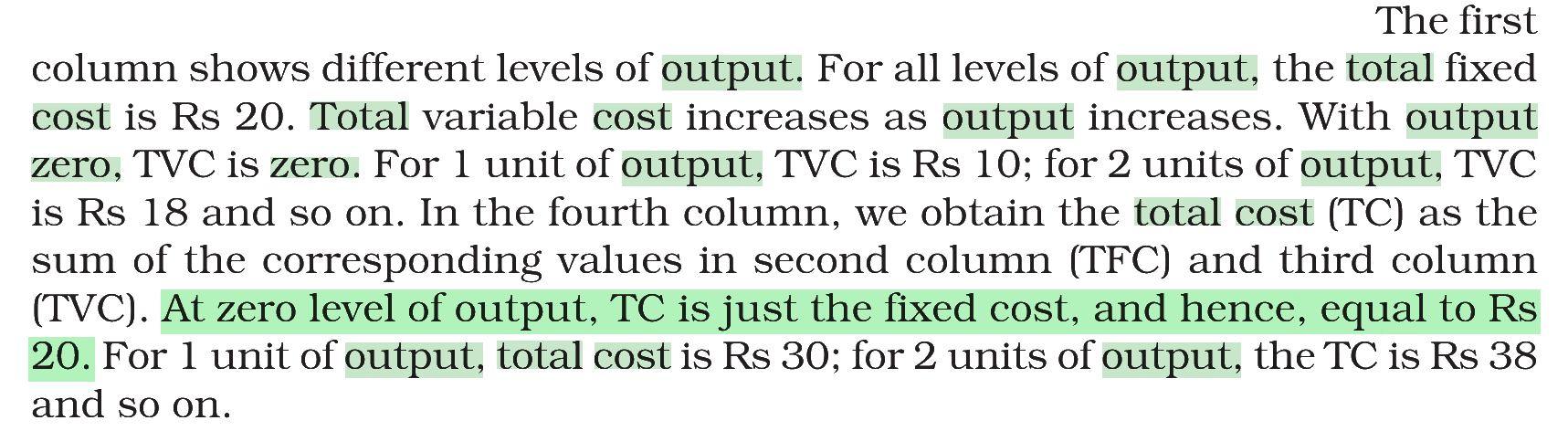
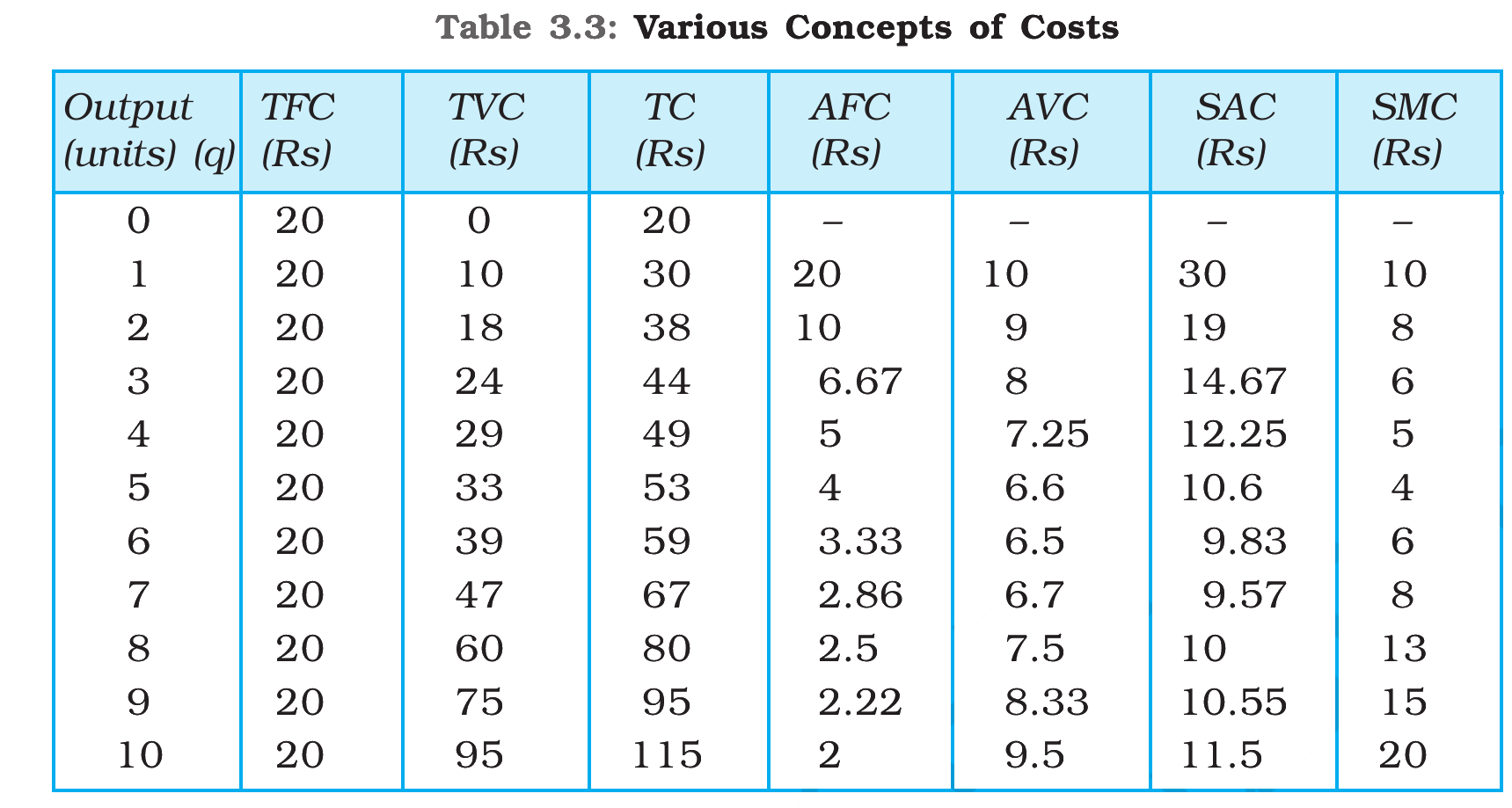
The correct answer is Option (1) → TC = FC
A firm’s costs are of two kinds. Some, such as rent, insurance and interest on borrowed capital, must be paid whether the firm produces or not; these are fixed costs. Others, such as raw material and power, arise only when something is produced; these are variable costs. Total cost is the sum of the two:
TC = FC + VC
When output is reduced to zero, no variable input is used, so VC = 0 and total cost is just the fixed cost:
TC = FC + 0 = FC
This is why the total cost curve starts on the vertical axis at the height of the fixed cost, not at the origin.
Why the other options are incorrect
Option (2) TC > FC — Incorrect. True at every positive level of output, where VC is positive, but not at zero output.
Option (3) TC=VC — Incorrect. This holds in the long run, where no cost is fixed and total cost is all variable cost. The question is about a firm that has a fixed cost.
Option (4) TC < VC — Incorrect. Impossible, since variable cost is one part of total cost.
NCERT: Introductory Microeconomics — Chapter 3: Production and Costs (2025-26)
|