
In a typical test cross :
Answer & explanation
Correct answer: option 2
The correct answer is option (2) - An organism showing a dominant phenotype is crossed with the recessive parent
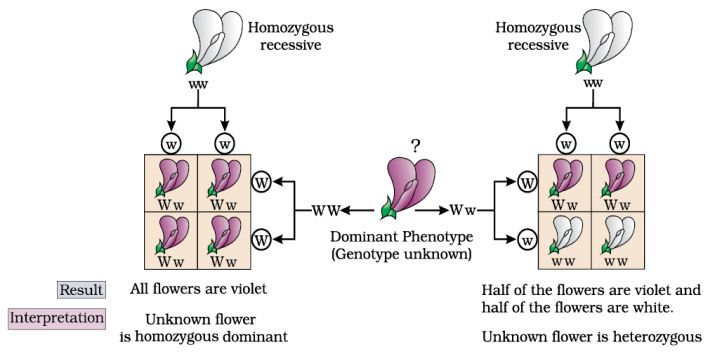
Diagrammatic representation of a test cross
Mendel crossed the tall plant from F2 with a dwarf plant. This he called a test cross. In a typical test cross an organism showing a dominant phenotype (and whose genotype is to be determined) is crossed with the recessive parent instead of self-crossing. The progenies of such a cross can easily be analysed to predict the genotype of the test organism.
In Test cross an organism showing a dominant phenotype (genotype unknown) is crossed with the recessive parent. In the case of dominant phenotype, by just looking at the morphology, it is difficult to find out whether the given plant is heterozygous or homozygous for dominance. In order to find the unknown genotype of the dominant character, a cross breeding is performed which is called test crossing. Here the unknown dominant character is crossed with the known recessive character, for example, tall plant (its genotype is not known) is crossed to dwarf (its genotype is known). In the cross, if the offsprings produced are of both dominant and recessive in equal ratio, the given plant is heterozygous for the said character. On the other hand, if the offsprings produced are all tall, then the tall plant is dominant homozygous. This type of crossing is employed to determine the heterozygosity or homozygosity of a suspected character.