Match List-I with List-II
| List-I | List-II |
| (A) Increase in price of good X | (I) Increase in demand for normal goods. |
| (B) Increase in income of consumers | (II) Demand is price inelastic |
| (C) Good X is a necessary good | (III) Unit elasticity of demand. |
| (D) Demand curve of Good X is a rectangular hyperbola. | (IV) Contraction in demand for good X |
Choose the correct answer from the options given below:
Answer & explanation
Correct answer: option 4
The correct answer is Option (4) → (A)-(IV), (B)-(I), (C)-(II), (D)-(III)
A change in a good’s own price moves the consumer along the demand curve. A change in income shifts the curve. Price elasticity of demand shows how strongly quantity responds to price.
| List-I | List-II | Reason |
|---|---|---|
| (A) Increase in price of good X | (IV) Contraction in demand for good X | A higher price means a movement along the demand curve to a smaller quantity. This fall is called a contraction. |
| (B) Increase in income of consumers | (I) Increase in demand for normal goods. | Demand for a normal good moves in the same direction as income. |
| (C) Good X is a necessary good | (II) Demand is price inelastic | Necessities such as food are essential for life, so their demand does not change much when price changes. |
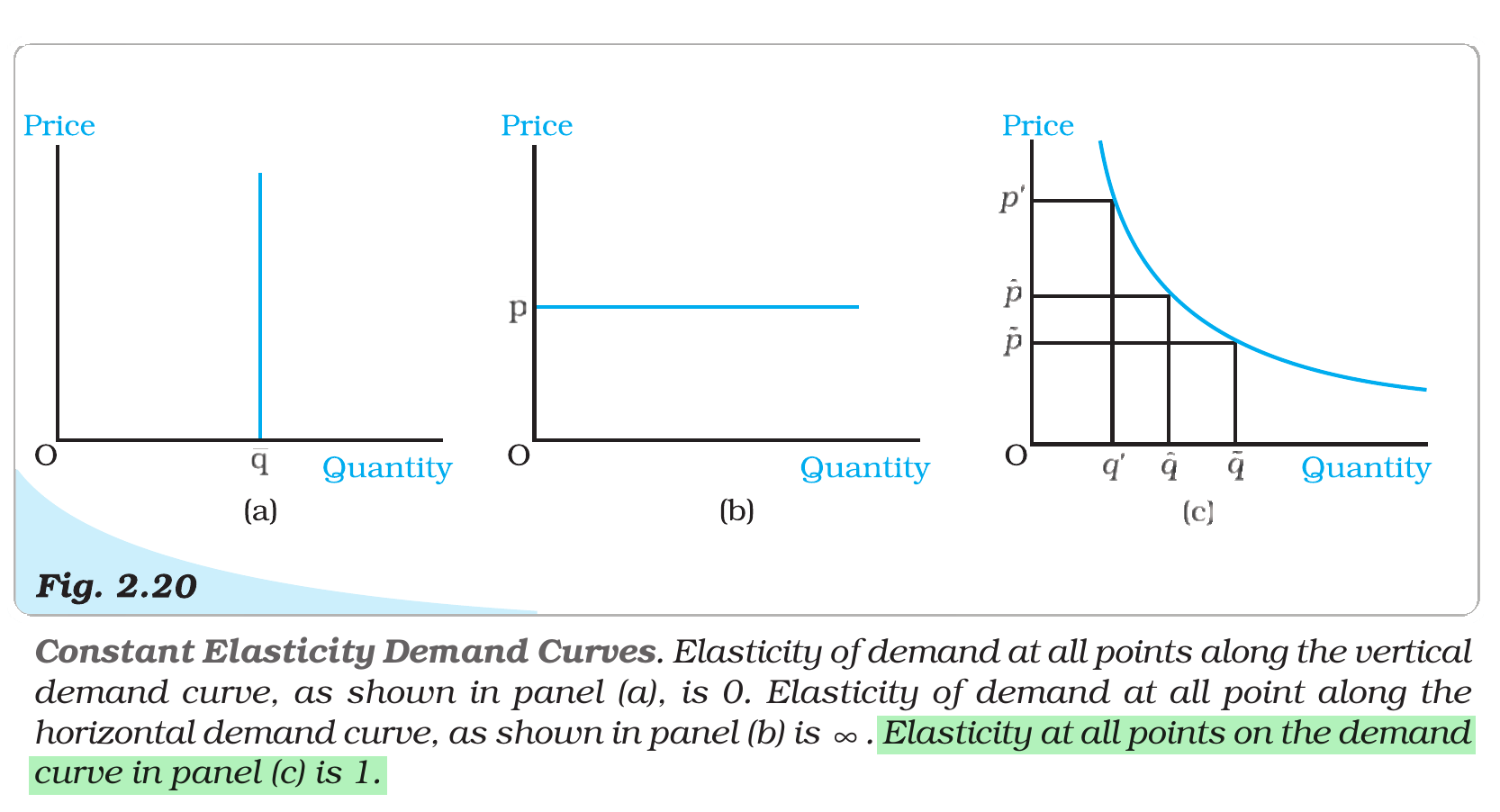
| (D) Demand curve of Good X is a rectangular hyperbola. | (III) Unit elasticity of demand. | On this curve a percentage change in price leads to an equal percentage change in quantity, at every point. |
NCERT (2026-27): “2.4.3 Normal and Inferior Goods … For most goods, the quantity that a consumer chooses, increases as the consumer’s income increases and decreases as the consumer’s income decreases. Such goods are called normal goods.… 2.4.6 Movements along the Demand Curve and Shifts in the Demand Curve … At higher prices, the demand is less, and at lower prices, the demand is more. Thus, any change in the price leads to movements along the demand curve.… 2.6.2 Factors Determining Price Elasticity of Demand for a Good … Consider, for example, necessities like food. Such goods are essential for life and the demands for such goods do not change much in response to changes in their prices. Demand for food does not change much even if food prices go up. On the other hand, demand for luxuries can be very responsive to price changes. In general, demand for a necessity is likely to be price inelastic while demand for a luxury good is likely to be price elastic.… … Figure 2.20(c) depicts a demand curve which has the shape of a rectangular hyperbola. This demand curve has a property that a percentage change in price along the demand curve always leads to equal percentage change in quantity. Therefore, |eD| = 1 at every point on this demand curve. This demand curve is called the unitary elastic demand curve.”
|