
How are the two polypeptides of human insulin connected to each other?
Answer & explanation
Correct answer: option 3
The correct answer is Option (3) → Disulphide bridges
Human insulin is made of two short polypeptide chains, chain A and chain B. They are held together by disulphide bridges (S–S links between sulphur atoms of the two chains). In the body, insulin is first made as pro-insulin with an extra C peptide, which is removed to give the mature hormone.
Option (1) Phosphodiester bonds — Incorrect. Phosphodiester bonds join the nucleotides of DNA and RNA. They are not found between the chains of a protein.
Option (2) Ionic bonds — Incorrect. Ionic bonds are weak attractions between oppositely charged groups. The two insulin chains are joined by covalent S–S links (disulphide bridges), not by ionic bonds.
Option (3) Disulphide bridges — Correct. Chains A and B of insulin are linked together by disulphide bridges, as Figure 10.3 shows.
Option (4) Hydrogen bonds — Incorrect. Hydrogen bonds hold the two strands of DNA together (between the base pairs). They are not the link between the two insulin chains.
NCERT Extract:
Genetically Engineered Insulin – “… Insulin used for diabetes was earlier extracted from pancreas of slaughtered cattle and pigs. Insulin from an animal source, though caused some patients to develop allergy or other types of reactions to the foreign protein. Insulin consists of two short polypeptide chains: chain A and chain B, that are linked together by disulphide bridges (Figure 10.3).”
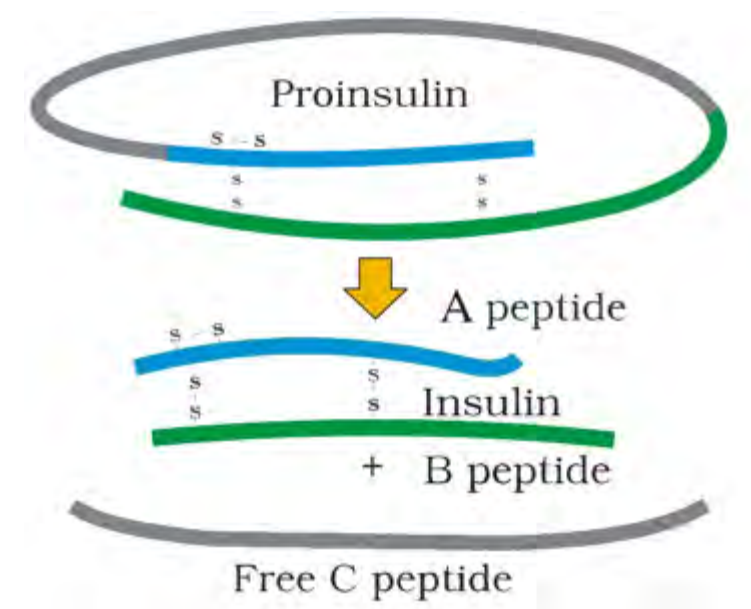
Figure 10.3 Maturation of pro-insulin into insulin (simplified)