
Read the passage and answer the following questions:
Apart from the deep-sea hydrothermal ecosystem, the primary source of energy for all ecosystems on Earth is the sun. However, only a portion of the incident solar radiation, less than 50 percent, is photosynthetically active radiation (PAR). Autotrophs, such as plants and photosynthetic bacteria, utilise this radiant energy to produce food from simple inorganic substances. Remarkably, plants can capture only 2-10 percent of the PAR, yet this small amount of energy sustains the entire living world. Understanding how solar energy, captured by plants, flows through different organisms within an ecosystem is crucial. In this unidirectional flow of energy, the sun nourishes the producers (often green plants), which serve as the foundation of the ecosystem. In terrestrial ecosystems, herbaceous and woody plants are the major producers, while in aquatic ecosystems, various species like phytoplankton, algae, and higher plants play this vital role. All other organisms, referred to as consumers or heterotrophs, depend on producers for their food requirements. Consumers can be classified based on their feeding habits. Those that directly consume producers, the plants, are called primary consumers. In contrast, if animals eat other animals that, in turn, feed on plants or their products, they are known as secondary consumers. Tertiary consumers, similarly, consume animals from the secondary consumer level. In summary, the entire ecosystem relies on the unidirectional flow of solar energy, starting from the sun to the producers (plants), and then passed on to the various levels of consumers, ensuring the sustenance of life within the ecosystem.
Which of the following pairs of organisms are both placed at the second trophic level?
Answer & explanation
Correct answer: option 1
The correct answer is Option (1) → Grasshopper and cow
An organism is placed at a trophic level by what it eats. Producers form the first trophic level, herbivores (primary consumers) the second and carnivores (secondary consumers) the third. NCERT gives zooplankton, grasshopper and cow as examples of the second trophic level.
Option (1) Grasshopper and cow — Correct. The grasshopper and the cow both feed on plants. They are herbivores, that is primary consumers, so both sit at the second trophic level.
Option (2) Grass and phytoplankton — Incorrect. Grass and phytoplankton make their own food by photosynthesis. They are producers at the first trophic level.
Option (3) Wolf and snake — Incorrect. The wolf and the snake eat other animals, so they are carnivores. The wolf is shown as a secondary consumer at the third trophic level.
Option (4) Man and lion — Incorrect. Man and lion are shown at the top of the trophic levels, as top carnivores (fourth trophic level), not at the second level.
Note: The answer to this question is printed in the Examples column of Figure 12.2, not in any paragraph. Spend a minute on such figure columns too; they hold marks that the text never repeats.
NCERT Extract:
Energy Flow – “Organisms occupy a place in the natural surroundings or in a community according to their feeding relationship with other organisms. Based on the source of their nutrition or food, organisms occupy a specific place in the food chain that is known as their trophic level. Producers belong to the first trophic level, herbivores (primary consumer) to the second and carnivores (secondary consumer) to the third (Figure 12.2).”
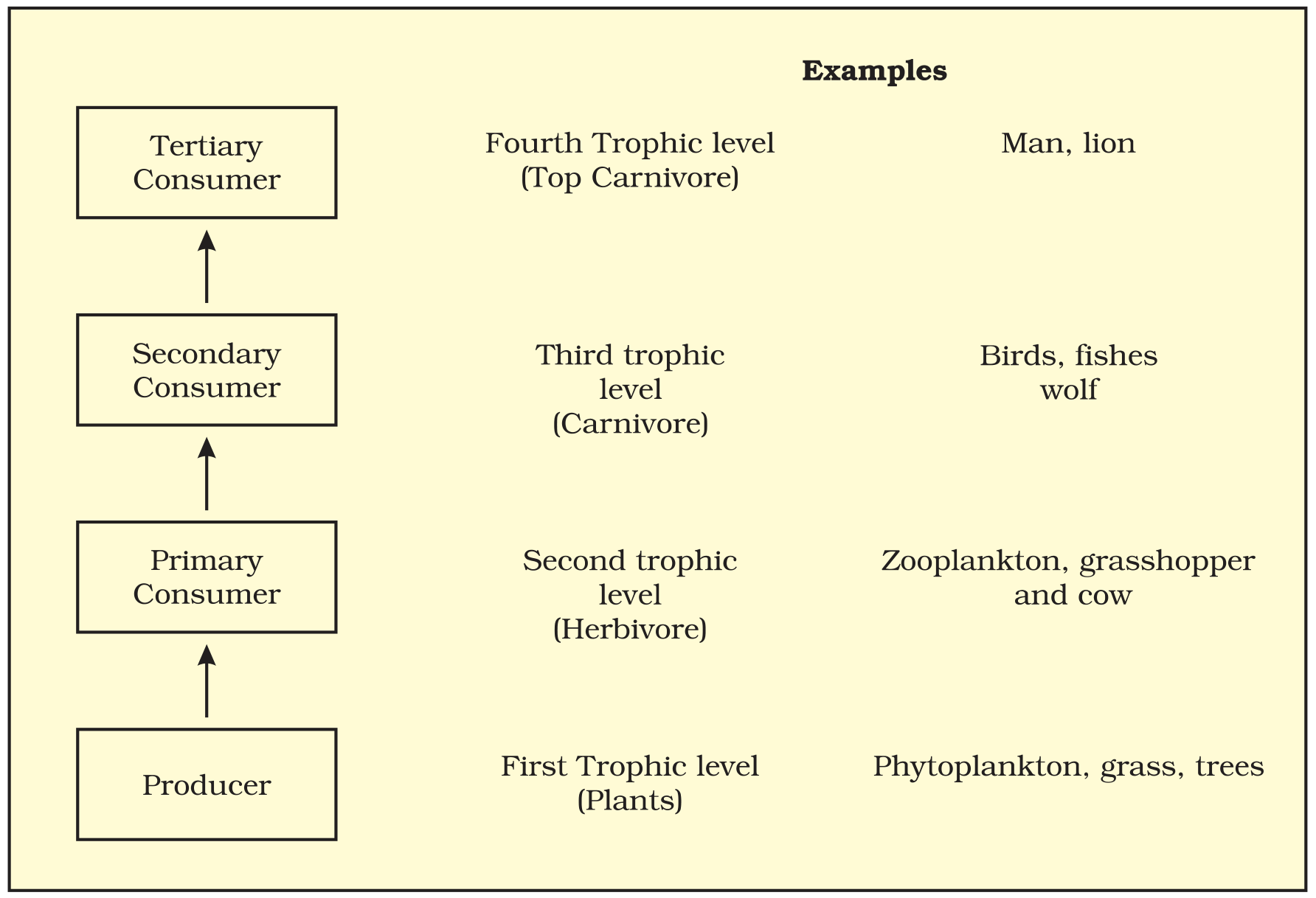
Figure 12.2 Diagrammatic representation of trophic levels in an ecosystem