Match List I with List II. Match the diseases in List I with their year of occurrence in List II
| LIST-I (Names of Pandemic/ Epidemics) | LIST-II (Year of occurrence) | ||
| A. | Surat Plague Epidemic | I. | 1968 |
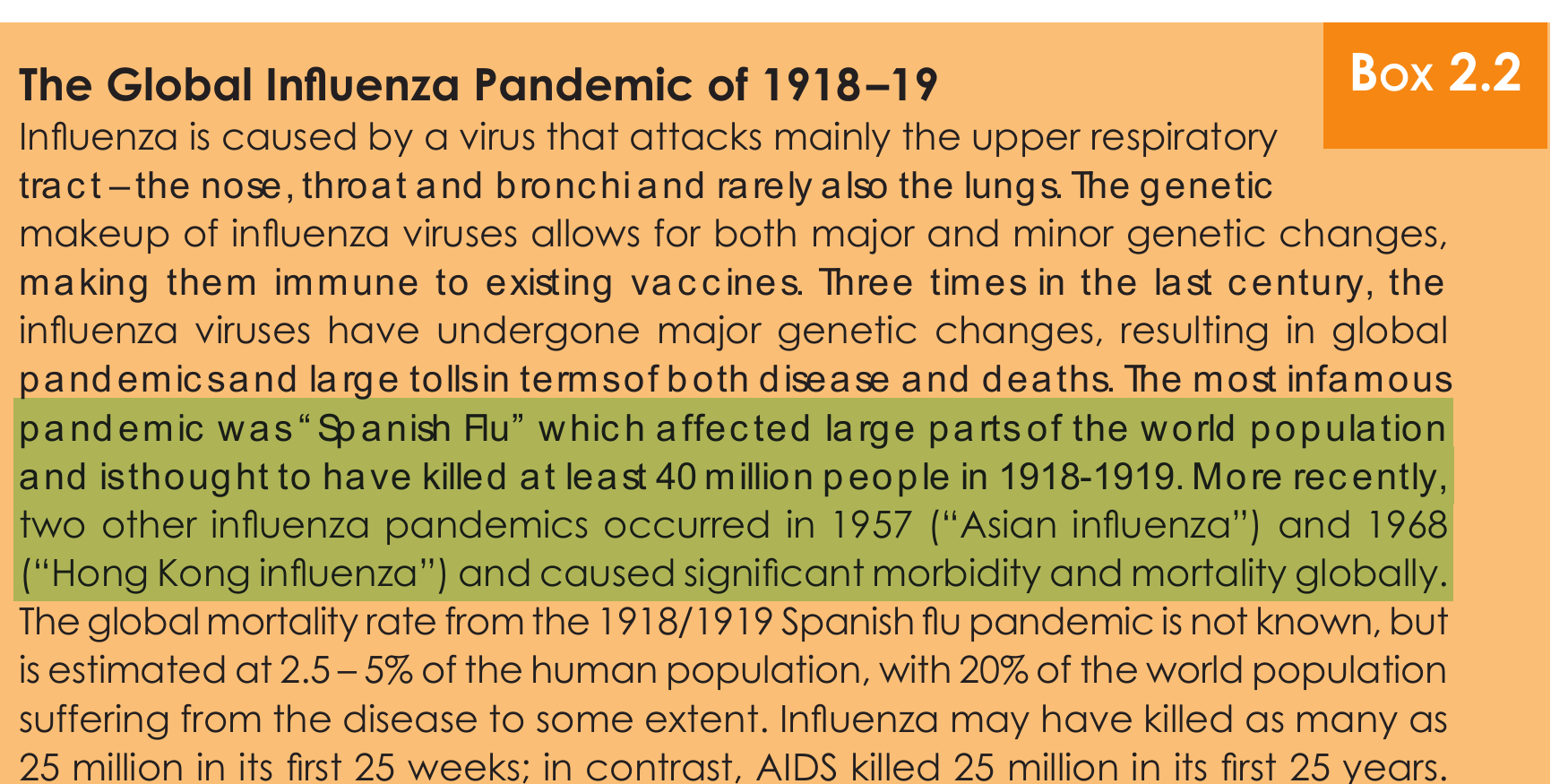
| B. | Asian Influenza | II. | 1918-19 |
| C. | Hong Kong Influenza | III. | 1994 |
| D. | Spanish Flu | IV. | 1957 |
Choose the correct answer from the options given below:
Answer & explanation
Correct answer: option 4
The correct answer is Option (4) → A-III, B-IV, C-I, D-II
(A) Surat Plague Epidemic — this matches (III) 1994. Surat witnessed a small epidemic of plague in September 1994.
(B) Asian Influenza — this matches (IV) 1957.
(C) Hong Kong Influenza — this matches (I) 1968.
(D) Spanish Flu — this matches (II) 1918-19, the most infamous influenza pandemic.
NCERT (2025-26): “2.2 Size and Growth of India’s Population … Improvements in medical cures for these diseases, programmes for mass vaccination, and efforts to improve sanitation helped to control epidemics. However, diseases like malaria, tuberculosis, diarrhoea and dysentery continue to kill people even today, although the numbers are nowhere as high as they used to be in the epidemics of the past. Surat witnessed a small epidemic of plague in September 1994, while dengue and chikungunya epidemics are since reported in various parts of the country.…”
Box 2.2 (NCERT 2025-26) |