Arrange the following events in chronological order according to time period.
(A) The Economic Consequences of the Peace.
(B) An Enquiry into the Nature and Cause of the Wealth of Nations.
(C) The Great Depression.
(D) General Theory of Employment, Interest and Money.
Choose the correct answer from the options given below:
Answer & explanation
Correct answer: option 4
The correct answer is Option (4) → (B), (A), (C), (D)
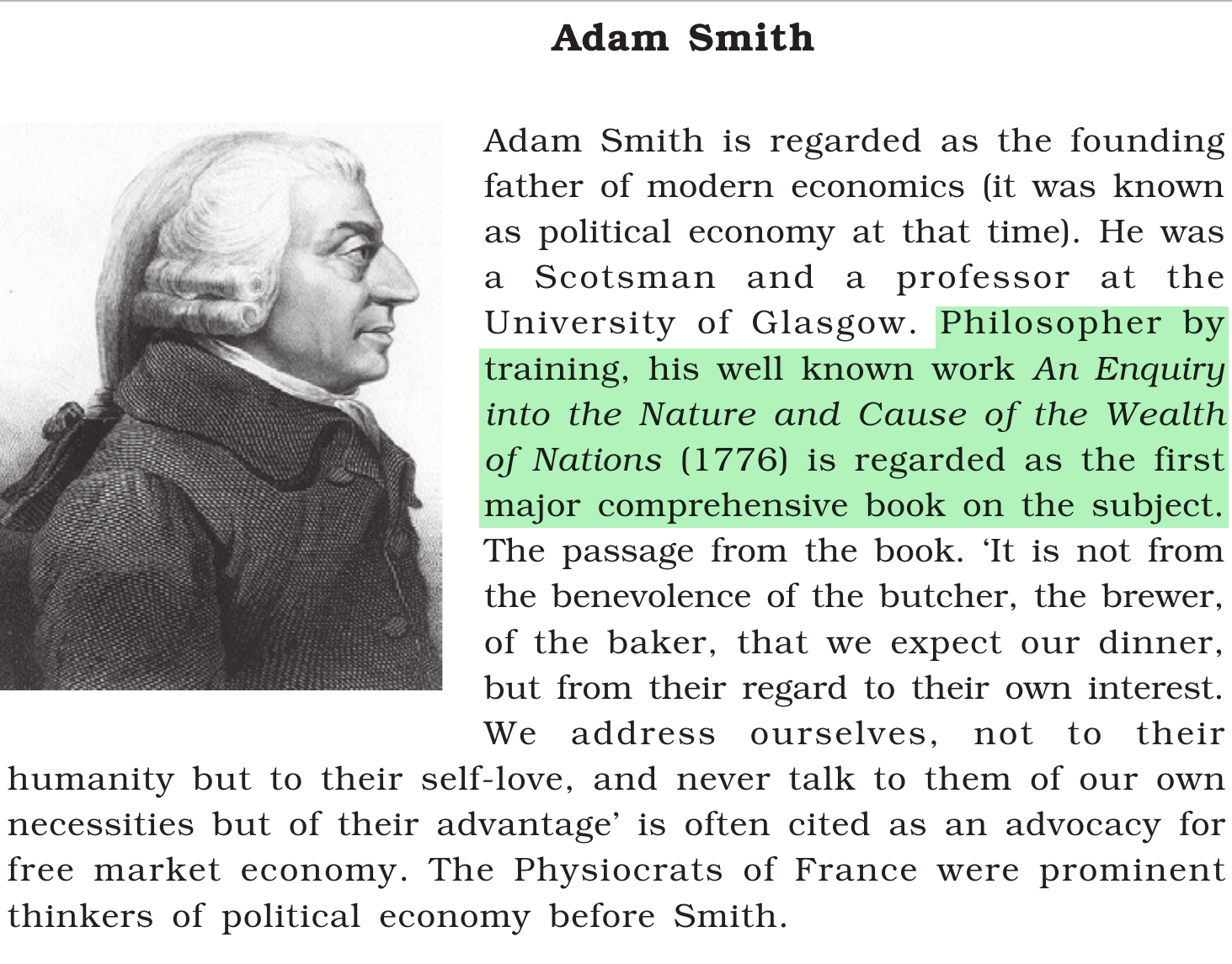
(B) An Enquiry into the Nature and Cause of the Wealth of Nations. — Adam Smith’s book, published in 1776.
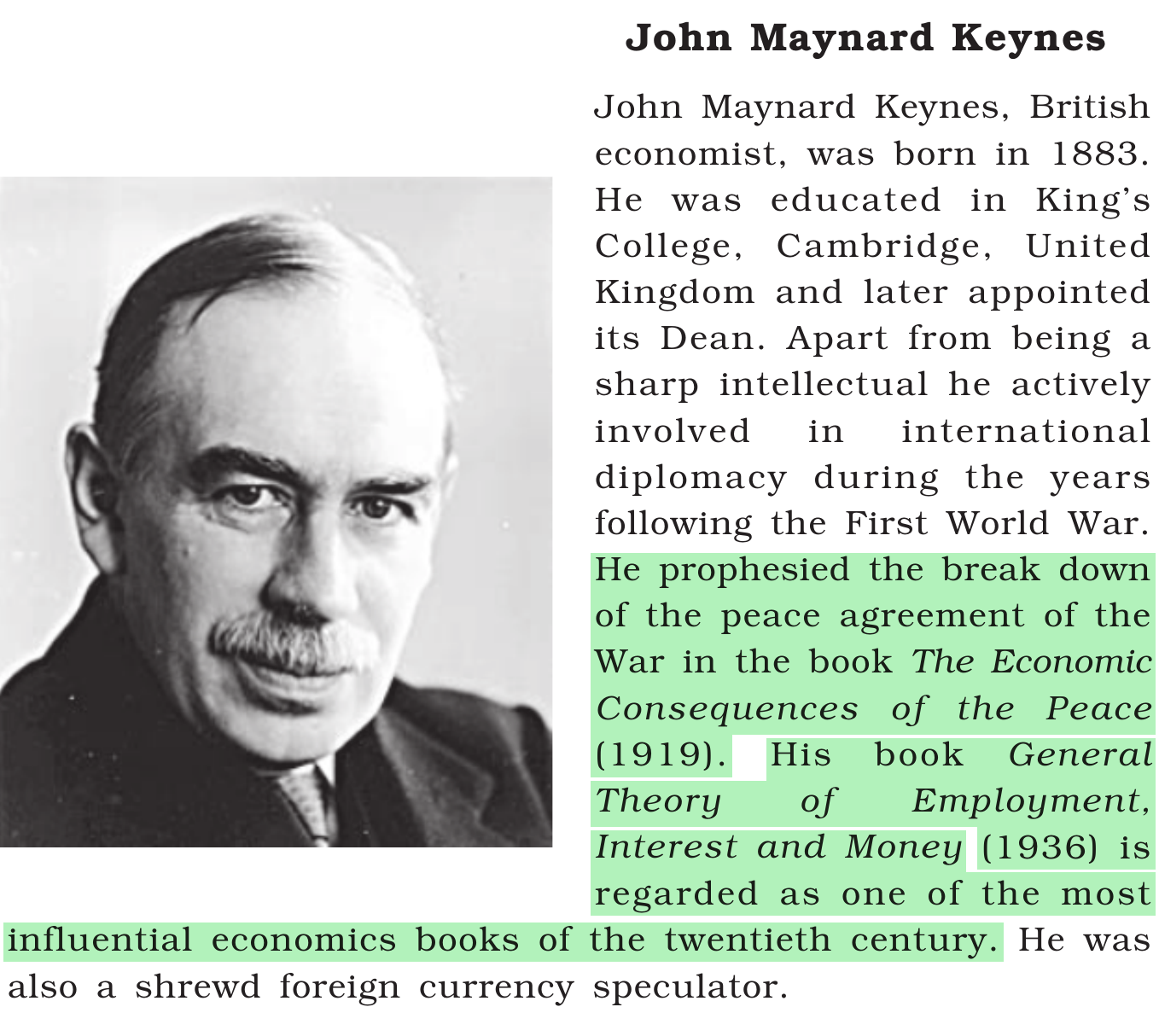
(A) The Economic Consequences of the Peace. — John Maynard Keynes’s book, published in 1919, after the First World War.
(C) The Great Depression. — It began in 1929. Output and employment fell by huge amounts in Europe and North America.
(D) General Theory of Employment, Interest and Money. — Keynes’s book, published in 1936, after the Great Depression.
Note: A same/similar question was asked in CUET (UG) in the papers below.
| 2026 | 2025 | 2024 | 2023 | 2022 |
| 21-05 S2* 23-05 S2* 06-06 S1* | 26-05 S2* 03-06 S1* 03-06 S2 | – | – | – |
* A similar question.
NCERT (2026-27): “1.1 Emergence of Macroeconomics Macroeconomics, as a separate branch of economics, emerged after the British economist John Maynard Keynes published his celebrated book The General Theory of Employment, Interest and Money in 1936. The dominant thinking in economics before Keynes was that all the labourers who are ready to work will find employment and all the factories will be working at their full capacity. This school of thought is known as the classical tradition. However, the Great Depression of 1929 and the subsequent years saw the output and employment levels in the countries of Europe and North America fall by huge amounts. It affected other countries of the world as well.…”
|