The government expenditure multiplier is calculated by which of the following:
Answer & explanation
Correct answer: option 3
The correct answer is Option (3) → 1/1-c(1 - t)
Note: The given answer is as per the official NTA Answer Key. However, the question can have more than one correct answer, i.e. both Option (3) and Option (4), as explained below.
When the government spends one more rupee, income rises by that rupee, and the part of it that people spend becomes someone else’s income, round after round. The total rise in income per rupee of spending, ΔY/ΔG, is the government expenditure multiplier. Its size depends on how much of each extra rupee households can spend, and so on how taxes are collected.
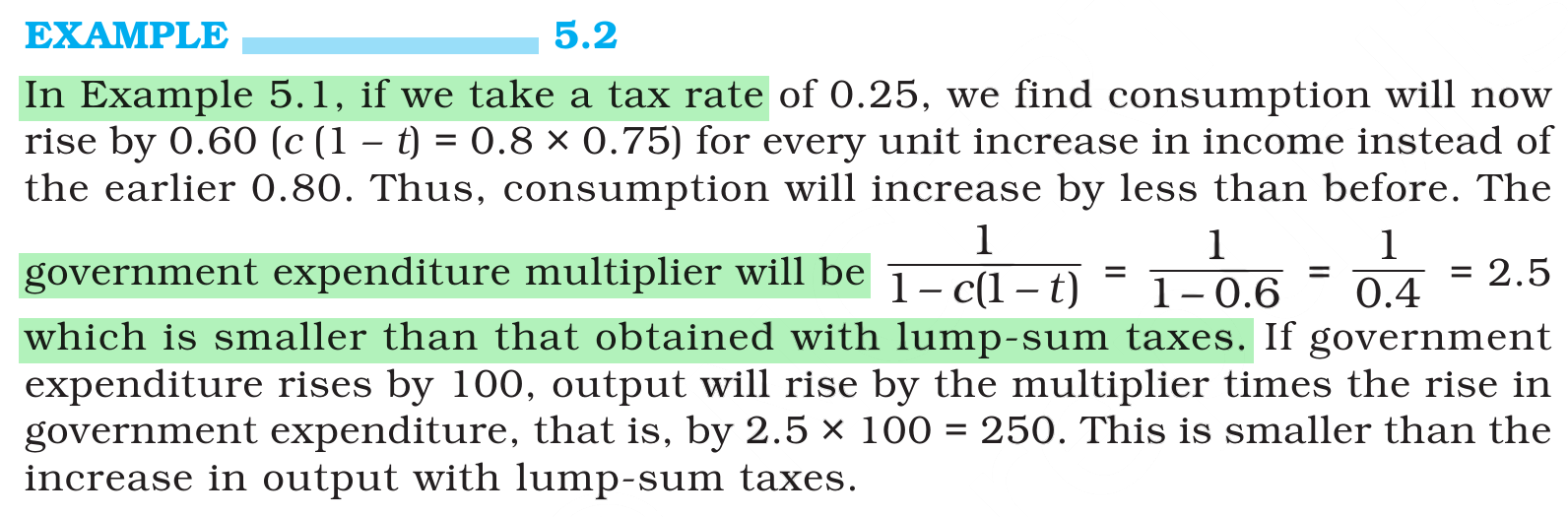
With a proportional income tax the government takes a fixed fraction t of income, T = tY. Out of each extra rupee of income households keep (1 − t) and spend the fraction c of that, so consumption rises by c(1 − t):
ΔY = ΔG + c(1 − t)ΔY
ΔY [1 − c(1 − t)] = ΔG
ΔY/ΔG = 1 ÷ [1 − c(1 − t)]
This is Option (3). It is smaller than the multiplier with lump-sum taxes, because part of every round of extra income goes in tax.
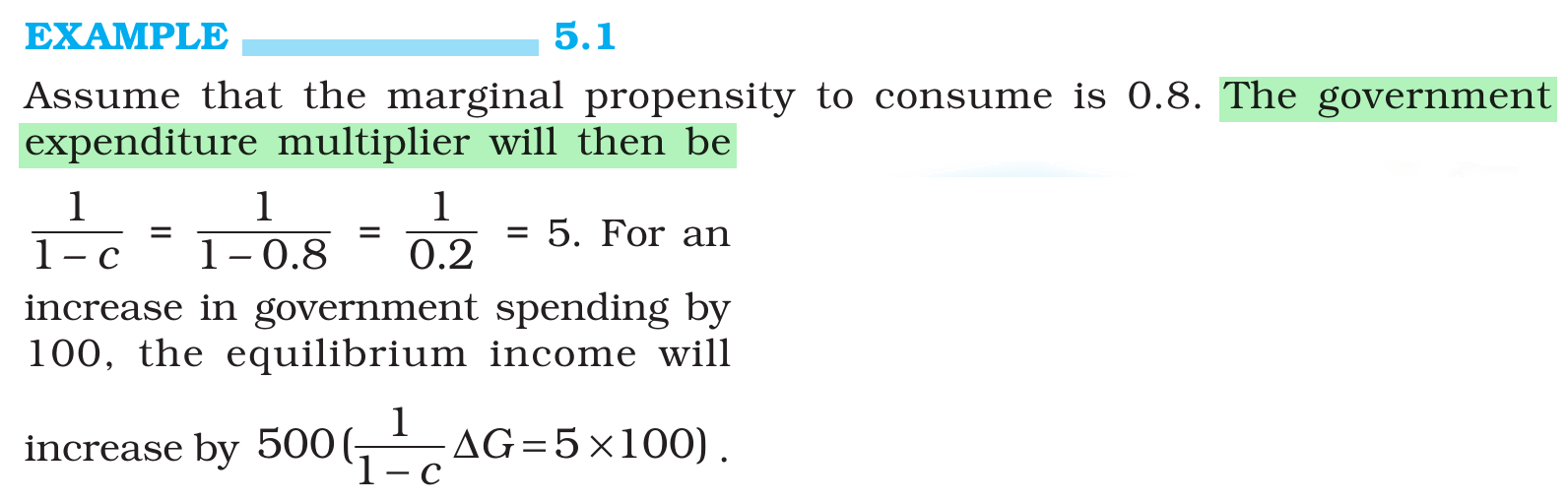
With lump-sum taxes T does not change with income, so consumption rises by c out of each extra rupee:
ΔY = ΔG + cΔY
ΔY/ΔG = 1 ÷ (1 − c)
Since MPC + MPS = 1, (1 − c) is the marginal propensity to save, so this multiplier is 1/MPS, which is Option (4).
The other options
Option (1) 1/1-t (1 + c) — Incorrect. A tax rate lowers the marginal propensity to consume to c(1 − t); it never turns it into (1 + c). With t = 0 the expression gives 1 and not 1/(1 − c), so it fits neither case.
Option (2) -c/1-c — Incorrect. This is the tax multiplier, ΔY/ΔT. It is negative because a rise in taxes cuts disposable income and so consumption, and it measures the effect of a tax change, not of government expenditure.
Option (4) 1/mps — Also correct. 1/MPS = 1/(1 − c), the government expenditure multiplier when taxes are lump-sum, as worked out above.
NCERT: Introductory Macroeconomics — Chapter 5: Government Budget and the Economy (2025-26)
|