Match List-I with List-II
| List-I | List-II | ||
|---|---|---|---|
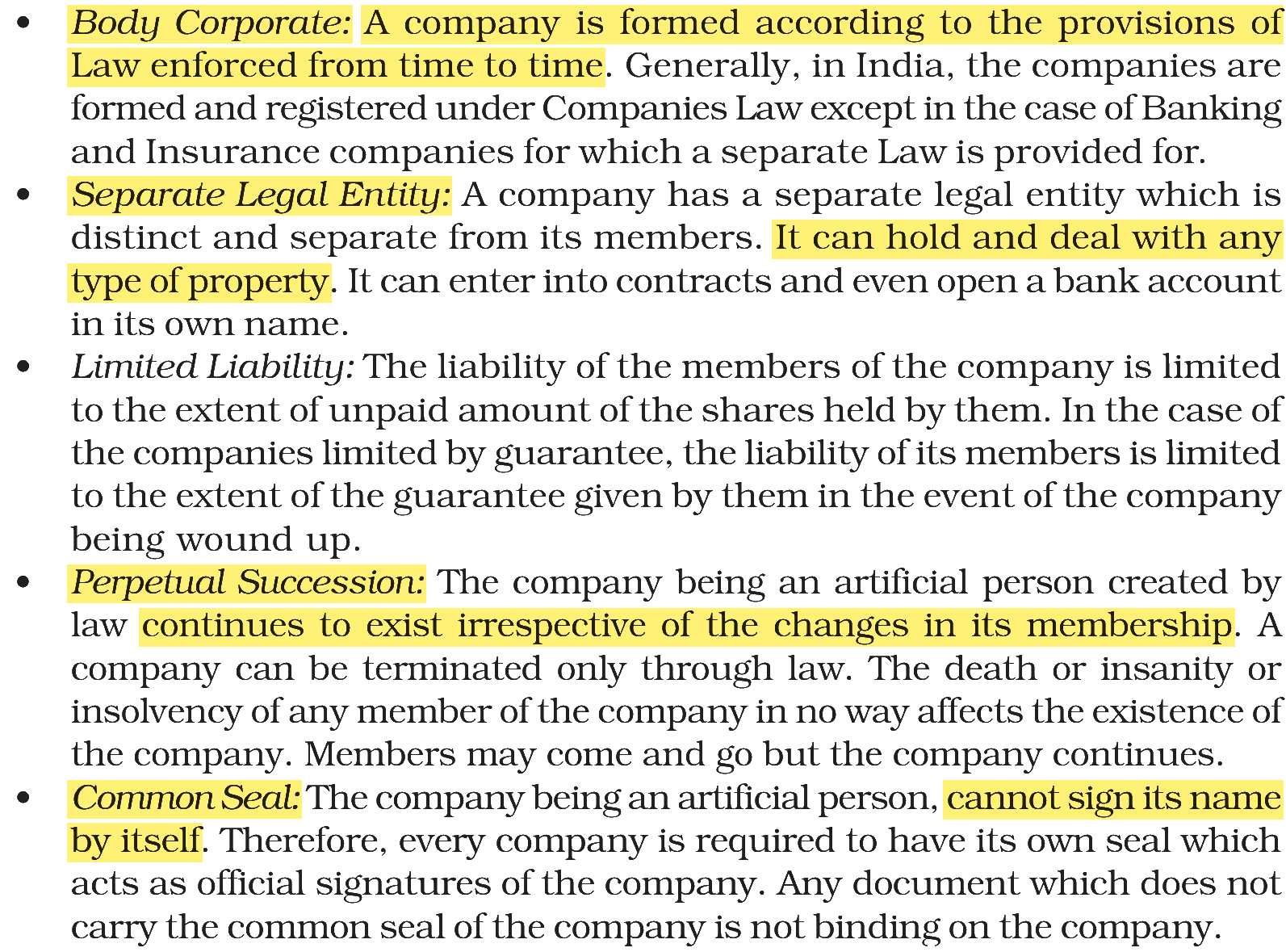
| (A) | A company is formed according to the provisions of Law enforced from time to time. | (I) | Common Seal |
| (B) | A company can hold and deal with any type of property. | (II) | Body Corporate |
| (C) | The company continues to exist irrespective of the changes in its membership. | (III) | Separate Legal Entity |
| (D) | The company cannot sign its name by itself. | (IV) | Perpetual Succession |
Choose the correct answer from the options given below:
Answer & explanation
Correct answer: option 3
The correct answer is Option (3) → (A) - (II), (B) - (III), (C) - (IV), (D) - (I)
A company is an artificial person created by law, and each of these features follows from that.
(A) A company is formed according to the provisions of Law enforced from time to time. — this matches (II) Body Corporate. A company comes into being only by registration under the law, which makes it a body corporate.
(B) A company can hold and deal with any type of property. — this matches (III) Separate Legal Entity. Being distinct from its members, it owns property, enters into contracts and opens a bank account in its own name.
(C) The company continues to exist irrespective of the changes in its membership. — this matches (IV) Perpetual Succession. Members may die, become insolvent or sell their shares, but the company goes on until the law ends it.
(D) The company cannot sign its name by itself. — this matches (I) Common Seal. An artificial person has no hand to sign with, so its seal acts as its official signature.
NCERT (2026-27 edition):
|