
In trimethylamine, the C–N–C bond angle is 108°, which is less than the tetrahedral angle of 109.5°. Which of the following is the reason for this?
Answer & explanation
Correct answer: option 1
The correct answer is Option (1) → The unshared pair of electrons on the nitrogen atom
Nitrogen in amines is sp3 hybridised. Three sp3 orbitals form bonds with carbon or hydrogen, and the fourth holds the unshared pair of electrons. This lone pair repels the bonding pairs more strongly and pushes them closer together, so the shape is pyramidal and the C–N–C angle shrinks to 108°.
Why the other options are incorrect
Option (2) The sp2 hybridisation of the nitrogen atom — Incorrect. Nitrogen in amines is sp3, not sp2; an sp2 centre would give a planar shape with angles near 120°, larger than 109.5°.
Option (3) The repulsion between the three methyl groups — Incorrect. Repulsion between the methyl groups would push them apart and widen the angle, not make it smaller.
Option (4) The absence of a hydrogen atom on the nitrogen atom — Incorrect. The angle is less than 109.5° in all amines, primary and secondary ones included, which do have N–H bonds; the cause is the lone pair present in every amine.
NCERT (2026-27 edition):
9.1 Structure of Amines – “…The fourth orbital of nitrogen in all amines contains an unshared pair of electrons. Due to the presence of unshared pair of electrons, the angle C–N–E, (where E is C or H) is less than 109.5°; for instance, it is 108° in case of trimethylamine as shown in Fig. 9.1.”
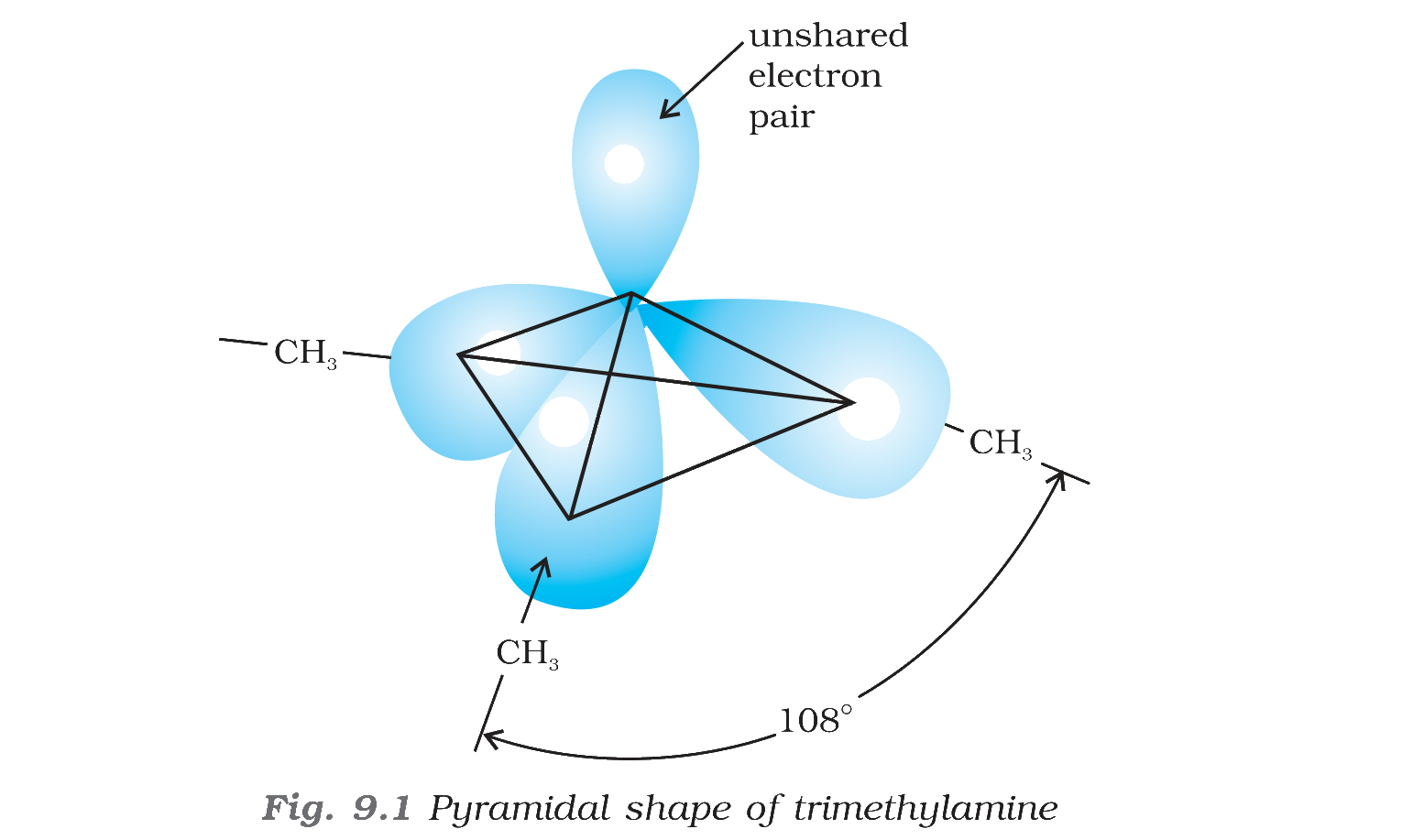
Fig. 9.1: Pyramidal shape of trimethylamine