Consider the following statements about the process of controlling:
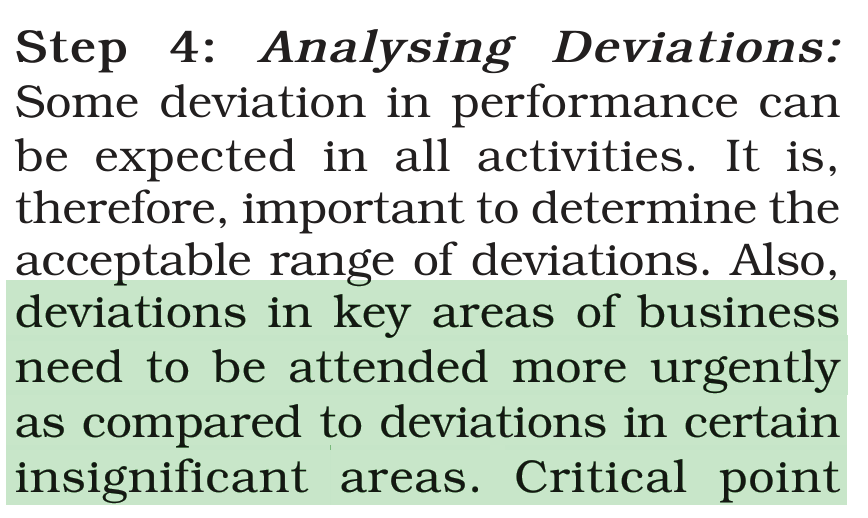
(A) Deviations in key areas of business need to be attended more urgently than deviations in insignificant areas.
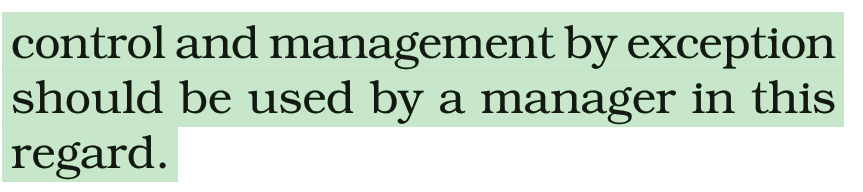
(B) Critical point control and management by exception should be used by a manager while analysing deviations.
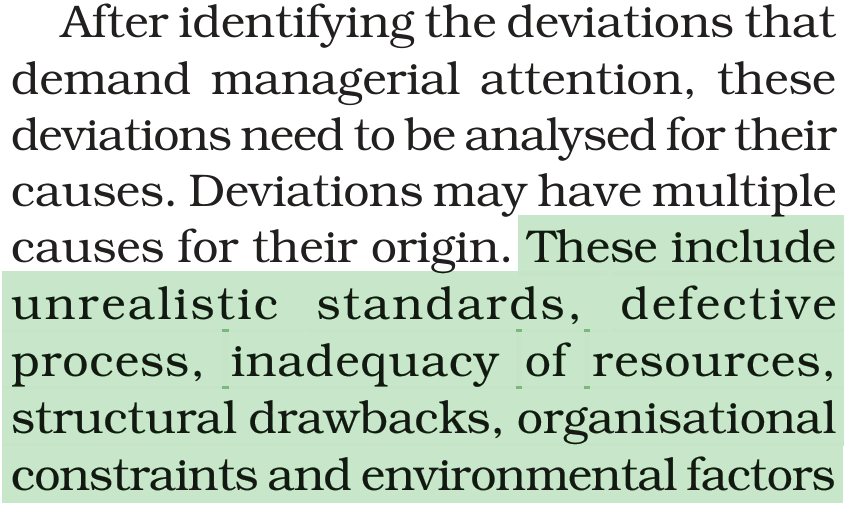
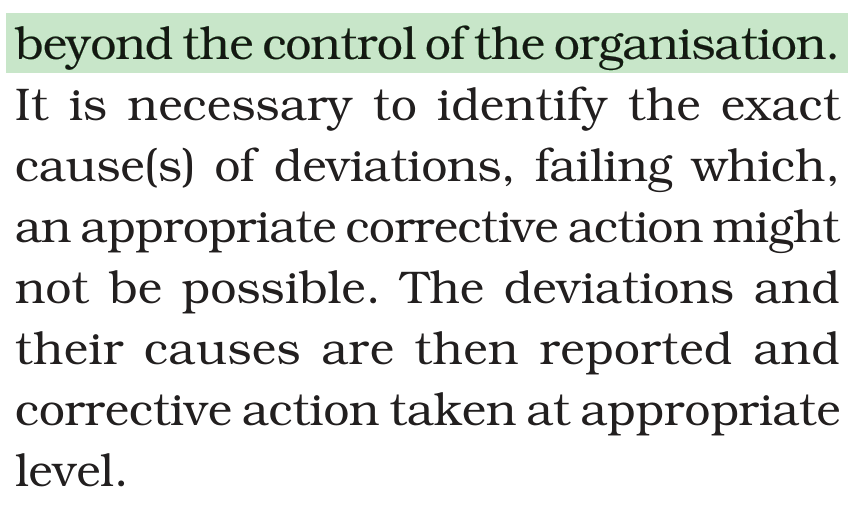
(C) The deviations that demand managerial attention need to be analysed for their effects.
(D) Determining the acceptable range of deviations is a part of the measurement of actual performance.
(E) Structural drawbacks are among the causes from which deviations may originate.
Which of the statements given above are correct?
Choose the correct answer from the options given below:
Answer & explanation
Correct answer: option 4
The correct answer is Option (4) → (A), (B) and (E) only
(A) Deviations in key areas of business need to be attended more urgently than deviations in insignificant areas. — Correct. Deviations in key areas of business hurt the firm more, so they are attended to first.
(B) Critical point control and management by exception should be used by a manager while analysing deviations. — Correct. While analysing deviations, a manager uses critical point control and management by exception to pick the deviations that need attention.
(C) The deviations that demand managerial attention need to be analysed for their effects. — Incorrect. Deviations that need attention are analysed for their causes. Only when the exact cause is known can the right corrective action be taken.
(D) Determining the acceptable range of deviations is a part of the measurement of actual performance. — Incorrect. Fixing the acceptable range of deviations is part of analysing deviations, the fourth step. Measurement of actual performance, the second step, only records the work done.
(E) Structural drawbacks are among the causes from which deviations may originate. — Correct. Structural drawbacks are one of the causes of deviations, along with defective process and inadequacy of resources.
NCERT (2026-27 Edition):
|