Which one of the following has the ability to transform normal cells into cancerous cells in animals?
Answer & explanation
Correct answer: option 2
The correct answer is Option (2) → Retroviruses
Option (1) β-galactosidase — Incorrect. It is an enzyme, coded by the lacZ gene. It breaks lactose into galactose and glucose. In cloning it is used as a marker: a foreign gene inserted into its gene stops the enzyme, so the recombinant colonies stay white instead of turning blue. It does not change a cell into a cancer cell.
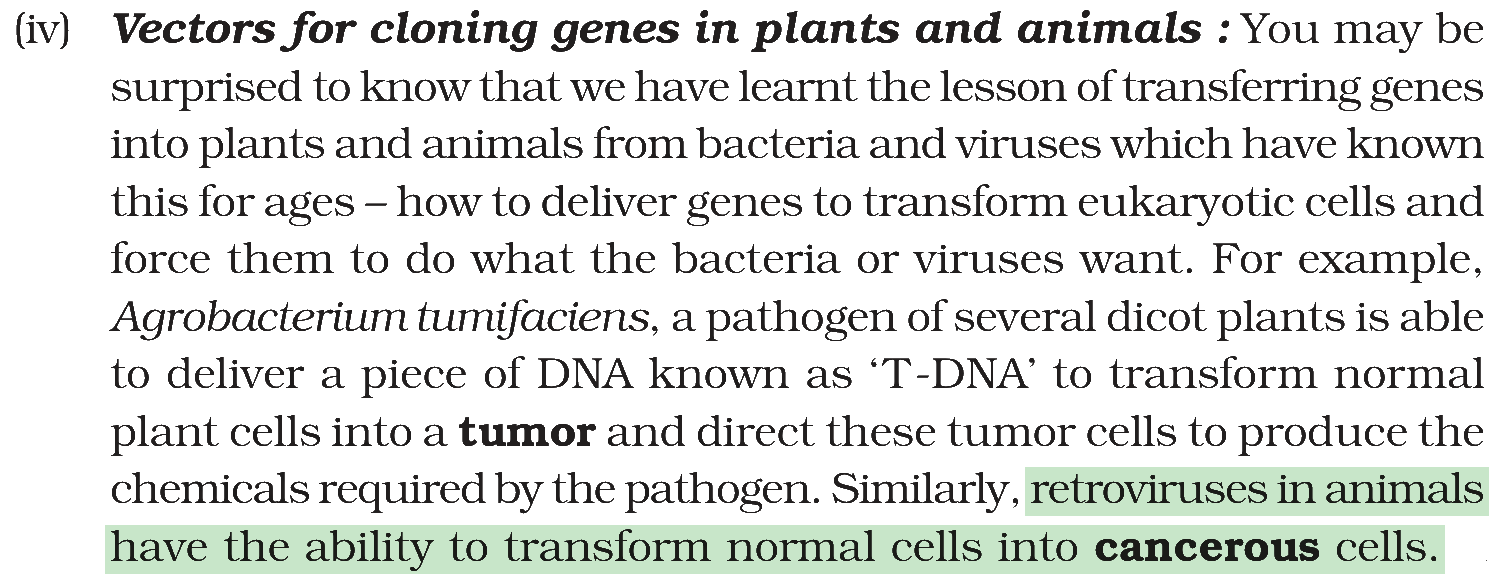
Option (2) Retroviruses — Correct. Retroviruses are viruses of animals that have RNA as their genetic material. Their genes enter the DNA of the host cell, and this can turn a normal cell into a cancer cell. Because they deliver genes so well, disarmed retroviruses are now used as vectors to carry useful genes into animal cells.
Option (3) T-DNA — Incorrect. T-DNA is the piece of DNA that Agrobacterium tumifaciens sends into dicot plant cells. It turns normal plant cells into a tumour, so it acts on plants, not on animals.
Option (4) Rhinoviruses — Incorrect. Rhinoviruses cause the common cold. They infect the nose and the respiratory passage but do not turn cells into cancer cells.
NCERT Extract:
Cloning Vectors – …