Match List-I with List-II:
| List-I Meanings | List-II Terms | ||
| (A) | When descent is traced through the mother | (I) | Adi-Parvan |
| (B) | Barbarians or outsiders of the Brahmanical order | (II) | Endogamy |
| (C) | The first section of Mahabharata | (III) | Matriliny |
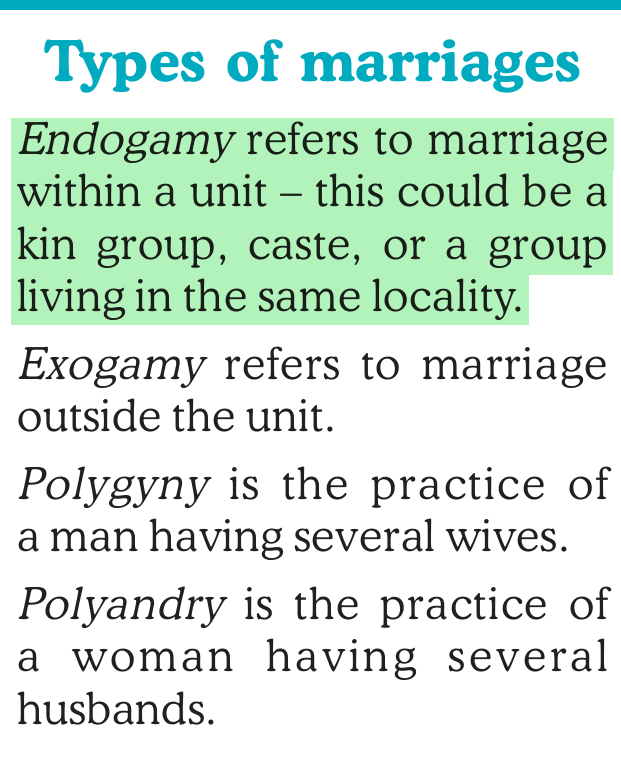
| (D) | Marriage within a kin group, caste, or a group living in the same locality | (IV) | Mlechchhas |
Choose the correct answer from the options given below:
Answer & explanation
Correct answer: option 4
The correct answer is Option (4) → (A)-(III), (B)-(IV), (C)-(I), (D)-(II)
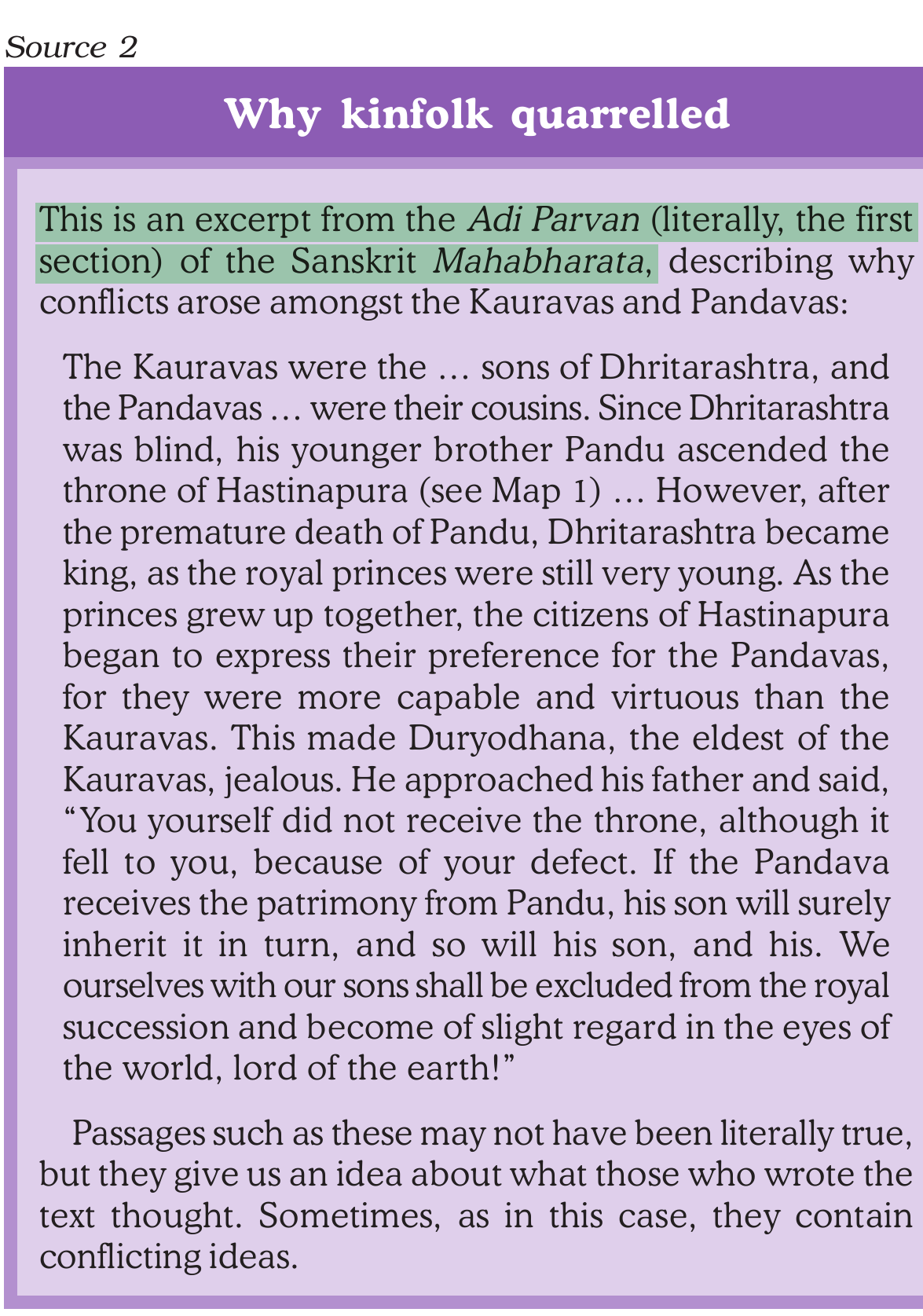
(A) When descent is traced through the mother — this matches (III) Matriliny. Its opposite, tracing descent from father to son, is patriliny.
(B) Barbarians or outsiders of the Brahmanical order — this matches (IV) Mlechchhas. Rulers such as the Shakas, who came from Central Asia, were regarded by the Brahmanas as mlechchhas.
(C) The first section of Mahabharata — this matches (I) Adi-Parvan. Adi Parvan literally means the first section of the Sanskrit Mahabharata.
(D) Marriage within a kin group, caste, or a group living in the same locality — this matches (II) Endogamy. Endogamy is marriage within a unit; exogamy is marriage outside it.
NCERT (2026-27): “2.2 The ideal of patriliny … Patriliny means tracing descent from father to son, grandson and so on. Matriliny is the term used when descent is traced through the mother. 3.2 Non-Kshatriya kings … Other rulers, such as the Shakas who came from Central Asia, were regarded as mlechchhas, barbarians or outsiders by the Brahmanas.…”
|