Read the following passage and answer the question :
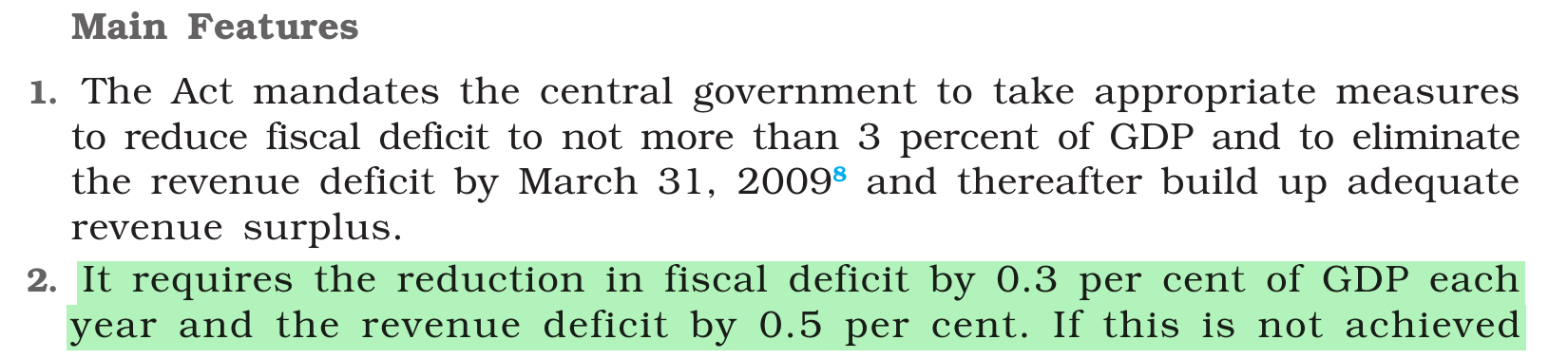
In a multiparty parliamentary system, electoral concerns play an important role in determining expenditure policies. The enactment of the FRBMA, in Aug. 2003, marked a turning point in fiscal reforms, binding the Govt. through an institutional framework to pursue a prudent fiscal policy. The act mandates the Central Govt. to take appropriate measures to reduce fiscal deficit to not more than 3 percent of GDP and to eliminate the revenue deficit by 31 March, 2009. It requires the reduction in fiscal deficit by 0.3% of GDP each year and revenue deficit by 0.5 percent. If it is not achieved through tax revenues, the necessary adjustment has to come from a reduction in expenditure. The Central Govt. must ensure inter-generational equity and long term macro-economic stability by achieving sufficient revenue surplus, removing fiscal obstacles to monetary policy and effective debt management by limiting deficits and borrowings. The rules under the act were notified with effect from July 2004.
If the required reduction in fiscal deficit is not achieved through tax revenues, what adjustment has to be done :
Answer & explanation
Correct answer: option 4
The correct answer is Option (4) → Reduction in Expenditure
The passage covers the case where the deficit does not come down through tax revenues. Then the necessary adjustment has to come from a reduction in expenditure.
Fiscal deficit is the gap between what the government spends and what it receives apart from borrowing. If receipts do not rise enough, this gap can close only when spending falls.
NCERT (2026-27): Introductory Macroeconomics — Chapter 5: Government Budget and the Economy, Box 5.2
|