
Which one of the following is a result of convergent evolution?
Answer & explanation
Correct answer: option 1
The correct answer is Option (1) → The eye of octopus and eye of mammals
Convergent evolution gives analogous organs: different structures in unrelated groups that evolve to do the same job in similar habitats. Divergent evolution gives homologous organs: one basic structure from a common ancestor, changed for different jobs.
Option (1) The eye of octopus and eye of mammals — Correct. A mollusc and a mammal evolved eyes separately; the eyes are analogous.
Option (2) Vertebrate hearts — Incorrect. All vertebrate hearts come from a common ancestor; they are homologous.
Option (3) Fore limbs of cheetah and man — Incorrect. Both have humerus, radius, ulna, carpals, metacarpals and phalanges; they are homologous.
Option (4) Vertebrate brains — Incorrect. Like hearts, vertebrate brains are homologous: they come from a common ancestor and share one basic plan. So they show divergent, not convergent, evolution.
NCERT Extract:
What Are the Evidences for Evolution? – “… Such similarities can be interpreted to understand whether common ancestors were shared or not. For example whales, bats, Cheetah and human (all mammals) share similarities in the pattern of bones of forelimbs (Figure 6.3b). Though these forelimbs perform different functions in these animals, they have similar anatomical structure – all of them have humerus, radius, ulna, carpals, metacarpals and phalanges in their forelimbs. Hence, in these animals, the same structure developed along different directions due to adaptations to different needs. This is divergent evolution and these structures are homologous. Homology indicates common ancestry. Other examples are vertebrate hearts or brains. … Homology is based on divergent evolution whereas analogy refers to a situation exactly opposite. Wings of butterfly and of birds look alike. They are not anatomically similar structures though they perform similar functions. Hence, analogous structures are a result of convergent evolution - different structures evolving for the same function and hence having similarity. Other examples of analogy are the eye of the octopus and of mammals or the flippers of Penguins and Dolphins.”
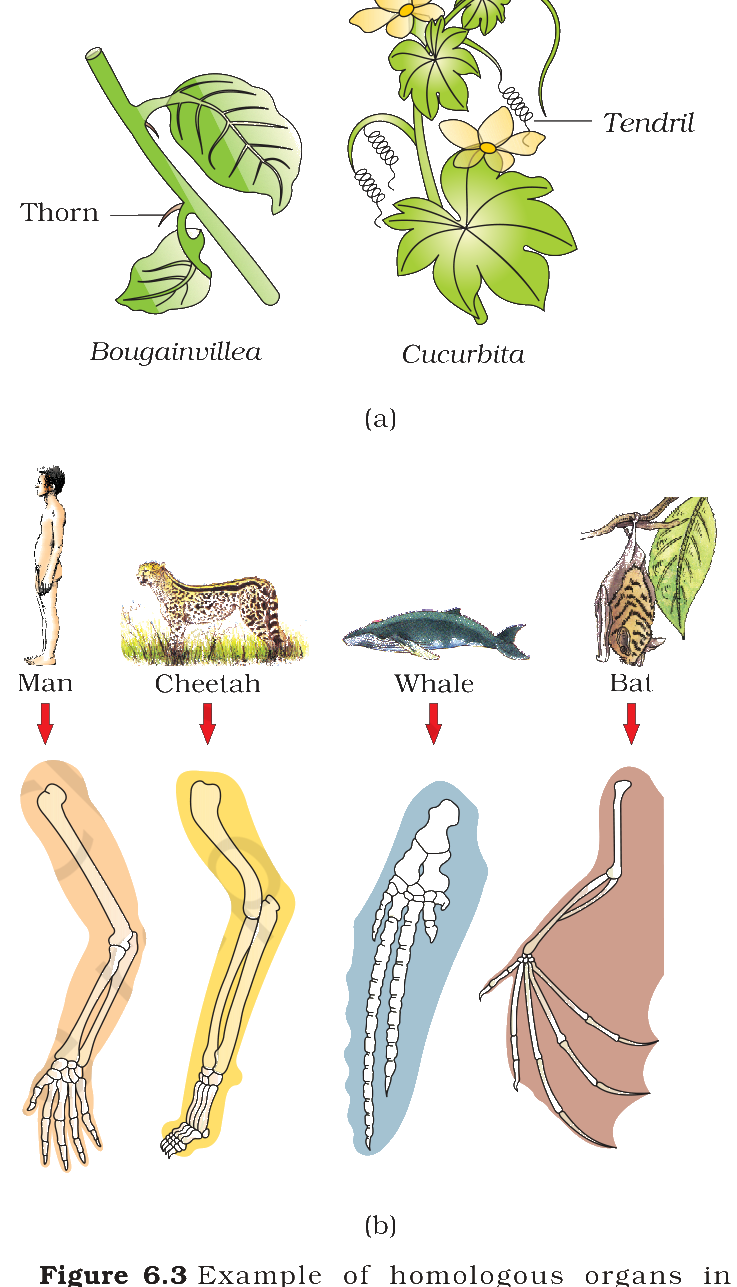
Figure 6.3 Example of homologous organs in (a) Plants and (b) Animals